
Platform on production and process automation
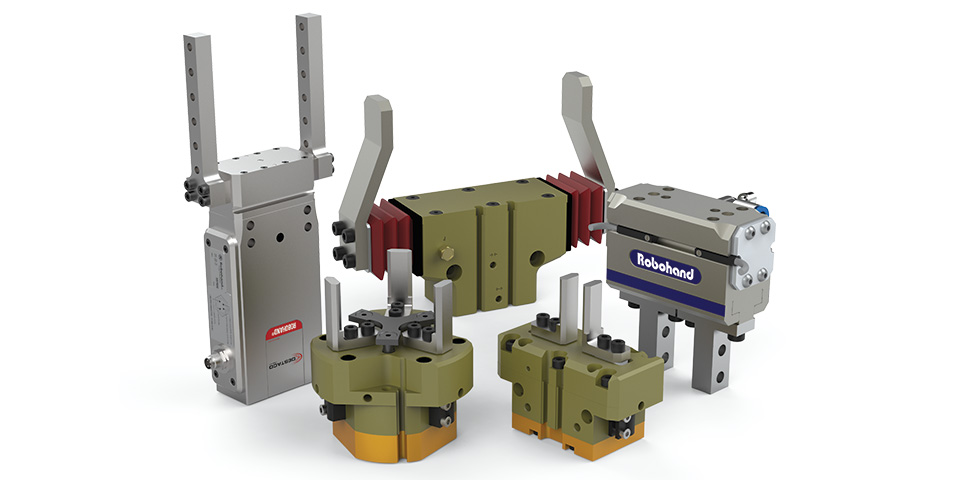
Those who design pick-and-place automation systems must integrate a proper gripper. If designers and engineers fail to do this, it can have negative effects on the operation of the system, and then they end up having to look for another gripper anyway. So it is not enough to randomly pick a gripper from the rack or a catalog. Destaco, a specialist in the development and production of solutions for precision movement, positioning and control in industrial automation, provides technical advice on choosing the right gripper. Indeed, under the brand name RobohandTM, the manufacturer offers innovative pneumatic and electric grippers, including the successful G110 gripper series.
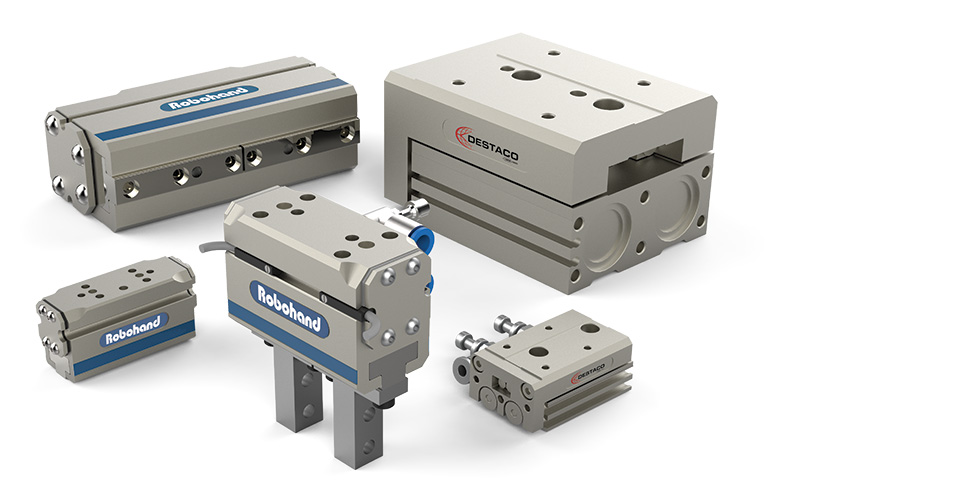
The G110 grippers include some 20 design models that allow OEMs to produce many more products per hour. A shield protects the internal mechanism from damage.
Founded in 1915, Destaco (Detroit Stamping Company) is a leading global provider of precision motion, positioning and control solutions in industrial automation. The product family consists of several leading brands, such as Destaco itself (hand and power clamps and end-effectors), CAMCOTM and FergusonTM (indexers), CRLTM (manipulators and transfer gates) and RobohandTM (grippers). Since mid-1996, the company has also had a sales office for Benelux. Anyone looking for technical support in choosing the right gripper can therefore turn to this specialist. "Experience shows that when designing pick-and-place automation systems for use in the most diverse applications, engineers often do not pay sufficient attention to the choice of the most suitable gripper. Yet the right gripper is very important for the proper operation of the system," states Fred Voogel, general manager of Destaco Benelux. "After all, the performance of an automated production system is only as strong and reliable as the performance of their weakest link. To ensure, that the gripper is not the weakest element, one has to pay attention to the control environment and the appropriate gripper, specified based on the design and available options. This may be a standard solution, but an application may just as easily require a custom gripper."
Many factors must be considered when choosing a gripper. For example, dirt, grit, oil, grease, cutting fluid, temperature fluctuations, cleanliness and the level of human interaction affect the operation of an automation system. Furthermore, gripper design and construction also affect performance in a given operating environment. "A gripper consists of three basic elements: the body with the parts for force transmission, the jaws and the fingers. The gripper manufacturer designs and builds the body and jaws, while the machine builder or end user provides the custom fingers to grip or encapsulate the given part," Voogel explains. "Finger size, gripping force, stroke, activation time and accuracy are some aspects, which one must consider when selecting a gripper. Manufacturers provide those specifications with each gripper model." Specific control environments also play an important role in determining the type of gripper design. For example, the jaw support mechanism (bearing type) and internal design or the method of force transmission from piston to jaws can have an impact. Grippers may have the same size and function, yet completely different designs, making some models better than others for a given control environment.


