A 5G network for every factory

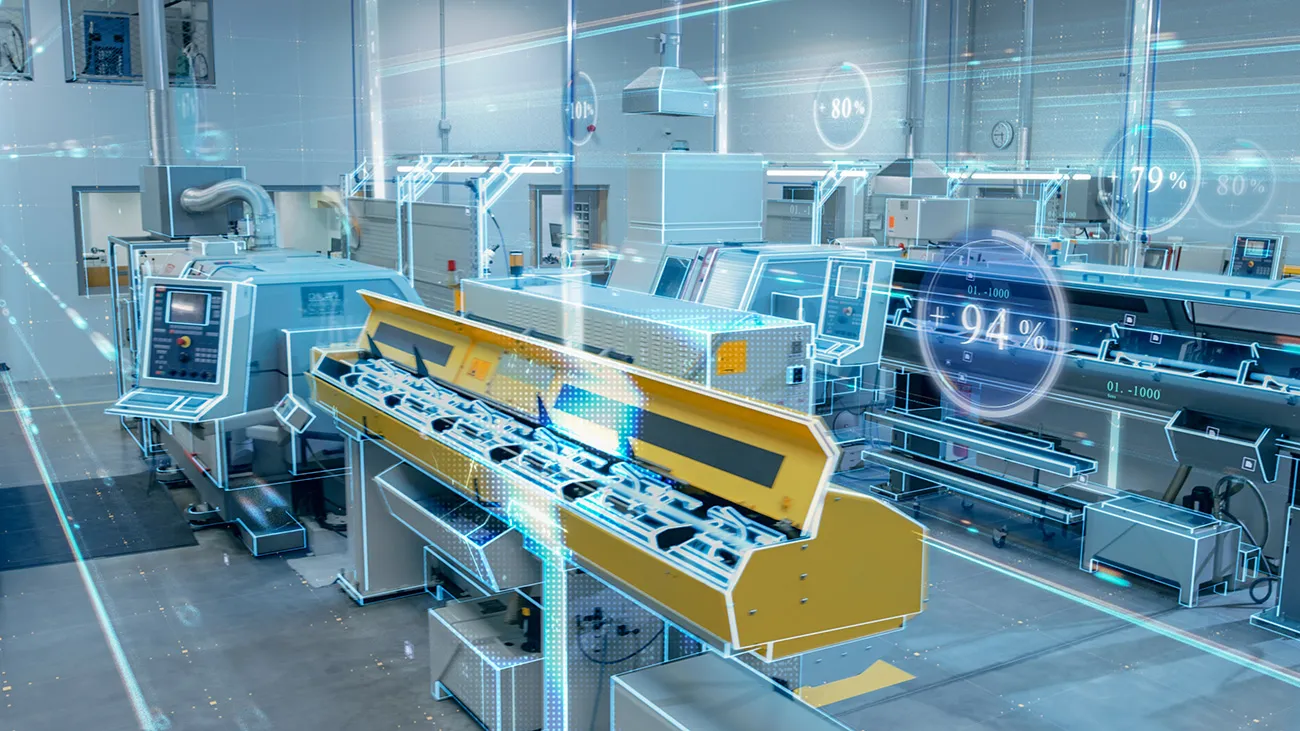
Preparations for 5G are well under way. Within a few years, many companies will be able to connect their production facilities entirely wirelessly using a local 5G network. This will give their production a welcome boost in efficiency, autonomy and flexibility, helping them meet the challenges of ‘high mix, low volume’ production.
Over the coming years, 5G networks will make their way into every setting where companies need robust, ultra-fast networks with high bandwidth. From automated warehouses and production lines to augmented reality and robots, this new mobile communications standard will control thousands of devices per km³ in real time. Consumers have already discovered the appeal of 5G on their smartphones. It enables them to watch 4K video in crystal-clear quality wherever they are. But 5G is even more important for industry. It is a milestone on the road to Industry 4.0, where smart factories become more flexible and productive through end-to-end digitalisation and IoT applications. 5G is ten to twenty times faster than an LTE network today and uses just one thousandth of the energy per bit transferred. Other benefits include low latency, extremely high bandwidth and full control over a company’s own data and network performance. It will therefore give industry unprecedented opportunities to control digital processes with greater precision.
Hurdles to overcome
But we are not there yet. A number of hurdles still need to be overcome before 5G networks become a reality. Germany took the first step last March, auctioning its 5G licences. In Belgium, the wait is likely to continue until early 2022. At least four players are expected to bid. The proceeds will be shared between the regions and the federal level. Some of the spectrum to be allocated should be reserved for local networks in industry and research institutions, as well as for agricultural applications. It is no surprise that Germany is leading the way in Europe, with companies such as Audi, Mercedes-Benz, BASF … already investing in 5G technology. But before industry can get started, the 5G standard needs further development to meet industrial requirements. Last year, 3GPP, the mobile networks standards body, released ‘Release 16’. This enabled companies to start developing hardware, including infrastructure and terminals. Once the cost of using a frequency is clear, they can get started on demos and proof of concepts. There is no need to worry about health risks. The (strict) standards are already in place, and Belgium, Flanders and Brussels set limits that are several orders of magnitude lower still.
More scope for wireless thinking
The benefits of a private network are clear. Companies can monitor, store, analyse, route and flexibly configure their data traffic as they wish. This allows their processes to benefit from the network speed and reliability required in the factory of the future. Wireless communication is, of course, nothing new in industry. LTE networks, for example, are already being used in factories and ports to manage processes and flows of goods. But 5G and its vast range of services open up opportunities to consider wireless solutions for time-critical applications too. There is particularly strong potential for companies that want to track their production in real time or process data at the edge within their own network, without having to send it to the cloud. But for this to be truly successful, international recognition of private 5G spectrum for local applications will be crucial. Only then will 5G technologies be successfully adopted around the world.
Question about this story? Ask your question
Keep following this
Get an email when a new story is published. No account needed.
- SubjectControl & networks