Drives are becoming a source of efficiency, data and process reliability
Text Christobal van LeeuwenImage iStock
It is increasingly the load profile, not the kilowatt rating, that determines the right drive
A drive is rarely a standalone component these days. The choice of motor, variable frequency drive, servo axis or gearbox has a direct impact on cycle time, energy consumption, EMC behaviour, thermal load, maintenance data and machine safety. As a result, drive technology is shifting from conventional component selection to systems engineering. The starting point is no longer the nominal kilowatt rating, but the demands of the application.
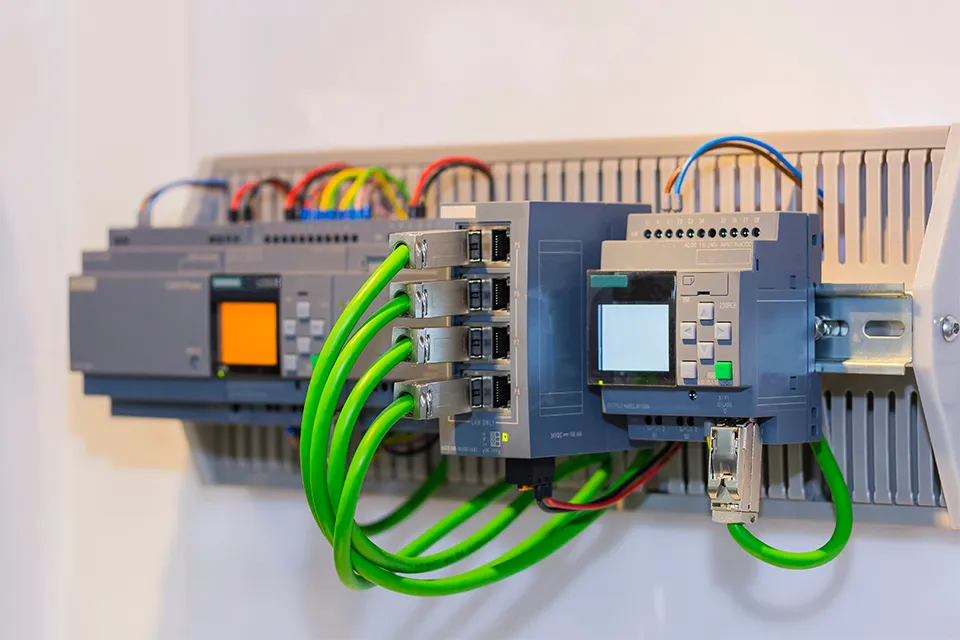
This shift is relevant to both new installations and retrofits. Replacing an existing motor with a more efficient model or adding a variable frequency drive also changes the electrical and mechanical behaviour of the installation. Motor cable length, filtering, control cabinet cooling, braking energy, bearing currents and communication with the PLC then become just as important as power and speed.
In practice, the load profile is the starting point for this system-level choice. A pump or fan with variable torque calls for a different approach than a conveyor belt, mixer or extruder operating predominantly at constant torque. A pick-and-place axis or servo-controlled packaging module, meanwhile, places demands on dynamics, positioning accuracy and feedback. Only once the profile is clear can you size the motor, drive, gearbox, control system and protection effectively.
The load profile determines the right choice
Anyone looking to optimise energy use and availability starts with the application. For pumps and fans, the benefits of speed control are often substantial because power demand falls sharply as speed is reduced. An installation previously controlled using valves, bypasses or throttling valves can operate much more efficiently with a variable frequency drive. There are still significant savings to be made here in the process industries, HVAC, water treatment and food production.
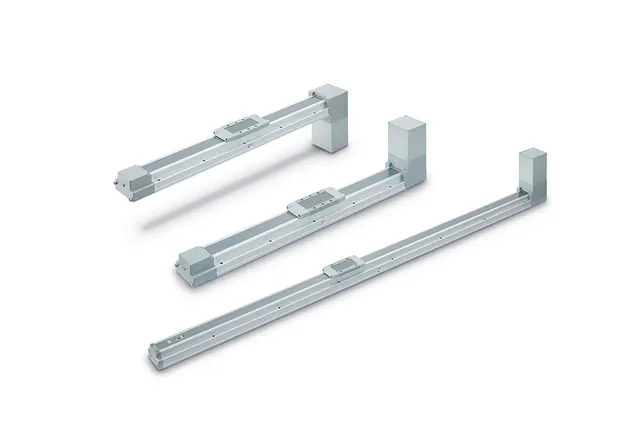
For constant-torque applications, such as conveyor belts, mixers or extruders, the priorities are different. Starting torque, thermal load, mechanical robustness and process stability matter more. For dynamic axes in packaging machines or assembly lines, acceleration, positioning accuracy, feedback and motion control play a greater role. There is no one-size-fits-all drive solution.
Oversizing also deserves more attention. An oversized motor may seem like the safe choice, but it often runs outside its optimum operating range. An undersized motor increases thermal load and shortens service life. Correct sizing therefore requires an understanding of torque, speed, duty cycle, ambient temperature, start-stop frequency and mechanical losses.
Efficiency goes beyond the motor
Interest in high-efficiency motors continues to grow. IE3 has become the minimum for many applications, while IE4 and IE5 solutions are increasingly being considered for installations with long operating hours. However, motor efficiency alone does not tell the whole story. Overall efficiency is determined by the entire drive system: motor, drive, cables, filters, gearbox and mechanical load. This is why the industry increasingly talks about system efficiency.
A high-efficiency motor paired with a poorly selected gearbox or a pump that is permanently throttled will not deliver the best results. Conversely, a well-chosen motor-drive combination operating at the right duty points can achieve more than simply moving up to a higher IE class. This matters to OEMs. Customers are asking not only about the purchase price of the machine, but increasingly about energy consumption, Total Cost of Ownership and CO2 impact. A drive that operates more efficiently under the machine’s actual operating conditions is a tangible selling point.
The variable frequency drive as an intelligent hub
The variable frequency drive has evolved from a speed controller into an intelligent hub in the machine architecture. It continuously measures current, voltage, load, temperature, torque indicators and fault conditions. This means it can do much more than run the motor. This data is becoming increasingly valuable in maintenance applications. Abnormal current patterns can indicate mechanical resistance, wear, contamination or misalignment. An increase in load despite unchanged production can point to bearing wear, contamination in a pump or increasing friction in a conveyor line. Some modern drives can also monitor motor insulation, thermal load or vibration-related signals, potentially in combination with external sensors. This makes condition monitoring more accessible. Not every drive needs to be fitted with a complete sensor network straight away. In many cases, the drive itself can already provide an initial diagnosis. This is particularly relevant for maintenance teams with limited technical resources: the focus shifts from periodic checks to targeted intervention based on anomalies.
Drive technology also affects the power supply
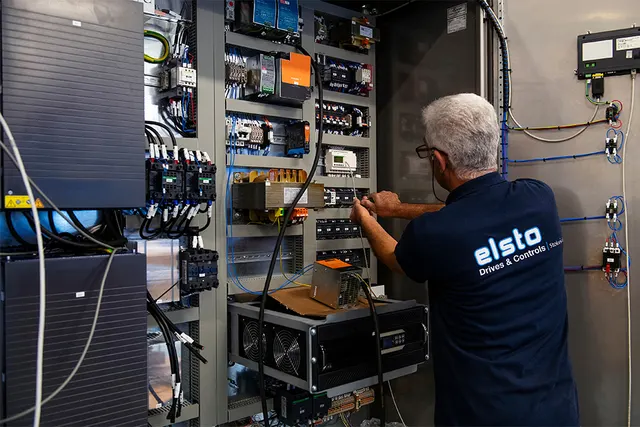
When using variable frequency drives, it is important to consider the electrical installation as well as the motor. Drives can cause harmonics, generate leakage currents and increase electromagnetic interference if cabling, earthing and filtering are not designed correctly. In installations with many drives in particular, this can lead to faults, heat build-up, error messages or problems with sensitive measurement and control equipment. That is why power quality, EMC, cable shielding, motor cable length, filters and earthing all need to be considered in the design. This is sometimes underestimated in retrofit projects. Replacing an old direct-on-line motor with a variable frequency drive may seem straightforward, but the impact on the control cabinet, cooling, protection and cabling needs to be assessed in advance.
Braking energy also deserves attention. In hoisting, centrifuge, test bench or dynamic motion applications, significant amounts of energy can be released during deceleration or lowering. Traditionally, this energy is converted into heat in braking resistors. In some applications, feeding energy back into the grid or sharing it via a DC bus may be more attractive. This not only reduces energy losses, but also limits heat build-up in the cabinet.
Connectivity and safety are advancing too
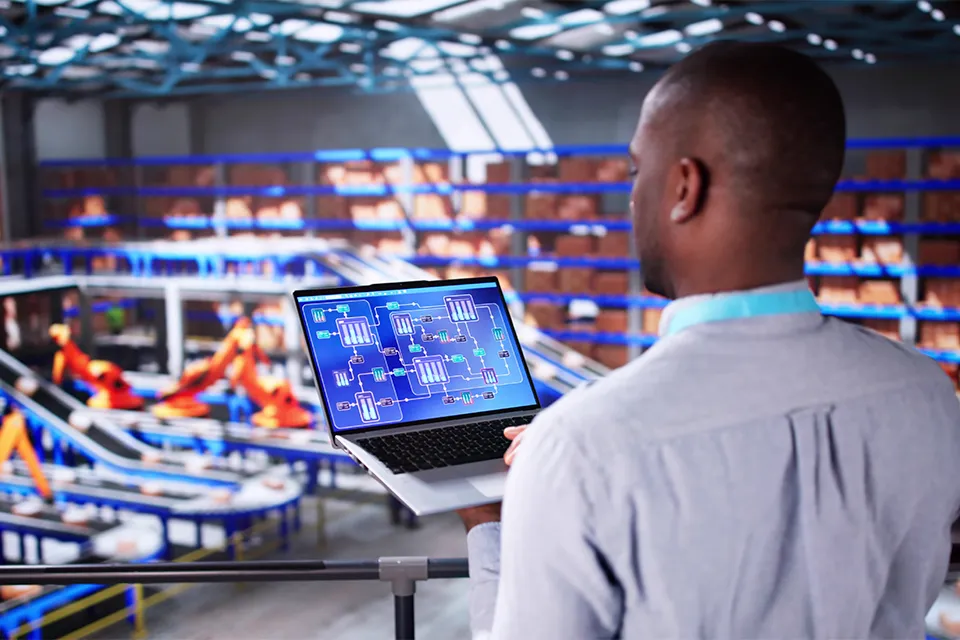
Drive systems are becoming increasingly integrated into industrial networks. PROFINET, EtherNet/IP, EtherCAT, Modbus TCP and other communication protocols allow parameters to be managed centrally, fault codes to be read and performance to be compared. For machine builders, this enables faster commissioning, remote support and standardisation across multiple machine types. The role of functional safety is also growing. Functions such as Safe Torque Off, Safe Stop, Safe Limited Speed and safe motion monitoring are increasingly being integrated into drives and motion controllers. This enables more compact safety architectures, but also calls for correct engineering, validation and documentation. Safety is not an add-on to the drive, but part of the machine design.
From component to system strategy
Drive technology is evolving from pure motion technology into a combination of energy management, process control, data generation, maintenance and safety. This makes the field more complex, but also more valuable. For manufacturers, the challenge is to combine efficiency and availability intelligently. For machine builders, there is an opportunity to stand out with drive systems that are not only powerful, but also measurable, easy to maintain and energy-efficient.
Anyone who still selects drives solely on the basis of power and purchase price is missing an important part of the picture. The drive of tomorrow is an integrated system: tailored to the load profile, connected to the automation layer and designed for the machine’s entire service life.
Question about this story? Ask your question
Keep following this
Get an email when a new story is published. No account needed.
- ThemeTailored motion and drive systems
- SubjectMotion, gears & drives