Machines that are not built to be cybersecure will be left behind
Text Valérie CouplezImage Siemens
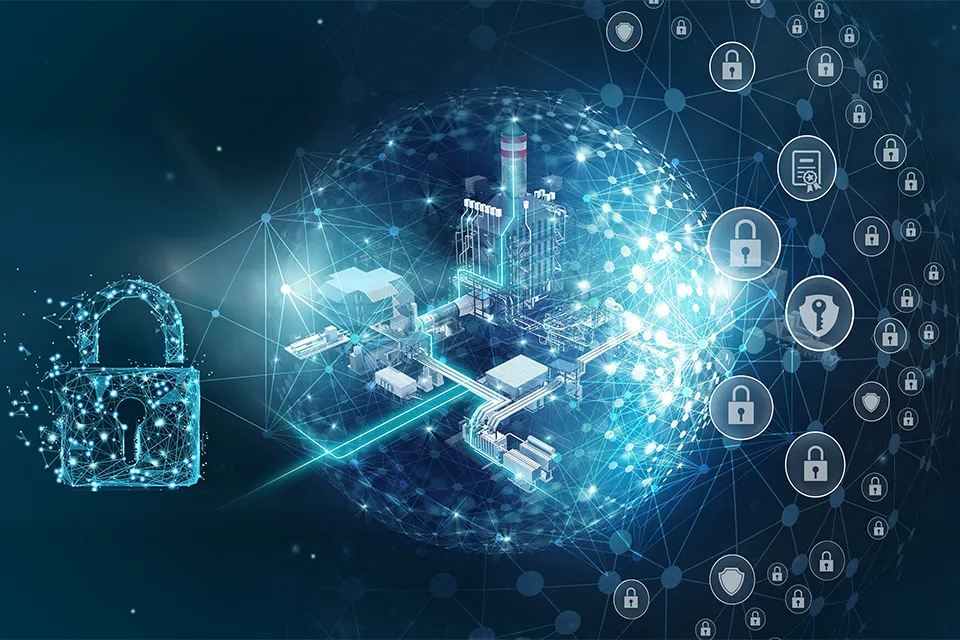
With NIS2 and the Cyber Resilience Act, Europe is stepping up the pressure on companies to do more about cybersecurity. “But don’t see this as a European story about extra red tape getting in the way of your competitiveness. No, this is already enshrined in law elsewhere in the world too. Cybersecurity is no longer a nice-to-have, but an essential condition for remaining competitive,” says Lars-Peter Hansen, head of business development cybersecurity at Siemens Digital Industries, setting the tone straight away.

Hansen’s cybersecurity alarm bells started ringing more than fifteen years ago, when he read a manual. “At the time, I was working at Siemens in network technology. It was around the time Stuxnet was discovered, a computer virus that exploited a vulnerability in Siemens equipment and was designed to sabotage Iran’s nuclear programme. But I already realised that the longer-term consequences would be far-reaching. We would need standards to strengthen our systems. And the IoT era had yet to really take off.”
Geopolitics
After fifteen years of preaching in the wilderness, Hansen is far from alone in making his case. With NIS2 (from October 2024) and the Cyber Resilience Act (from January 2027), Europe is forcing companies to make cybersecurity a cornerstone of their strategy. “But this is happening all over the world. Cybersecurity has geopolitical significance. There are plenty of examples. It is why Americans and Europeans would rather not see Huawei technology used, and why China tends to avoid using American and Israeli cybersecurity software.”
Manufacturers increasingly targeted
From the highest political circles right down to the factory floor, the threat is everywhere. Most hackers simply want to profit from vulnerabilities. Manufacturing companies make ‘willing’ victims. Hansen says: “Production is sacred, and productivity is the top priority. Hackers reason that companies in this sector will pay ransom more quickly than those in other sectors, to ensure business continuity and minimise productivity losses. Today, 26% of attacks are already aimed at manufacturers. The impact? On average, it takes 24 days to get back up and running. It has also become ‘easier’ for cybercriminals. As IT and OT become increasingly interconnected, production processes are more exposed than ever to cyberattacks. Doing nothing is no longer an option. We need to get to work on cybersecurity now.” Siemens has already done this at its own factories, fending off more than 100,000 attacks every year. “That experience also helps our customers move forward.”
OT expertise needed for effective protection
Securing a production environment is far from straightforward. “In an IT environment, you’ll find plenty of tried-and-tested tools. Cybersecurity is already more established there. But you can’t simply copy those tools into a production environment, where a single factory can have up to 50,000 I/Os. The rules are different. As I said, a production line must above all keep running. And once it is running, you want to change as little as possible. You’re dealing with legacy systems from different manufacturers. They were never designed to extract data and connect to higher-level systems. Nor can you simply roll out patches or security updates; you need to understand the potential impact on, for example, the PLC programme. In other words, developing cybersecure solutions requires IT experience combined with knowledge of OT processes. You won’t find that in one person. Cybersecurity is therefore a team effort, involving partners,” Hansen says.
Take action quickly
But above all, it is a matter of urgency. “European cybersecurity legislation is becoming increasingly stringent and will soon cover the entire supply chain, including owners of factories and infrastructure, machinebuilders and product manufacturers. Non-compliance can result in administrative fines of up to 15 million euros. However, many factory owners and machine builders have to start from scratch when taking measures to comply with the legislation, while the deadline is fast approaching: less than a year remains…” Geert De Coninck, business unit manager Factory Automation at Siemens Digital Industries, also sees a lot of work ahead to raise awareness. “We organised an event about NIS2 and asked participants to raise their hands if they thought their company fell within its scope. 10% put their hands up, when it should actually have been 70% of the room. They know the legislation exists, but are not aware of all the implications for their business.”
Understand the risks
So what do companies actually need to do? “Installing a firewall is not enough. It starts with analysing your processes to identify what is critical and what the risks are. If your entire factory comes to a standstill because dust extraction has been blocked, you need to secure that system more thoroughly. The same applies to machines. Know where your vulnerabilities lie and do something about them,” Hansen warns. Many machine builders supplying products to the European market are also required under the Cyber Resilience Act to provide security updates and patches for products with digital elements for at least five years. “So you need to think carefully about how to deliver that. But you can also turn this necessity into an opportunity. Why not use that connectivity to develop a new business model, where customers pay an annual fee not only for security updates, but also for access to new features?” De Coninck suggests.

A clear strategy
A clear action plan is also needed. “Everyone needs to know their role in this. From the operator at the machine, who must not simply plug in a USB stick, and the person responsible for installing patches, to the management team, which must allocate enough time and resources to make production and machinery cybersecure. In this respect, NIS2 legislation has turned the roles around by making management personally responsible,” De Coninck continues. The action plan must also set out what to do in the event of a cyberattack. “It’s not a question of whether it will happen, but when. Hackers are becoming increasingly sophisticated too. We’re now seeing how AI is being used for this. So if your machine or production stops, you need a backup plan. Literally and figuratively. What happened, and what should you do?”
Standards, segment, isolate, prioritise
Hansen also offers a few tips for anyone still wondering what it is all about. “Follow the cybersecurity standards that already exist. They provide excellent guidance. Also invest in segmentation. You won’t be able to eliminate the risks for some machines or systems. In that case, try to isolate them as effectively as possible on your network. Invest in tools to monitor your network and actively identify vulnerabilities. And don’t forget to develop a clear patching strategy. There are websites that can help you set the right priorities. They give each patch a score indicating how urgent the update is, so critical patches can be applied as quickly as possible, while others can be dealt with during, for example, a maintenance shutdown.”
Ecosystem
But perhaps the most important thing of all is to work with good partners. You need specialists to advise you on how to establish effective security and what you need for a resilient recovery plan. “At Siemens, we have the products and experience, much of it built up in our own production environments. But we don’t claim to be able to do everything either. We have chosen an open ecosystem of partners, including well-known names such as Palo Alto, Microsoft and Nvidia, so that we can always support our customers in the best possible way, with the best possible technology, enabling them to accelerate the required transformation,” Hansen concludes.
Question about this story? Ask your question
Keep following this
Get an email when a new story is published. No account needed.
- ThemeIndustrial cyber resilience
- SubjectProcess & instrumentation