The impact of grid congestion on machine building
Text Valérie CouplezImage Lenze
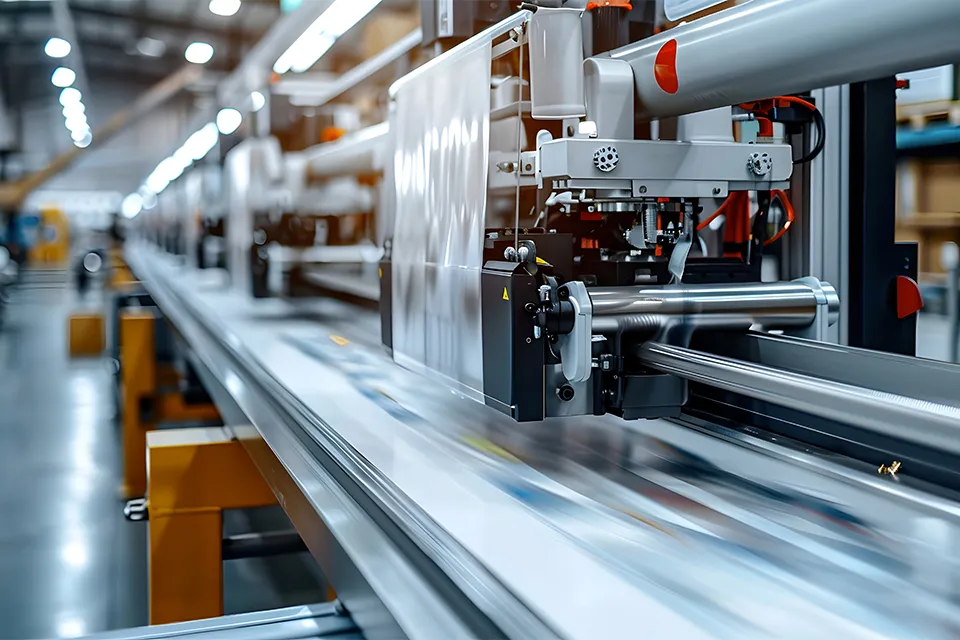
Energy management is essential to staying relevant
Until recently, electricity availability was taken for granted. That is no longer the case. Heavy industrial connection requests, battery projects and data centres have put such pressure on the electricity grid that they now pose a structural constraint on industrial growth. This means the best machine is no longer the most powerful one, but the one that can deliver reliable input within increasingly tight energy limits. Lenze helps build that machine.
The Benelux is a useful barometer of a wider European shift: access to energy is becoming less assured, more actively managed and increasingly influential in industrial investment decisions. The Netherlands is furthest along, with waiting lists and prioritisation rules already affecting businesses. Belgium is moving in the same direction. In Flanders in particular, grid operators are introducing congestion management and flexible access models for businesses. This transition is changing how industry defines performance. Energy supply is no longer a fixed assumption. We must therefore move beyond the idea that a machine’s competitiveness is determined solely by greater output, speed and power. Industrial resilience will increasingly depend on the extent to which businesses design, operate and invest within limited or conditional grid capacity.
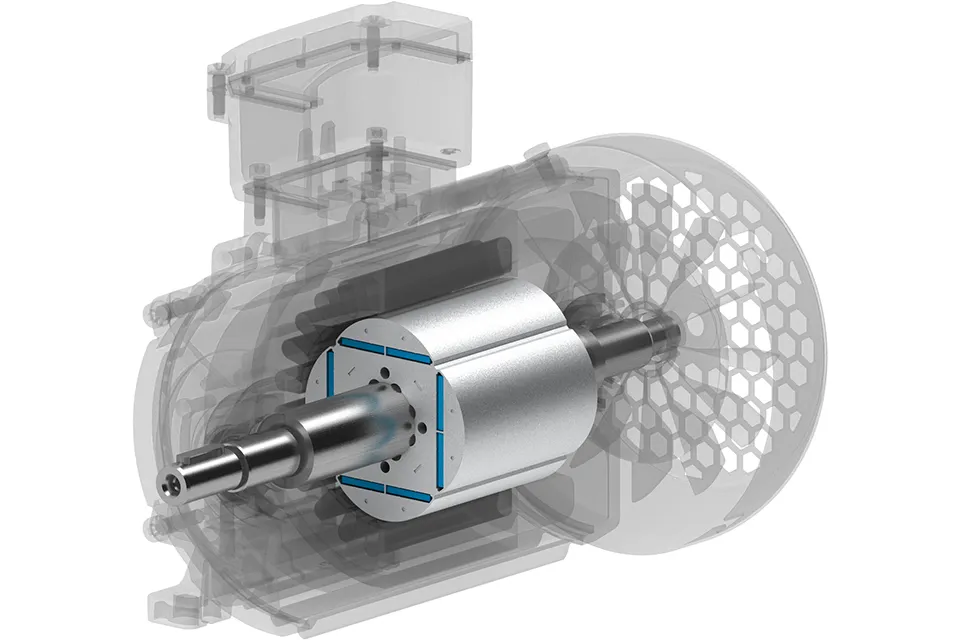
Modelling and sizing the drive train
This also has implications for how we think about machines and production systems. Intelligent control, energy management, buffering, regeneration and peak-load reduction may once have been luxury options, but they are now essential to staying relevant and continuing to produce in a Benelux energy landscape with limited capacity. It starts in the design phase: take these energy considerations into account from the outset. Tools such as Lenze’s Easy System Designer can help engineers model and size the drive train, giving them insight into system behaviour before implementation. Choose energy-efficient components such as Lenze’s new IE5/IE6 motors, but above all components that are perfectly matched to one another. When energy becomes a constraint, every component contributes to the behaviour of the system as a whole. Performance is no longer defined solely by speed or output, but by how effectively energy is used, controlled and balanced over time.
Making energy use visible
A second crucial element is, of course, software. It plays a central role in making energy consumption visible, controllable and economically justifiable. Software helps businesses align production with available capacity, reduce peak loads and prepare for flexible grid access models. So do not view it as a commercial add-on, but as a practical tool for making more robust design choices. OEMs increasingly expect suppliers to provide components that deliver real-time energy data, support dynamic load management and minimise peak demand. Without that transparency and controllability, suppliers risk becoming a limiting factor in system design.
Suppliers that contribute to energy intelligence are moving up the value chain: they enable machines that are easier to connect, operate more predictably and are more resilient under constrained conditions. This ecosystem perspective is central to Lenze. By combining drive technology, automation and software, Lenze works with OEMs and suppliers on machines that not only deliver high performance, but are also designed to be energy intelligent and future-proof.

From constraint to value creation
The strategic question is no longer whether congestion matters, but whether current investment decisions take into account the conditions under which industry will have to operate tomorrow. Businesses that act early can move from reactive adjustment to proactive value creation: by designing machines that are easier to connect, making factories more resilient and enabling production systems to respond dynamically to available capacity. Lenze supports this transition by enabling energy transparency, controllability and optimisation at system level. Given the strategic impact of grid congestion in the Netherlands and mounting pressure in Belgium, awareness and dialogue remain essential throughout the Benelux and further across Europe. Lenze contributes to that dialogue by sharing expertise at industry events, online sessions and in one-to-one conversations. In this way, insights into energy transparency, controllability and optimisation are translated into practical applications. The aim is not to magnify the problem, but to accelerate understanding of practical, future-proof approaches and create value through them.
Een zakelijke vraag aan Lenze? Get in touch
Companies in this story

Keep following this
Get an email when a new story is published. No account needed.
- ThemeFuture-proof production amid scarcity
- SubjectMotion, gears & drives
- CompanyLenze