Magnetic robots for heavy-duty blasting
Text Alexander PilImage VertiDrive en Alexander Pil
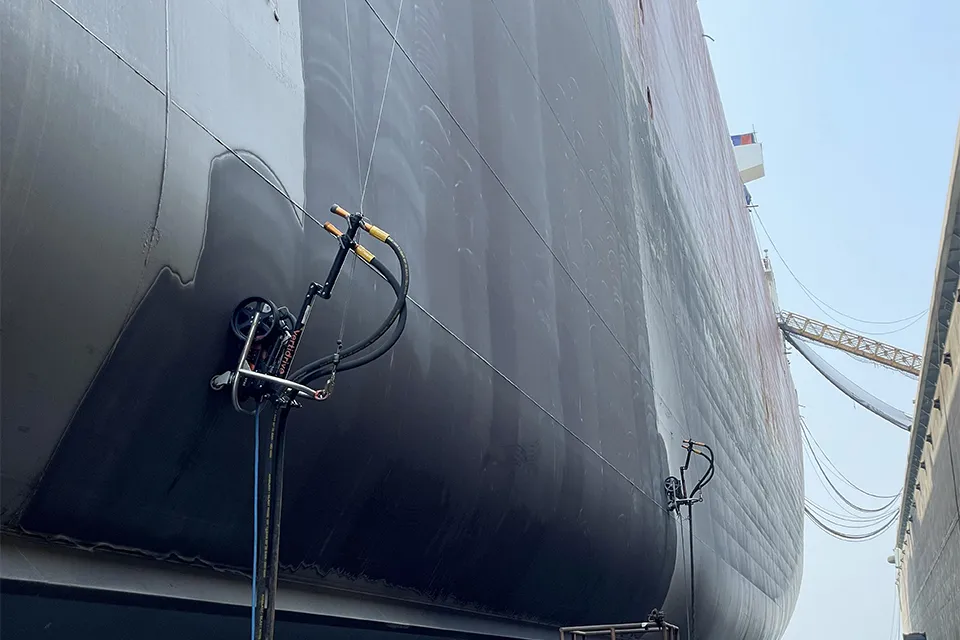
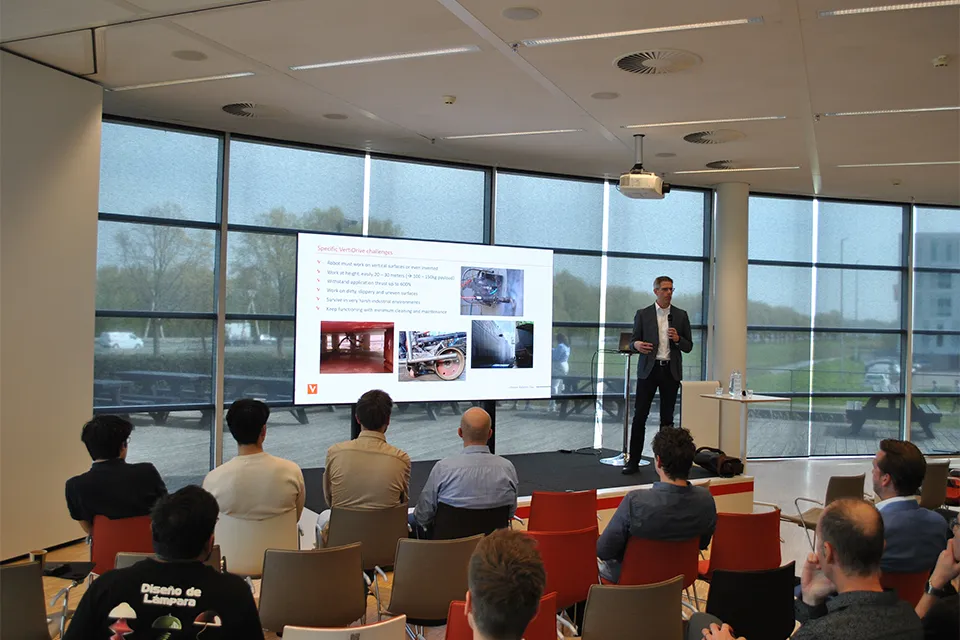
At Maxon Robotics Day, R&D manager Maarten van Pul explained how VertiDrive uses robots to make the cleaning and stripping of steel surfaces faster, more consistent and safer.
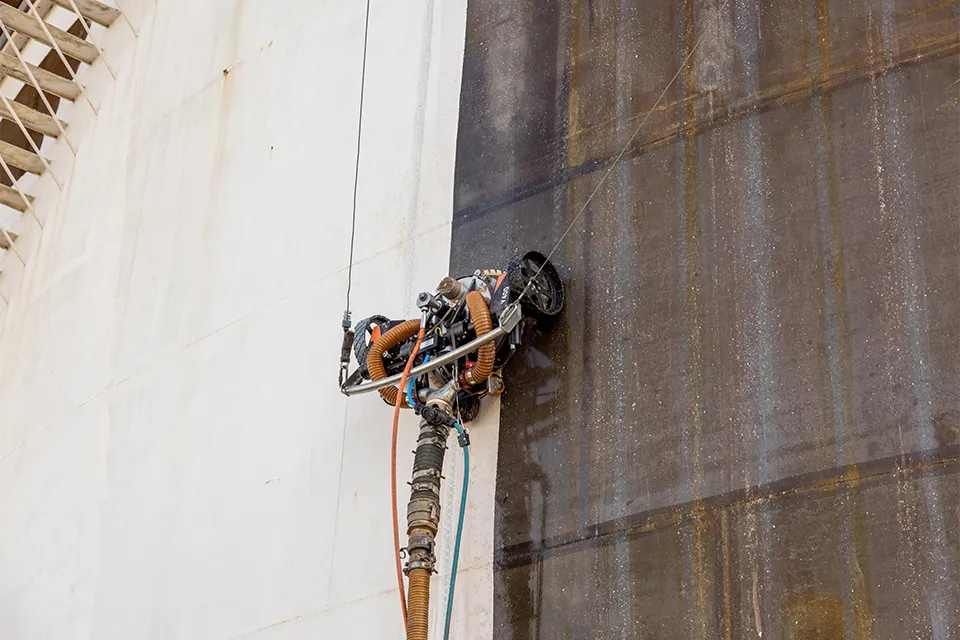
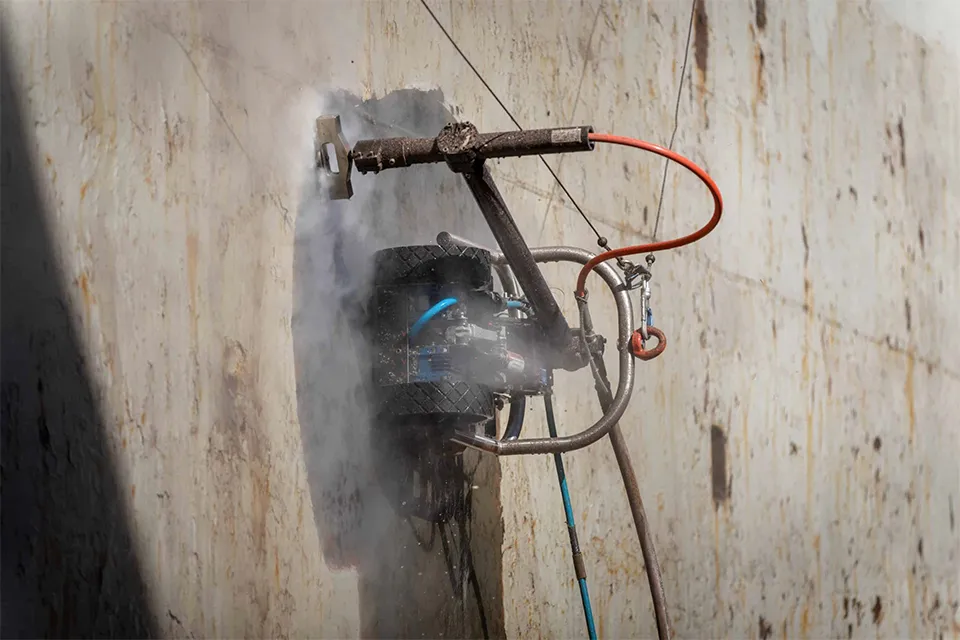
When cleaning a storage tank or ship’s hull, an operator would normally work with a hand-held lance, using water pressure of up to 3,000 bar. And when removing old paint layers, they spend all day pushing against a nozzle like that. “It’s hard and dangerous work, and it’s becoming increasingly difficult to find people to do it,” says Van Pul. Rotterdam-based VertiDrive builds and supplies robots that take over this work and allow the operator to work remotely. “Our robots attach to steel with permanent magnets, enabling them to work vertically and even upside down,” Van Pul explains. The cleaning technology itself does not come from VertiDrive, he emphasises. “It already exists. Think grit blasting or ultra-high pressure water jetting. We mount those systems on our robot platform. That’s why we’re such a good fit with BlastOne, which acquired us in 2023. They supply the rest of the system.”
Consistency does not sell itself
The robot has several major advantages. Alongside safety, there is consistency. “On a tank covering ten thousand square metres, you want every part to be done properly,” says Van Pul. “In practice, however, inspections often lead to rework because the results are not uniform. With our robot, you get the same quality everywhere.” Productivity also sees a clear improvement. “A robot typically does the work of four to five manual operators. You use the same nozzles and the same technique, but you can deploy more of them at once, and there’s no fatigue.”
That does not mean the market will automatically make the switch, though. “The sector is fairly conservative,” says Van Pul. “We get a lot of reactions at trade fairs from operators who say, ‘This is going to change my work.’ But then they go back to working manually.” Reliability is a key factor, he says. “When you introduce new technology, it simply has to work every time. Even minor faults can greatly delay acceptance.”
Built for real-world conditions
VertiDrive has had to learn that lesson too. “Our first generation of robots failed regularly,” says Van Pul. “It was never a question of whether they would break down, but when.” Conditions in the field proved far harsher than in the test environment. “There’s water, grit, corrosion, everything gets into everything. What works in the lab breaks down in practice. So we moved from prototypes and custom builds to robust, series-produced systems. We now have a few hundred robots in the field and thousands of operating hours. You learn from that.” The current generation is designed above all to survive. “As little maintenance as possible, and as few things that can fail as possible.”
The next step is to provide more support for the operator. “We’re not moving towards fully autonomous robots,” says Van Pul. “The operator remains important, including from a safety perspective.” The focus is on features that make the work easier, such as automatically aligning the passes. “That keeps the robot working neatly in parallel and maintains high productivity.” More importantly, it keeps the direction of travel straight. “Hoses and other forces pulling on the robot can make it veer off course. The operator currently corrects this continuously using their controller, but our new features will do it automatically. Our aim is for someone to achieve a good result after a short training session. That’s what it ultimately comes down to: the same quality, every metre of the way.”
Question about this story? Ask your question
Keep following this
Get an email when a new story is published. No account needed.
- ThemeFlexible production with robots
- SubjectMotion, gears & drives