Electrification makes grid capacity a design variable
Text Christobal van LeeuwenImage Unsplash/iStock
Drives, process heat, power quality and control must be designed as one system
Electrification only becomes technically interesting when the full power profile is known, not just annual consumption. Sizing must take account of factors including maximum demand, the load duration curve, simultaneity, inrush currents and the speed of power changes.
An electric heating process may be energy-efficient, but its high peak demand could still require a larger transformer, main switchboard or grid connection.
A grid connection is not the same as transmission capacity
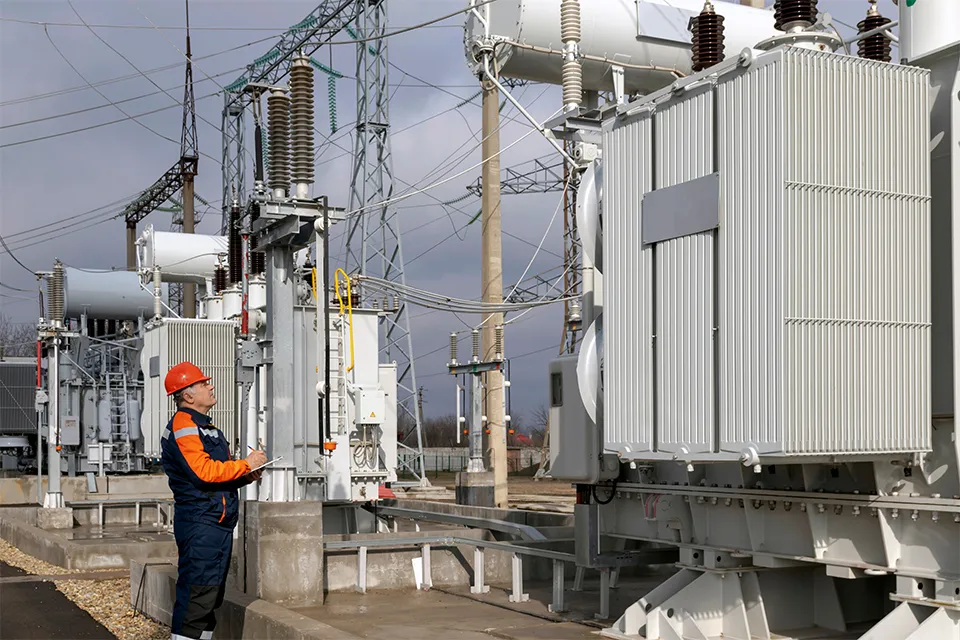
In the Netherlands, a distinction must be made between the physical connection and the right to transport power over the public grid. A factory may have a technically suitable connection, while an increase in contracted transmission capacity may not be possible immediately due to grid congestion. New or upgraded connections may therefore end up on a waiting list. Grid congestion is also dependent on time and location: the limiting factor may be a local substation, cable route or higher-voltage grid level.
An early assessment with the grid operator should therefore be part of the basic design. The national capacity map provides an initial indication, but does not replace a connection and transmission study. At the same time, the amount of flexible capacity available internally must be determined. Alternative transport rights and congestion management can provide scope for processes that can run outside critical hours or temporarily reduce their load. Their usefulness, however, depends on available spare capacity, the contract type and process flexibility.
From installed capacity to actual grid behaviour
Adding up nameplate ratings is not enough. Frequency converters, servo drives, rectifiers, chargers and electric heaters create non-linear loads. These can cause harmonic current and voltage distortion, affect the power factor and increase losses in cables and transformers. It is therefore important to consider not only kW and kVA, but also power factor, THDi, THDu, short-circuit capacity and the interaction between multiple power electronic converters.
Depending on the installation, line reactors, passive or active filters, or an ‘active front end’ may be required. For regenerative axes, braking energy can be dissipated through a resistor, reused on a common DC bus or fed back into the AC grid. The right choice depends on the motion profile and the simultaneity of accelerating and braking drives.
Process heat calls for technology selection
Process heat is not a one-size-fits-all application either. Industrial heat pumps are particularly attractive when useful waste heat is available and the required temperature lift is limited. For steam or higher temperatures, electric boilers, resistance heating, induction or infrared heating are options. Their value lies not only in conversion efficiency, but also in fast controllability, lower distribution losses and targeted heat input. The electrical load must therefore be modelled alongside the thermal process. Buffer tanks, thermal mass and batch scheduling can smooth peaks without reducing production capacity.
Protection and availability
A greater share of electricity also changes the protection philosophy. Selectivity, short-circuit withstand capability and voltage drop must be recalculated, particularly when on-site generation, batteries or regenerative drives introduce multiple power flow directions. DC links also remain energised for a time after disconnection. Maintenance procedures must therefore account for discharge times, safe isolation and the locking out of software-controlled energy sources.
Energy management moves towards OT
Once grid capacity becomes a limiting design variable, energy management must communicate with the PLC, SCADA and MES. An energy management system can only control loads responsibly if it knows which loads are controllable, for how long, and what process limits apply. Power limits thus become part of recipes, start-up sequences and production planning. This requires reliable measurement data, time synchronisation and clear fallback strategies. If communications fail, the installation must remain safe to operate without exceeding an agreed power limit.
Electrification is therefore not a matter of replacing individual components. It is a redesign of the energy supply and automation system, bringing together the grid connection, process dynamics and power electronics from the first engineering phase.
Question about this story? Ask your question
Keep following this
Get an email when a new story is published. No account needed.
- ThemeFuture-proof production amid scarcity
- SubjectControl & networks