New Machinery Regulation 2027: what will change for machine builders?
The new European Machinery Regulation comes into force on 20 January 2027. This will change not only the legal framework for machinery safety, but also bring new requirements for machine builders in areas including industrial security, cybersecurity and the management of machines throughout their entire lifecycle. Are companies sufficiently prepared for these changes?
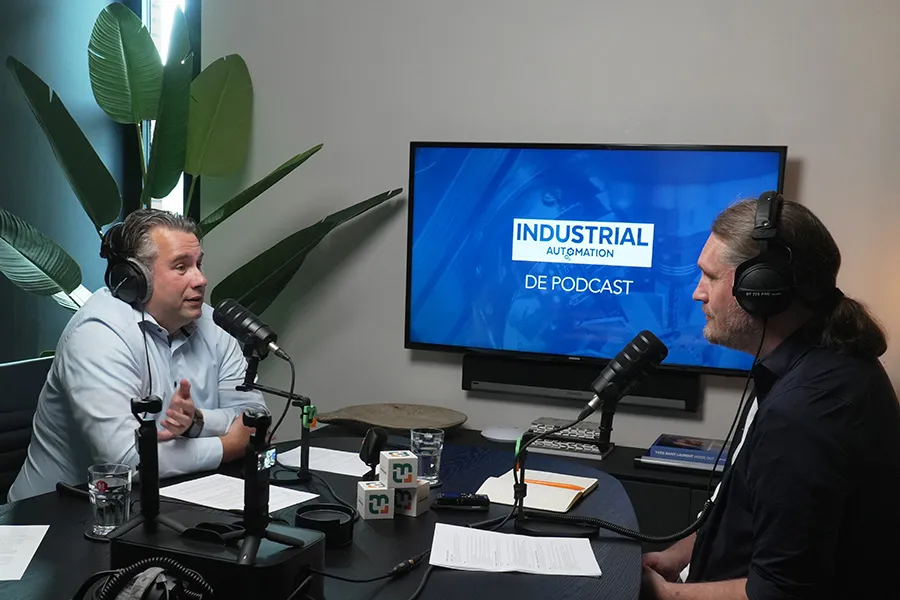
In this episode of the Industrial Automation Podcast, host Alexander Pil talks to Peter Eland of Pilz about the main differences between the current Machinery Directive and the new Machinery Regulation. They also discuss the NIS2 Directive, the Cyber Resilience Act and the growing role of artificial intelligence in machinery safety.
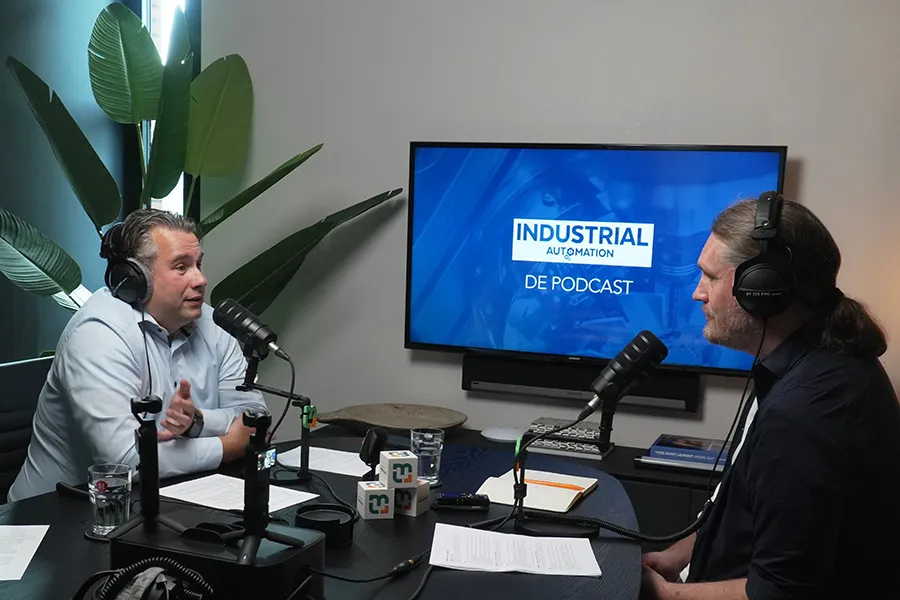
Peter explains what the new regulations mean in practice for machine builders and end users, why security by design is becoming increasingly important, and how companies should handle software updates, risk assessments and their responsibilities after a machine has been delivered. He also discusses how AI and Pilz’s MYZEL platform can help make machinery safety more accessible and efficient.
A discussion of the practical and technical implications of the new Machinery Regulation, the challenges facing industry and the opportunities offered by a considered approach to machinery safety.
Speaker: Peter Eland, Pilz Nederland | Host: Alexander Pil
A business enquiry for Pilz Nederland? Get in touch
Full transcript
All chapters (28)
- Introducing Pilz and machinery safety
- The new Machinery Regulation and the main differences
- Harmonised European legislation with no transition period
- Existing machines and substantial modifications
- Designing new machines to comply with the Machinery Regulation
- Responsibilities of machine builders and end users
- Cybersecurity as part of machinery safety
- Industrial security and human risks
- Security by design and the IEC 62443 standard
- Zones and conduits, and separate control systems
- Cooperation between IT and OT
- Growing awareness of cybersecurity
- How the Machinery Regulation relates to NIS2 and the CRA
- The impact of the Cyber Resilience Act on product development
- In-house components and the CRA
- Artificial intelligence in the Machinery Regulation
- The MYZEL platform for machine safety
- AI as support for risk assessments
- The name and background of MYZEL
- Practical changes for machine builders
- Digital documentation and new responsibilities
- Keeping track of software versions, firmware and logs
- Planning and prioritising security patches
- Will companies be ready for the January 2027 deadline?
- What if companies are not prepared?
- Machine safety as a competitive advantage
- Common sense and support with the Machinery Regulation
- Wrapping up the conversation
Introducing Pilz and machinery safety
Alexander Pil Hello and welcome to this Industrial Automation podcast. My name is Alexander Pil, and I’m here with Peter. Peter Eland from Pilz. Peter, perhaps we should start by introducing Pilz. What do you do?
Peter Eland Well, thank you. It’s good to be here. For customers, Pilz is a partner in machinery safety. That means the products they need to make machines safe, as well as advice, safety concepts and training. They can call us about pretty much anything to do with machinery safety.
Alexander Pil Can they call you?
Peter Eland Yes, and increasingly, these days, about industrial security too, but we’ll no doubt come back to that shortly.
The new Machinery Regulation and the main differences
Alexander Pil Absolutely. Today’s main topic is the Machinery Regulation, which is coming into force in January next year. All companies across Europe will have to comply with it, though perhaps not quite all companies. You might want to explain that as well. The Machinery Regulation replaces the Machinery Directive. Can you tell us what the biggest differences are? What will change?
Peter Eland And you’re right, it’s January 2027, so it’s not far off. It’s just around the corner. On the one hand, a lot will change, but that doesn’t mean a machine that is completely safe now will suddenly become unsafe. So that’s probably reassuring for a lot of people. But if you have a machine that is already questionable, then you still have a lot of work to do before 2027. The legal structure of a directive compared with a regulation is different, and that really matters. It’s a different concept, in effect.
Alexander Pil It is a different concept, absolutely.
Peter Eland Normally, a directive has to be implemented in each country. The European Union says: ‘This is a directive, and you have to comply with it.’ But that can lead to differences in interpretation, and differences in how it is implemented in national legislation. In the Netherlands, for example, the Machinery Directive was incorporated into the Commodities Act Decree on Machinery. That step is no longer necessary when you move to a regulation. An agreement is made at a certain point: this is the Machinery Regulation. From that date, in this case 20 January 2027, it becomes the law that applies throughout Europe. So it really is different.
Read the full transcriptCollapse transcript26 more chapters
Harmonised European legislation with no transition period
Alexander Pil It’s all been harmonised too. There won’t be any differences. Or there shouldn’t be any differences?
Peter Eland There shouldn’t be any differences. Of course, there can still be differences in translation, but the English version takes precedence.
Alexander Pil Right. Is that one of the reasons why they’ve made the Machinery Regulation a regulation?
Peter Eland I think the main reason is to ensure a level playing field, because there were differences between countries, including in how the directive was implemented. They wanted to prevent that. That’s also why there’s no transition period. The deadline is absolute. From 20 January 2027, you may only place a new machine on the market if it complies with the Machinery Regulation.
Existing machines and substantial modifications
Alexander Pil Right. What about machines that are already on the market? Will they have to comply retroactively?
Peter Eland No, fortunately not. They can stay as they are. That is, until you make modifications to the machine. If you do, part of the existing declaration of conformity, and therefore the CE marking on it, may become invalid.
Alexander Pil Okay, and when does it become a different machine? When do you actually have to comply with the new Regulation?
Peter Eland That’s an interesting question. The old Machinery Directive already referred to substantial modifications. If you made substantial modifications, that could mean you had to go back to the drawing board. And you, as the end customer, could suddenly be considered the manufacturer. There has always been a lot of debate about that.
Alexander Pil It’s a grey area too. When is a modification a substantial modification?
Peter Eland Exactly. We get a lot of questions about that. ‘Help me with this.’ The new Regulation makes this a little clearer. It also says that you can reissue a CE marking for only part of a machine. Say you have a 50-metre production line, and you automate a section that people currently operate. A robot is added. That doesn’t mean you have to CE-mark the entire 50-metre machine all over again. But you will probably have to repeat the process for the section you have modified. That is now more clearly defined than before.
Designing new machines to comply with the Machinery Regulation
Alexander Pil Or will become clearer?
Peter Eland Yes, well, that’s a good point, because it’s quite difficult for a lot of machine builders. If you’re designing a new machine now, do you take a chance and design it to comply with the Machinery Directive? Or do you say: ‘No, I’ll do my best to prepare now’?
Alexander Pil Surely it makes more sense to design it to comply with the Machinery Regulation from the outset.
Peter Eland Absolutely. That’s also because the Machinery Regulation is structured differently from the previous legislation. Normally, the Machinery Directive applied when you placed a machine on the market. You placed the machine on the market and had to affix a CE marking. This meant that, at that point, you complied with all the applicable directives, including the Machinery Directive. You then had to keep a technical file for ten years. Now the focus is much more on the machine’s entire lifecycle. New elements have also been introduced, including industrial security, which we briefly mentioned in the introduction. That means you can no longer just say: ‘Here’s the machine, here’s the documentation, good luck.’ You remain responsible for the next ten years.
Responsibilities of machine builders and end users
Alexander Pil So the machine builder or supplier remains responsible, not just the users. What responsibilities do the users have?
Peter Eland When the machine is handed over, some responsibility also passes to the end user. But under a different legal framework, because that has more to do with the Work Equipment Directive. They have to ensure their employees can work safely with the machines. That’s different from the machine manufacturer’s responsibilities. I think we briefly touched on this beforehand. We’ve always focused heavily on protecting people from dangerous machines. That’s still the case. But with what’s happening now with the Machinery Regulation, you can see that we’re also going to protect machines from dangerous people.
Alexander Pil From dangerous people. Yes.
Peter Eland And that’s a fundamental difference.
Cybersecurity as part of machinery safety
Alexander Pil But what do you mean by that? How should we protect the machine? Why do we need to protect it?
Peter Eland One of the most obvious reasons is cybersecurity.
Alexander Pil [Unclear passage.]
Peter Eland Historically, Stuxnet has played a very important role in this. And of course there’s also [unclear passage]. That’s the strange thing. Hopefully, you don’t come across that in this world any more. But it is still possible for a hacker to break into a machine and disable a safety function. That means we’re convinced that without good security, your safety is effectively worthless.
Alexander Pil Has that actually happened? I can’t remember hearing stories about hackers interfering at an industrial scale, at this level, or anything like that. How should I put it? Causing harm?
Peter Eland Well, Stuxnet is one of the…
Alexander Pil Yes, that was a long time ago.
Peter Eland Yes, that’s [unclear]. Very little is published about it, because people naturally prefer to keep it under the radar. But if you look at the threats and attacks, you can see that they increase significantly every year. And we’re not really talking about a company’s website. We’re talking about how connected those machines are to the outside world.
Alexander Pil And they’re increasingly connected, of course. All those machines need to be updated, maintained and monitored. So they’re all networked, or many more of them are networked.
Industrial security and human risks
Peter Eland Absolutely. And in many cases, that’s exactly what you want. You just need to think it through. And that is one of the things that is changing now. You need to take account of what could happen and how systems might be manipulated. We call it industrial security, to make a clear distinction from cybersecurity. Manipulation could come from a hacker. But it could just as easily come from an employee who has just been dismissed but still has the right access to a machine. Or someone who hasn’t had the right training or doesn’t have the right permissions, and does something without realising it. Those are the kinds of things that are described more clearly in the Machinery Regulation. You need to take account of them. And there are some very good solutions available. So industrial security is also about awareness. A simple example: if there’s a USB port for updating the machine, the operator can also use it to charge their phone. You might think you’ve secured everything properly, but then you’ve created a link to the outside world.
Alexander Pil So designers also need to look at their machines somewhat differently. They need to try to anticipate and address these kinds of issues.
Security by design and the IEC 62443 standard
Peter Eland Yes, one of the things that will become essential is security by design.
Alexander Pil Yes, exactly.
Peter Eland So you shouldn’t just treat the symptoms by adding a little VPN or firewall after the fact.
Alexander Pil Put a fence around it and call it done.
Peter Eland No, no. That wasn’t the case with machine safety, but it certainly isn’t the case with security. You need to account for it from the outset. Fortunately, there are standards that can help. One of them is IEC 62443.
Alexander Pil Okay, what exactly is that?
Peter Eland It’s a standard that focuses mainly on how an organisation can make sure it has everything set up properly. For example, it covers who is responsible. That’s a tricky issue. When I think back to the start of my engineering career, the distinction between IT and OT was already becoming difficult to pin down. We were moving from networks such as Modbus and Profibus to Modbus TCP and Profinet, so suddenly we were dealing with Ethernet-based networks. We were quite apprehensive about that, because we all wanted to have IP addresses on the network and so on. And that divide is becoming even more pronounced now. The OT side wants to have a say in all sorts of security matters, while IT says, ‘Hang on, isn’t that our domain?’ Or the other way round, with them saying, ‘Hang on, we don’t deal with security, that’s your domain.’ So one of the things you really need to establish clearly in advance is who is responsible. Who is responsible for industrial security? And who decides who has which access rights, and so on? That’s essentially what you need to address with security by design.
Zones and conduits, and separate control systems
Peter Eland IEC 62443 sets out various methods. One of them is zones and conduits, which means clearly defining what has access to what, what is connected, and where the barriers are. One thing you see a lot these days is that, in recent years, people increasingly started putting safety and standard control functions into a single control system. It’s convenient, after all: you only need one PLC. But the opposite is also true: because it’s so convenient, once you’re inside, you have access to the whole system. And that’s what you want to prevent. So now you’re seeing the opposite trend, with people deliberately choosing a separate PLC for control and a separate control system for safety. That’s the zones and conduits principle, as well as defence in depth, where you have several systems in a row. But these are all things you need to map out properly in advance. How do I want to do this?
Cooperation between IT and OT
Alexander Pil IT and OT integration is difficult in any case. I get the impression that cybersecurity has been part of the conversation in IT for a long time. My laptop, for example, is protected. Machines are often a lot more complicated to secure, or so it seems to me. Are these two worlds getting closer, and are they working together to secure machines? Are they translating the lessons learned about cybersecurity in IT into the OT world?
Peter Eland They are getting closer, you’re right. But we still have a long way to go. This is an area where we’re still finding our feet. We recently had a customer who had already booked a training course with us. Then they called to say they had to cancel because their IT department said they weren’t allowed to organise it. It was an IT-related subject. So you get these internal political games. I should also say that it is a different world. That’s why we deliberately call it industrial security. We look at it from a different perspective. We start with the machine, so to speak. Everything around it remains firmly in the IT domain. But it’s essential that we keep talking to each other.
Alexander Pil Yes, nowadays it’s almost become one world, at least.
Peter Eland I completely agree. That’s how things are going.
Alexander Pil So that customer of yours is odd. I understand what you’re saying, on the one hand. It turns into political games: ‘No, that’s ours’ or ‘You need to deal with that’. Complicated.
Growing awareness of cybersecurity
Peter Eland One thing that’s really encouraging is that, looking back at Pilz’s history, I think we first started talking about cybersecurity in 2017 or 2018. At the time, people found it really interesting. ‘Come and talk to us, come and give a presentation.’ But then nothing happened. People would say, ‘Yes, we should do something about that at some point. That’s a good idea, actually.’ Now, several years later, more companies have been victims of ransomware attacks and the like. That has also raised awareness. And the Machinery Regulation is a big help in that regard. At the same time, there is more legislation to help people become aware of the need for digital resilience.
How the Machinery Regulation relates to NIS2 and the CRA
Alexander Pil Yes, exactly. That was actually one of my next questions. There’s NIS2, which is in progress, and the CRA, the Cyber Resilience Act. These are all regulations that companies have to comply with. How do they relate to the Machinery Regulation? How can they be linked?
Peter Eland Yes, they often run somewhat in parallel. The Machinery Regulation, of course, is limited to machinery. It mainly [unclear] the machine builder, before any substantial modifications are made. Then there’s NIS2. The first version of NIS was really intended for essential entities, as I think we called them at the time. That meant water companies, utilities and so on. NIS2 has a much broader scope, bringing in the entire supply chain. So if you supply anything at all, however small, within that supply chain, you’re covered too. The Dutch government has checklists online that you can fill in to check whether you’re covered. Yes, but that’s mainly aimed at end users. So even if you…
Alexander Pil And I think that’s mainly about the process, about your machine design.
Peter Eland Yes, that’s right. It’s more about how you’ve considered the risks. All three of the regulations you’ve just mentioned relate to digital resilience, but each from a slightly different angle. NIS2 is mainly about the end user. It places responsibility, or at least raises questions about responsibility, across the entire supply chain. And then there’s the CRA, the Cyber Resilience Act, as you mentioned.
The impact of the Cyber Resilience Act on product development
Peter Eland It’s a major undertaking for my German colleagues, where product development takes place. Every one of our products will have to be analysed to determine whether it complies. That also means that you need to be able to patch any security issues that arise over the next ten years. So you’ll have to adapt all your products. Their firmware needs to be updatable remotely or by the customer themselves. As a result, you’ll stop using part of your portfolio earlier than planned, because it makes more sense to develop a successor than to bring the old product into compliance. We’re seeing that at our company, but also at many other suppliers: product portfolios are being streamlined at the moment. So for manufacturers, this represents a fairly substantial investment.
Alexander Pil So that applies to you, then?
Peter Eland Yes. As Pilz, we’re involved on two fronts. On the one hand, we manufacture components. On the other, we’re a partner to our customers, helping them use, build and maintain machines safely and correctly. But there are certainly [unclear] on the product manufacturing side. Machine builders also need to consider whether all the products they plan to use will comply by the end of 2027, when the CRA comes into force. NIS2 is already in force, by the way. I think it was published about five years ago. But it also became law in the Netherlands in August.
Alexander Pil About time, I’d say.
Peter Eland Yes, I think they’ve called it the Cyberveiligheidswet, or Cybersecuritywet here. This is where you see the difference between the Machinery Directive and the Machinery Regulation. They don’t come into force at the same time. That’s why, in the Netherlands, where there’s been some back and forth, it became law later. But as a machine builder, you also need to make sure that all the components you use will comply with the CRA.
In-house components and the CRA
Peter Eland That also means that if you’ve put something you’ve made yourself into your machine, your own circuit board, display or communications module, it has to comply. So the question is: does it still make sense to keep maintaining it yourself, or would it be better to use a commercial off-the-shelf product? It might be a little more expensive, but it would save you a huge amount of development work.
Artificial intelligence in the Machinery Regulation
Alexander Pil Exactly. Artificial intelligence is obviously one of the major topics in the world of technology, perhaps in the whole world. I can imagine that the Machinery Regulation now has something to say about it.
Peter Eland Yes, the thing is, legislation always lags behind. So this is the first time the Machinery Regulation has said anything about…
Alexander Pil It wasn’t mentioned in the Machinery Directive at all, was it?
Peter Eland No, it wasn’t relevant at the time.
Alexander Pil No.
Peter Eland It wasn’t around then, at least not in a way that…
Alexander Pil You might almost say…
Peter Eland No. In this case, it is described, in relation to machine learning, self-learning systems and AI. The main point is that it must never compromise the safety built into the system. That makes perfect sense.
Alexander Pil Yes, OK. At least it is mentioned.
Peter Eland Exactly. But over the next few years, we will all have to work out how we want to handle it. Of course, we use AI everywhere and apply it across the board.
Alexander Pil Hackers.
Peter Eland Hackers too, indeed. So, as we see it, a machine safety system is normally highly deterministic. You know how it behaves because you have defined that in advance. And if it goes beyond certain limits, it moves to a safe state. That is what we want. AI makes this difficult, because it learns from the data we are collecting now and could make a different decision next week. That is a concern. It might not be much of a problem for your standard control system, but for safety it is still a problem at the moment. We all need to explore the possibilities here. But there is no doubt that AI has a special place in this.
The MYZEL platform for machine safety
Peter Eland I should say that we use this ourselves too. We have MYZEL, a cloud platform used mainly by end users to store all their data on their machines. In the past, it was always a case of asking: where is that risk assessment? It’s on the server, in my inbox or in a drawer. It was always difficult. Now you can store everything in one place, and you get a whole dashboard. OK, this percentage of my machines is compliant, and this percentage isn’t yet. It gives you that insight. You can also carry out risk assessments on it. The great thing is that you can walk around the plant with an iPad or similar, take a photo of a machine, and the AI function immediately tells you: OK, these are the hazards I can already see. You then take it from there, so you still need a person involved. It only helps you. But it immediately shows you the hazards it can see. Are there any others? OK, do I agree? It also gives you the relevant standard reference straight away. It tells you: OK, this looks like a risk according to that standard. If you accept that these are risks, it will also suggest possible ways to address them. So that part is done. Then you move on to the next step: what does my SRS look like? My Safety Requirements Specification. AI supports the whole process and does the work for you. You just check that it is right. That makes things much easier.
AI as support for risk assessments
Peter Eland In the past, people might have been a bit reluctant: it already costs money to hire someone to do this. Now we are seeing the landscape change a little. They hire us to set up a platform, or they do it themselves. They ask us to take care of the tricky bits. But they can manage those 80% of standard machines perfectly well themselves.
Alexander Pil Or make those machines completely safe themselves.
Peter Eland Yes, and make their safety status visible. That is a step that not only makes it more affordable for a customer, but also means it gets done more often because it is easier. We are seeing a lot of end users who have assessed only some of their machines. Quite apart from the fact that they should be assessing them all, I understand. The end user’s main priority is simply keeping production running.
Alexander Pil Exactly.
Peter Eland And yes, there are some challenges involved. But you can also specify [unclear] very effectively. I would rather you used a tool like this that has been validated than simply putting it into a chat and seeing what it says. Because then you have no idea where the data comes from.
The name and background of MYZEL
Alexander Pil But you have a solution for that. An AI tool that lets you inspect a machine and check it thoroughly.
Peter Eland Yes, it’s called MYZEL. The German word Pilz means mushroom, of course. The underground network connecting mushrooms is called mycelium. That is where the name comes from. The idea is to link all the machines together and connect them with one another. Hence MYZEL, with a nod to Pilz, but with a deeper meaning behind it.
Practical changes for machine builders
Alexander Pil Yes, that’s good. Peter, we have talked a lot about the theory and all the rules. Can you make it more concrete? What practical changes will companies need to make to their processes and designs?
Peter Eland Well, it is still… It is only a short time until the…
Alexander Pil Perhaps they should already have done it.
Peter Eland Ideally, yes. If you are only starting now, time may be very short. The important thing is not to see 20 January as the start date. It really is a deadline. You need to be ready by then. There is no transition period either. So up to 19 January, you simply comply with the Machinery Directive and supply machines under it. The next day, it is the Machinery Regulation.
Digital documentation and new responsibilities
Peter Eland The important thing is that there are some advantages too. You no longer necessarily have to supply all those crates full of documentation that you used to have to provide. You can now provide your manuals digitally. You already did not have to supply your technical file. You just have to keep it, digitally. The same goes for the CE marking, or the… Not the CE marking, the declaration of conformity, sorry. You can provide all of that digitally too. So that part is easier. But something we perhaps have not discussed in much depth yet, and which is changing, is that you are responsible for all the security updates you need to carry out. That makes things difficult. You really need to make decisions about this. Who will monitor it? Who will make sure those patches are applied? This is perhaps where the IT and OT worlds differ most in their understanding of one another. In the IT world, it is perfectly normal to have a patch pushed out every day that simply has to be [unclear] installed. Even on my laptop, I get one chance to postpone it. After that, it decides for me, and my system restarts. That is something you absolutely do not want in a production environment.
Alexander Pil Then you get downtime.
Peter Eland And it can also create hazards if a controller responsible for your safety suddenly restarts without you realising it. So you need to think about this. Who is responsible for that? Who can decide whether or not to do it?
Alexander Pil So you also need clear agreements between machine builders and machine suppliers. That needs to be clear, regardless of which department is responsible for it.
Keeping track of software versions, firmware and logs
Peter Eland It also means that, as a machine builder, you will need to log a lot more. When you deliver a machine, you need a very clear record. You need not only a bill of materials showing what is in it, but also a record of the software and firmware versions you have installed. If you have your own application, you also want the one that contains your checksum to remain the one installed. At the same time, you need to be able to update it over those ten years. So make sure that, when you apply updates, the record is updated too. In other words, keep those log fields up to date. What is the current status at the customer’s site? This is a different way of doing things from before, so people really need to think about it.
Planning and prioritising security patches
Alexander Pil So you will also need to plan patches, making sure you include all the patches, including security patches, in the machine’s maintenance schedule.
Peter Eland Yes, and you will probably use classifications for them too. Some can wait a day, some a week, and some perhaps as long as six months.
Alexander Pil Some just need to be done now.
Peter Eland Some just need to be done now. Yes, you cannot wait until the scheduled shutdown in three months. Something has to be done now. So you need to work out how you will inform your customer that this needs to be done. The same applies, of course, to manufacturers. They need to inform their customers. A whole new information flow needs to be established to make sure we all remain digitally resilient. This is going to involve a combination of safety, security and lifecycle management. That is a very important change from how things work now.
Will companies be ready for the January 2027 deadline?
Alexander Pil Yes, exactly. And it is coming up very quickly now. It is practically knocking at the door. Do you think companies in the market are far enough along to meet the deadline?
Peter Eland Yes, I think most companies will manage it. It was published and announced several years ago. I can also tell from how many people want to attend our training, particularly to learn about the practical side. How do I do this? I mentioned IEC 62443 earlier. It mainly says how an organisation should handle these kinds of decisions. But it says less about how to put things into practice. There is also a standard for that, if I remember correctly, EN 50742. But it is still a preliminary standard. Hopefully it will be harmonised before 20 January. It does explain how to deal with this in practice. It also indicates what level you need. In machine safety, we often talk about performance levels or safety integrity levels. Here, we are talking about a safety-related security level. This indicates that, for this safety function too, you need to put a security solution in place that matches that level. Sometimes you do not. Sometimes it turns out to be unnecessary because there are no risks. Great, that makes things very easy. But it does provide guidance on whether this is something we can address easily, or whether we need to go back to the drawing board. This really is security by design, and it is a real change from the way machines have traditionally been designed.
What if companies are not prepared?
Alexander Pil It is good to hear that many companies are already well on their way. What about the companies that have been asleep and suddenly wake up, so to speak? Can they still get up to speed quickly and do something about it? What is the situation?
Peter Eland Legally speaking, the answer is no.
Alexander Pil You just have to…
Peter Eland It is very clear: you have to be ready by 20 January.
Alexander Pil This is almost a question of enforcement too, isn’t it?
Peter Eland Look, as long as there are no accidents, the risk isn’t that great. But what level of risk are you willing to accept, of course? From a legal point of view, though, it’s very clear. That’s also our position at Pilz, naturally. But I do think it’s important that the machine is safe. For example, if you’ve thought through the machine but still have a few bits of paperwork to complete, and you do that the following week or two weeks later, that won’t be the main issue. But if you take the right approach and start from the beginning, building in security by design from the outset, then you’ll also have the paperwork in order. So it’s really more a question of when you deliver the machine. I can imagine some manufacturers saying: “I’ll hurry and deliver a machine before 20 January, because then I can still deliver my existing machine.” But new machines are already being designed with both the Machinery Directive and the Machinery Regulation in mind.
Alexander Pil That makes sense.
Machine safety as a competitive advantage
Peter Eland And the big advantage is that machine safety is often seen as a cost factor. Now security is being added as well. Another [unclear] and a bit more on top. Yes, look, it’s not getting any more enjoyable. These are indeed extra requirements. But you can turn that around. You can say: this is something that sets me apart from my competitors. Especially when it comes to large multinationals.
Alexander Pil Even though everyone has to comply.
Peter Eland Yes, but it’s about how I think through what’s practical. How I can tell my customer in advance: okay, this is how I’ll work with this machine over the next ten years. This is how I want to access my machine. These are the hazards it involves, which you’ll have to manage yourself. So the more of the homework you do for the customer, and the easier you make things for them, the more you can charge for that same machine.
Alexander Pil There’s value in that.
Peter Eland There’s real value in it, indeed. So I don’t believe you’re doing it for nothing. Yes, as an early adopter you may always pay a little more. But I think that eventually pays off in your image and reputation. And some customers will simply be more inclined to give you more business as a result.
Common sense and support with the Machinery Regulation
Alexander Pil I think so too. But everyone has to comply. So from January, it’s full steam ahead. There’s no avoiding it now?
Peter Eland No, but you don’t need to be afraid of it. Some things have changed, but it’s still a matter of thinking things through with common sense.
Alexander Pil Good old common sense.
Peter Eland Yes, good old common sense. And there are plenty of people who have already built up the knowledge to help you. And of course, we can help too, with training, consultancy support or whatever else. So there are plenty of ways to [unclear] even now. So don’t wait until next month or two months from now. If you’re hearing this now and thinking, “I haven’t done anything about it,” I think we can still make a lot of progress before then.
Alexander Pil Absolutely, and we’ll get there.
Peter Eland Definitely, definitely. Great. Okay.
Wrapping up the conversation
Alexander Pil Thank you, Peter, for this interesting conversation. And thanks to everyone listening. Until next time.
Peter Eland Hey, thanks.
Companies in this story
Keep following this
Get an email when a new story is published. No account needed.
- ThemeSafe machine design and operation
- SubjectServices & solutions
- CompanyPilz Nederland