No reliable measurements, no smart factory
Text Christobal van LeeuwenImage iStock
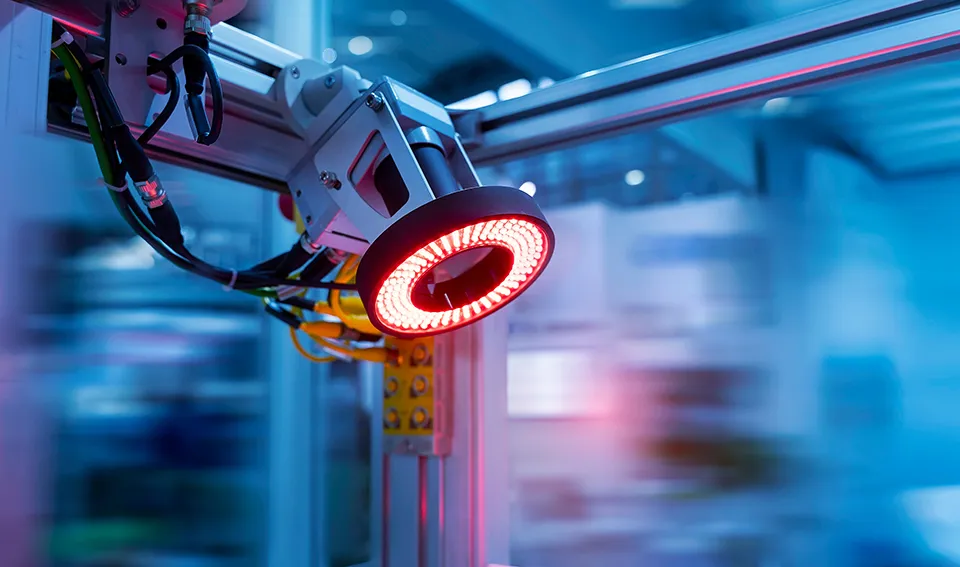
Reliable sensor data is the foundation for monitoring, quality control and predictive maintenance
Sensors form the first information layer of industrial automation. They detect position, pressure, temperature, flow, level, vibration, distance, colour, force, presence and much more. In production environments that are increasingly focused on monitoring, quality control, traceability and predictive maintenance, sensor data quality determines the reliability of the entire automation system.
Digitalisation does not start with dashboards, algorithms or artificial intelligence, but with accurate measurements. An algorithm can only deliver value when its input is reliable. A PLC can only respond correctly when the sensor data is accurate. And a maintenance platform can only identify trends if data is consistent, reproducible and interpreted well enough.
Sensors are present in almost every industrial environment: in packaging lines, process installations, conveyor systems, robot cells, cleanrooms, warehouses and assembly lines. Yet they are often underestimated. They are small, relatively inexpensive and functionally unobtrusive, but their impact on availability, quality and process reliability is significant.
From switching signal to diagnostics
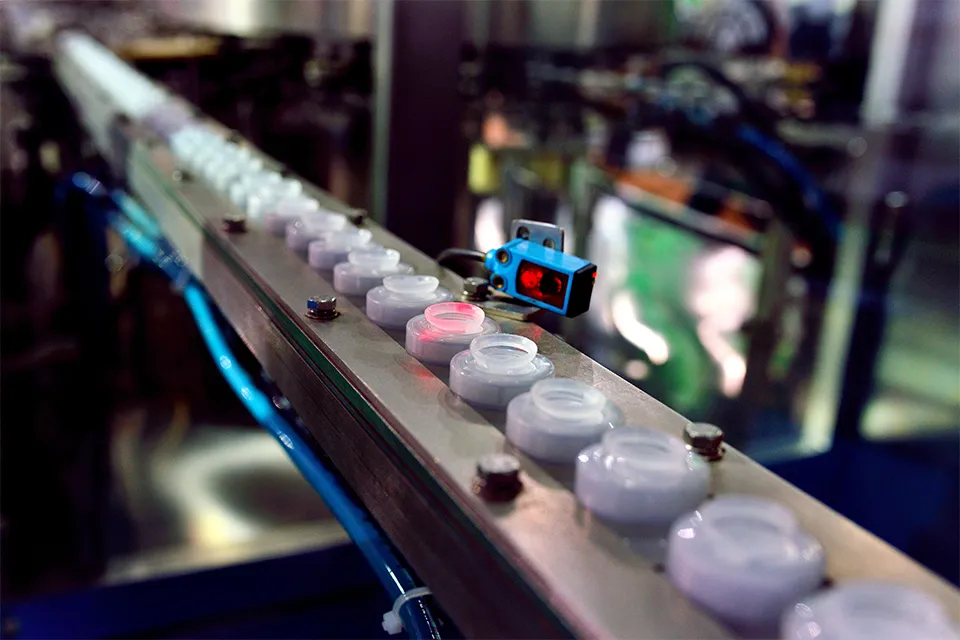
Traditional sensors mainly provided a digital or analogue signal: present or not present, high or low, a temperature or pressure reading. Modern sensors increasingly provide additional diagnostic information. They can report, for example, a declining signal margin, contamination, temperature drift, misalignment, limit exceedance or internal faults. This additional data is valuable because it makes faults visible earlier. An optical sensor that gives timely warning of a dirty lens can prevent unexpected machine stoppages. A pressure sensor showing abnormal patterns may indicate a leak, blockage or cavitation. And a vibration sensor can detect incipient bearing wear before mechanical damage occurs.
For maintenance teams, this means moving from reactive to condition-based working. Rather than waiting for the machine to stop, they can intervene when the data shows that a problem is developing. This is especially relevant for installations where downtime is costly, technical staffing is limited or quality deviations can quickly have serious consequences.
IO-Link makes sensors more communicative
One important technology in this evolution is IO-Link. This standardised point-to-point communication enables sensors and actuators to exchange not only signals, but also parameters and diagnostic data. This turns the sensor into a source of information rather than just a switching point, bringing many practical benefits. When a sensor is replaced, the new sensor can automatically receive the correct parameters. Settings can be managed centrally. Diagnostic information can be sent to a PLC, HMI, edge gateway or maintenance software. This reduces downtime, cuts commissioning errors and makes machines easier to service.
This is of interest to machine builders because standardisation and ease of maintenance are becoming increasingly important. A machine that is quicker to configure, provides clear fault information and relies less on manual resetting offers added value to the end user. For production companies, IO-Link also helps extract more data from existing field components without having to redesign the entire automation architecture straight away.
Choosing the right sensor remains an application-specific task
Despite all the digitalisation, getting the initial selection right remains crucial. The wrong sensor causes more problems than it solves. The choice depends on the object, distance, material, speed, accuracy, response time, environment and diagnostic capabilities required. Environmental factors have a major influence. Dust, moisture, cleaning agents, temperature, vibration, oil, electromagnetic interference and mechanical stress can affect the measurement. In food and pharmaceutical environments, hygiene, cleanability, IP protection and material selection are important. In metalworking, swarf, coolant, oil and reflective surfaces all play a role. In logistics, speed, distance and reliable detection of varying product shapes and packaging are key. The application therefore determines the technology.
Inductive sensors are robust when detecting metal objects. Capacitive sensors can also detect non-metallic materials, but are more sensitive to environmental influences. Optical sensors are fast and versatile, but require attention to colour, reflection, contamination and alignment. Ultrasonic and radar sensors can be useful for distance or level measurement. Vision, 3D sensors and force measurement come into play when detection alone is not enough and interpretation or quality control is also required.
Measurement quality takes more than hardware
A good sensor does not guarantee a good measurement. Mounting position, cabling, shielding, calibration, software filtering and mechanical reference points all affect reliability. A sensor positioned too close to a source of contamination, poorly aligned or insufficiently protected against vibration will perform less reliably in practice than it does on paper.
Signal quality must also be monitored. Switching distances, hysteresis, response time, resolution and repeatability are not minor details. In fast packaging lines or robot cells, even a small deviation can lead to false detections, missed picks or unwanted stops. In process environments, measurement drift can eventually result in incorrect control actions or quality deviations. That is why sensor technology deserves attention as early as the design phase. If it is only during commissioning that you discover a sensor is affected by reflection, product variation or electromagnetic interference, you lose time and reliability. A thorough application analysis prevents a great deal of remedial work later on.
Data only becomes valuable in context
Sensors provide raw data. That data only becomes valuable when it is linked to process knowledge. A rise in temperature may be normal under increased load, but problematic during constant production. Pressure fluctuations may indicate a process deviation, a mechanical problem or a change in product properties. A declining signal margin may indicate that maintenance is needed, but only if the trend is interpreted correctly. That is why integration with automation systems, edge computing and maintenance platforms is so important. Not every data point needs to go to the cloud, but relevant measurements, trends and alarms must be available wherever they create value: to the operator, maintenance technician, quality manager, or energy and production management.
Sensors do not automatically make a factory smart. But they do provide the necessary foundation. Anyone looking to digitalise, optimise or predict must start with reliable measurements. Without good sensor data, every smart factory remains blind.
Question about this story? Ask your question
Keep following this
Get an email when a new story is published. No account needed.
- ThemeSmarter measurement and inspection
- SubjectProcess & instrumentation