Fault tolerance in machine safety
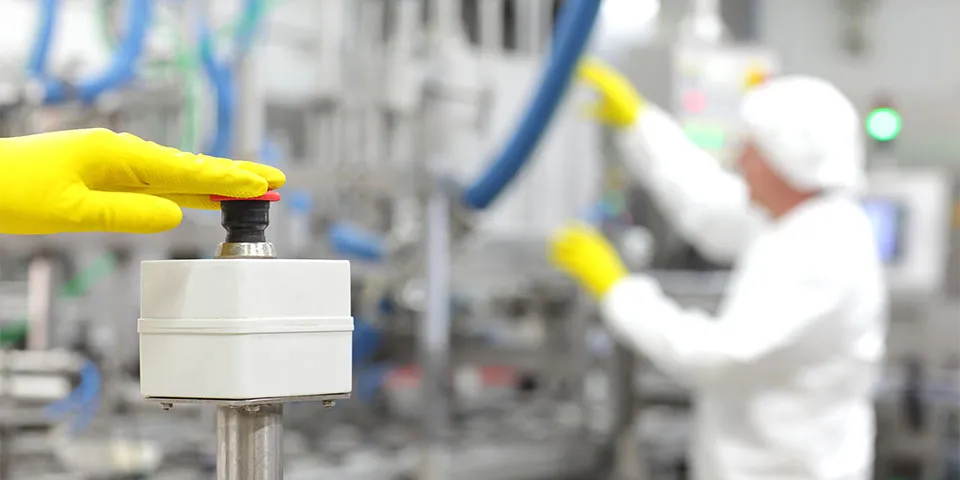
Als er een potentieel gevaarlijke uitval is gedetecteerd, kunnen fouttolerante systemen een verdere werking mogelijk maken. Dit verhoogt weliswaar de…
If a potentially dangerous outage has been detected, fault-tolerant systems can allow continued operation. While this increases availability, care must be taken to ensure employee safety. Therefore, in addition to fault detection, fault assessment is also necessary. This makes it possible to decide whether the detected error can be tolerated or is too serious after all. In the latter case, immediate shutdown of the system is unavoidable. Alternatively, one can continue working in a degraded state.
Safety controls are now being designed so that when a fault occurs, the machine is then brought to a safe state. In almost all situations, that amounts to shutting down power. In complex manufacturing environments, that often means bringing the entire production line to a halt. Certain programmable safety systems have functions that can shut down individual modules. That selection must be made according to the application and must be determined individually. Nevertheless, certain machines and machine functions will still be disabled depending on the control architecture. This system has worked without many problems so far, but the advent of Industrie 4.0 has created and will continue to create more dynamics. Individual machines are being connected to complete production lines and even connected to other production sites. In this case, companies cannot afford downtime when something goes wrong on the other side of the world. There is a need for tolerance for certain faults. However, fault-tolerant systems must be clearly defined according to the questions below:
- Can dangerous mistakes be tolerated?
- How and how long can a machine or plant continue to run if a fault is detected?
- Can a machine or plant then continue to operate without restrictions or do processes have to be adjusted (speed, mode ...)?
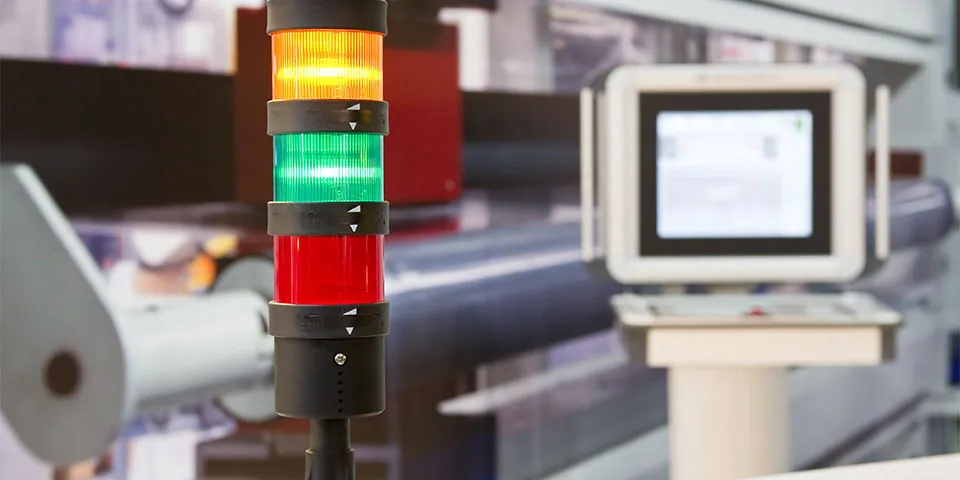
For example, when monitoring safety-limited speeds in a drive system (SLS in accordance with EN 61800-5-2), the decision maker could, in case of an error, instruct that only operation at reduced speed is still allowed.
Assessment of errors
To find out to what extent it is permissible under existing standards to allow continued operation of an automation system with a safety-critical error for a limited period of time, the ZVEI established a working group. The result was compiled in a white paper. No later than upon reaching the maximum permissible operating time in the degraded state, a decision maker must achieve the safe state. The decision maker also bears a great responsibility: in the context of a fault and effect analysis, a distinction is made between tolerable and non-tolerable faults. With non-tolerable errors, as in the case of intra-processor communication between two controllers, safe, further operation is not guaranteed and must therefore lead to an immediate shutdown. Conversely, under certain circumstances, a short circuit/external power supply (stuck-at-error) on a digital output of a controller or sensor can be tolerated for a period of time, provided that a second, independent shutdown path can correctly perform the safety function.
The authors of the white paper published by ZVEI conclude that the assessment of the measures described corresponds to the protection objectives of the Machinery Directive and does not conflict with the harmonized standards EN ISO 13849 and EN 62061.
Error tolerance within standards
If the relevant standards EN ISO 13849 and EN 62061 are examined, no indication is found in view of an immediate or direct reaction to the fault, when it occurs. Moreover, the failure probability (PFHD) calculation models also allow for the necessary design leeway, because in redundant architectures it occurs at a low level at the beginning and only increases after some time. Depending on the risk analysis and the quality of error control measures applied, the decision maker can thus extend the period until shutdown to a maximum of one week. The alternative calculation method that forms the basis in EN 62061 defines a diagnostic test interval that also contributes to a practically negligible proportion of the PFHD. With both calculation assumptions, however, it is assumed that the realization of the safety function has sufficient failure reserve with respect to faults with the same cause (common cause failure) and that these are observed.
Depending on the risk analysis and the quality of error control measures applied, the decision maker can thus extend the period until shutdown to a maximum of one week.
Activate alternative safety mechanisms
Another principle is based on the idea that a decision maker activates alternative additional safety mechanisms in case of a fault. For example, when monitoring safety-limited speeds in a drive system (SLS in accordance with EN 61800-5-2), the decision maker could, in the event of an error, instruct that only operation at a reduced speed is allowed. The speed limitation reduces the required level for risk minimization from PL d to PL c. Concrete application areas also occur in driverless transport systems (FTS), where the travel path control is realized by the speed-dependent sizing of the safety field of a laser scanner.
Consistent with target standards
What is still in the future in mechanical engineering is already the state of the art in many parts of the process industry. The authors of the white paper published by ZVEI conclude that the assessment of the measures described correspond to the protection goals of the Machinery Directive and do not conflict with the harmonized standards EN ISO 13849 and EN 62061. It will be decisive for the acceptance whether the use by the possibility of the degraded company can be measurably fixed, or whether other influences resulting, for example, from the increasing coupling of IT and automation components, endanger the availability of the plant.
To a white paper by ZVEI in collaboration with Beckhoff Automation, BGHM, Euchner, Festo, IFA, ifm electronic, Leuze electronic, Pilz, Phoenix Contact, Schmersal, Sick, Wago Kontakttechnik
Question about this story? Ask your question
Companies in this story


Keep following this
Get an email when a new story is published. No account needed.
- ThemeSafe machine design and operation
- SubjectControl & networks
- CompanyFesto
- CompanyLeuze electronic bv