Real-time maintenance planning based on artificial intelligence

They continue to call them ‘unexpected downtime’, but many faults in production processes can be predicted perfectly well. Which usually also means they can be avoided.
A method for detecting deviations in production processes and scheduling the necessary maintenance activities in real time has been developed at the Electromechanics programme at PXL.
The method used to predict faults in production is machine learning. At regular intervals, a whole set of relevant process measurements is sent to the cloud. There, the parameters are evaluated by a system that has learned from historical measurements what is normal and what is not. If the model detects an impending fault, it returns an urgency value. A high value means that, in similar situations in the past, it did not take long for a serious fault to occur.
Real-time analysis
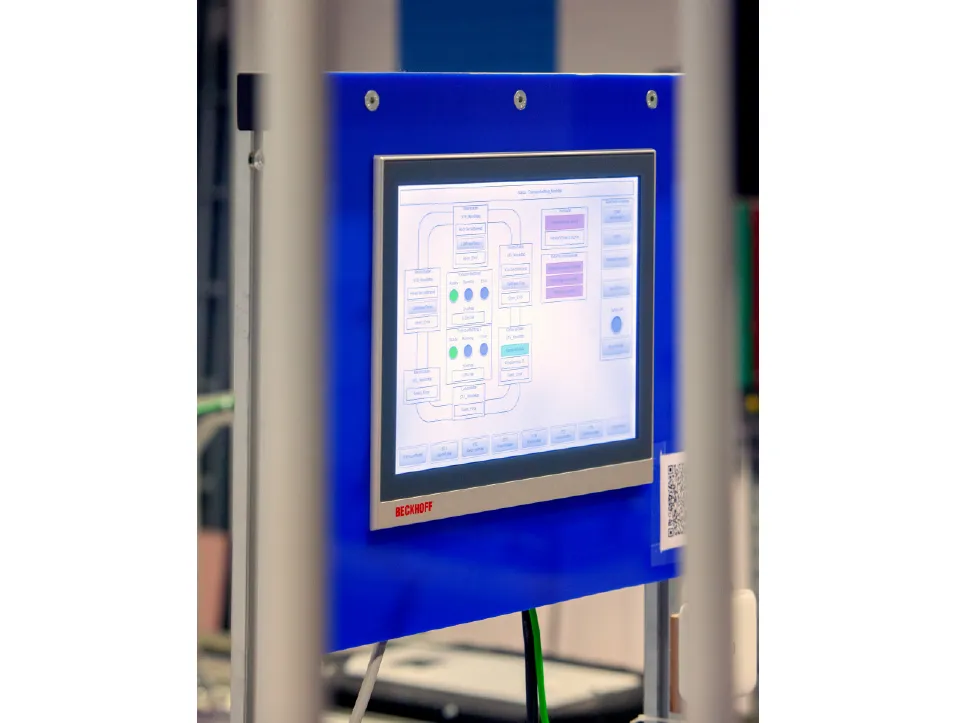
“A lot of this kind of analysis is already being carried out in industry, but it is usually used to optimise processes,” says Patrick Pilat, head of the Electromechanics programme at PXL University of Applied Sciences. “What is new about this project is that we perform the analysis in real time and have the system intervene immediately when necessary. This link between production and maintenance is usually missing. You can see that in ERP systems too, where production scheduling and maintenance scheduling are completely separate.” To test the system, a production line was built at PXL with a Beckhoff PLC that, in addition to controlling the processes, collects extra data such as voltage, current, temperatures and vibrations. “The data is used to create a set that is periodically sent to the cloud for analysis. If a fault is imminent, the model sends this information back to the PLC. Based on the urgency, the PLC can then schedule a maintenance task in the ERP software.”
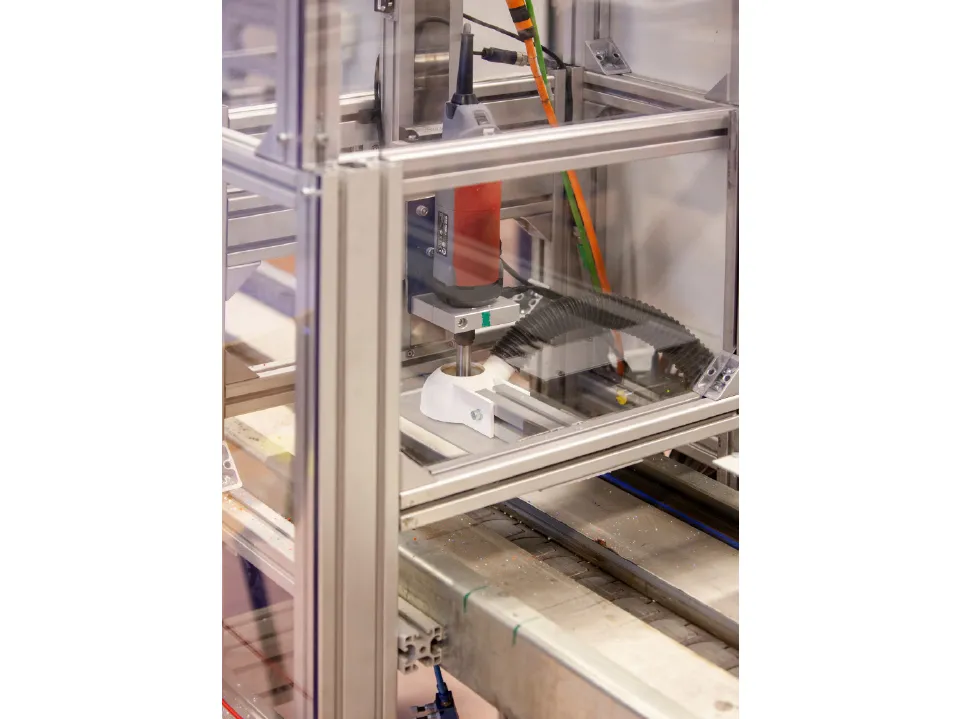
Beckhoff PLC plays a central role
As this is not a function provided for in the ERP software, Pilat came up with a workaround that enables the PLC to adjust the production schedule to accommodate an urgent maintenance task: “We added maintenance as one of the possible products the line can produce. When we have the PLC place an order for that product, the maintenance task is automatically added to the schedule.” This gives the PLC a central role in the whole process, going far beyond simply controlling the production line. “We use a Beckhoff PLC that allows open programming, going far beyond what is offered in standard function blocks,” says Gwen Vanheusden, lecturer in automation and project staff member at PXL. “There is an enormous range of I/O cards and communication protocols. Adding extra inputs, performing calculations and communicating with the cloud are all relatively straightforward to implement. We also receive support from the people at Beckhoff themselves, who respond very quickly when we have a problem.”
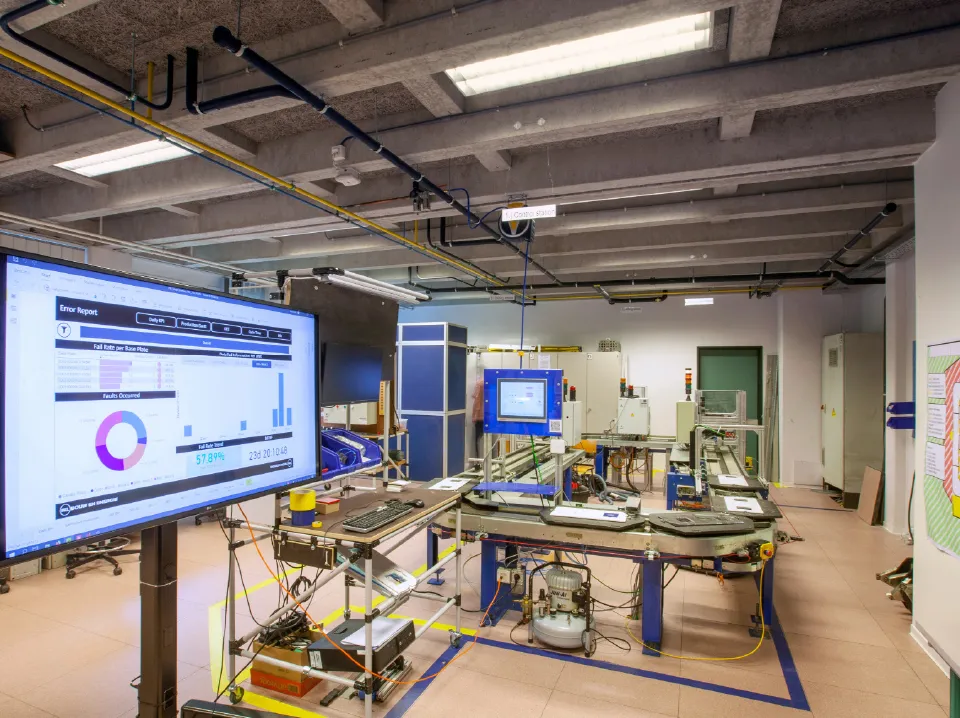
Preparing for the industry of the future
“We place great importance on good collaboration with schools,” says Philip Neyens, support engineer at Beckhoff Automation. “Working on innovative projects like this is interesting for us too.” For PXL, the focus is on the educational aspect. Including such projects in the curriculum prepares students for the industry of the future. The aim is also to share the knowledge and experience gained with people in industry. A number of workshops will therefore be held to explain the approach and implementation in more detail.
Those interested can request further information via patrick.pilat@pxl.be or smartfactory.pxl@pxl.be
Question about this story? Ask your question
Keep following this
Get an email when a new story is published. No account needed.
- ThemeFrom factory data to decisions
- SubjectControl & networks