3 alternatives for speed control
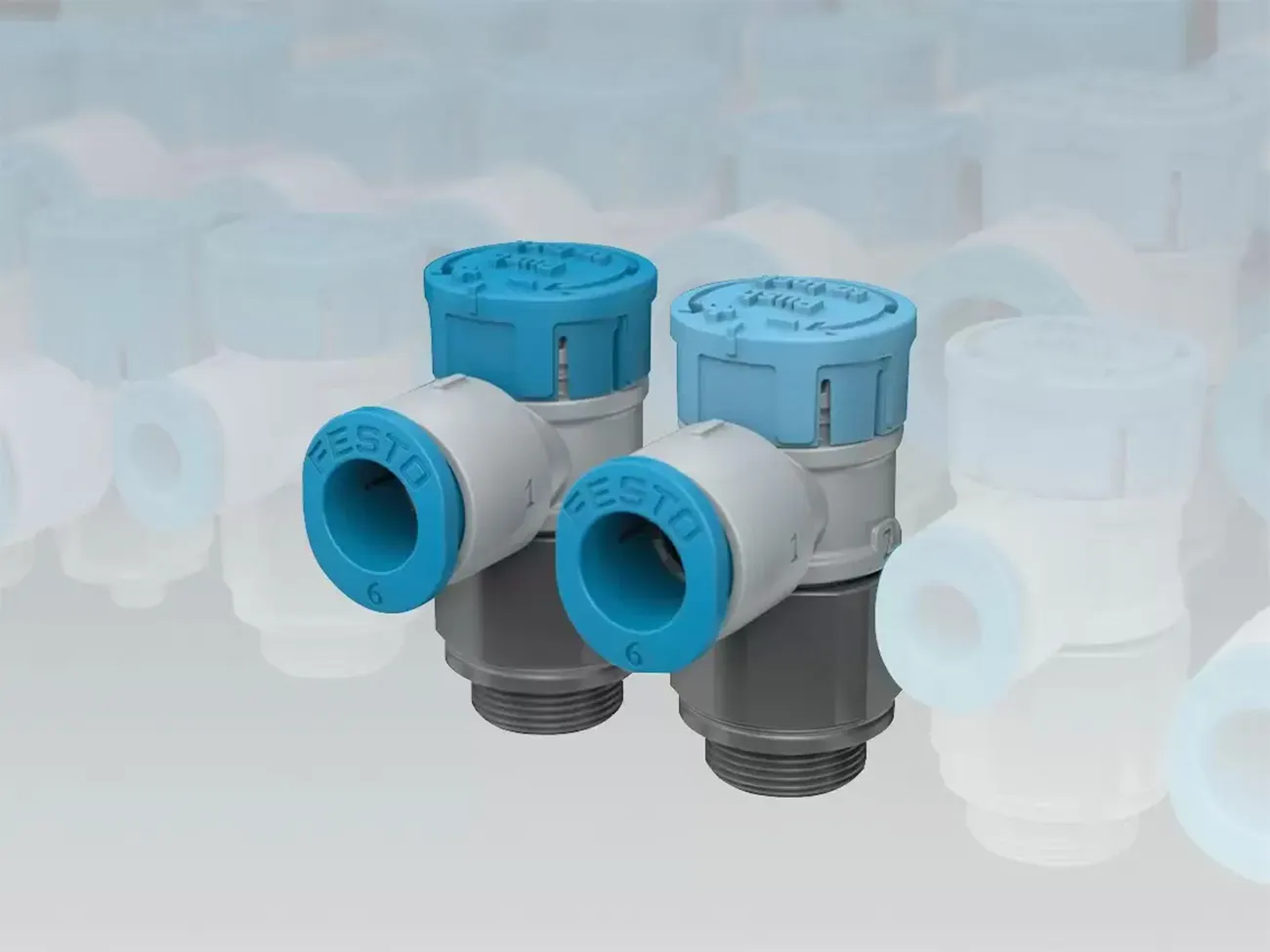
Pneumatic systems have two key control variables: compressed air pressure and flow rate. By accurately measuring and controlling these two parameters, for example using pressure regulators and flow control valves, the desired movement can be performed with the right speed, force and accuracy. This applies to pneumatic cylinders, pneumatic motors and pneumatic grippers, among other things. Controlling flow speed and pressure is essential in automated lines, where movements sometimes follow one another at a rapid pace and any deviation in speed or positioning can lead to faults, downtime or loss of quality.
Alternatives to flow control valves
This blog focuses on the options for controlling the flow rate. This is done by varying the nominal air passage in valves specially designed for this purpose. A previous blog covered the operation and applications of flow control valves in detail. This blog looks at the alternatives available.
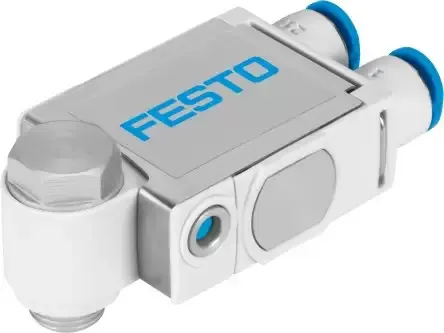
When should you use alternatives to flow control valves?
Flow control valves, particularly versions with a non-return valve such as the VFOE, are by far the most commonly used components for controlling flow rate. This is due to their functionality, as they can be mounted directly on a cylinder and are very easy to adjust. In some situations, direct mounting is not possible, for example because of a lack of space. But there is no need to worry: plenty of alternatives to flow control valves, also known as flow regulators or flow controllers, are available. This blog provides an overview of the options, from standard components to more advanced models with integrated safety functions.
Silencer with flow control
Where installation space is limited around a cylinder, throttled silencers can be used. These silencers with flow control can regulate the speed at the valve outlet. They are also an ideal solution for centrally controlling several cylinders, for example on a valve terminal.
The Festo range includes two versions for this purpose: the GRE is an exhaust flow controller made of sintered material. The GRU is a plastic flow control silencer.
Pilot-operated check valve
For safe cylinder movement, it may be desirable to block movement in certain (emergency) situations, for example when the system would otherwise continue to exert an unwanted force. Pilot-operated check valves can be used for this purpose.
Festo offers the VBNF releasable check valve for this purpose. This alternative to a flow control valve has a low installation height and a high flow rate. It works by directly shutting off the pressurised chamber when the supply pressure drops. This is achieved using an additional pilot port with a check valve. Once installed, the component can be rotated through 360° and is also suitable for manual venting.
The VFOF version has essentially the same function, with a flat, rotatable shut-off valve and the option of combining air supply and exhaust flow control. It combines the functions of a speed control valve (or flow control valve) and a releasable check valve, and also features integrated flow control. This version can also be rotated through 360° after installation and operated from the side.
Quick exhaust valve
Where short cycle times are required, flow control valves can be replaced with quick exhaust valves. When venting the cylinder, these components discharge the compressed air directly at the cylinder port rather than through the directional control valve. This is faster, allowing the cylinder to move at a higher speed. One point to consider with this alternative to a flow control valve is the higher kinetic energy involved, which can affect the cylinder’s service life.
Quick exhaust valves in the Festo range include the VBQF and SEU. The VBQF is a flat, screw-in exhaust flow control valve that offers balanced noise emissions as an alternative to the VFOE flow control valve. The flow controller has a low installation height and a high flow rate, and can be supplied with a silencer and with ducted or non-ducted air exhaust.
The SEU quick exhaust valve is a screw-in exhaust flow controller that offers balanced noise emissions. This flow controller enables fast venting and is available with or without a silencer.
In-line flow control valve
Finally, in-line flow control valves can also be used as an alternative to conventional flow control valves. These versions can be installed directly in an existing pipe, with a choice of models with or without a non-return valve. The latter allows the air to be controlled in both flow directions. Their in-line installation makes these flow control valves suitable, among other things, as an alternative when space is limited. Machine optimisation or an awkward-to-reach location may also be reasons to opt for an in-line flow control valve.
At Festo, in-line flow control valves are available in GRO (without non-return valve) or GO (with non-return valve) versions. These valves are made of robust plastic.
Complete overview of flow control valves
For more information: www.festo.com/nl/nl
Question about this story? Ask your question
Companies in this story

Keep following this
Get an email when a new story is published. No account needed.
- SubjectMotion, gears & drives
- CompanyFesto