Apex Dynamics on gearboxes, automation and the factory of the future
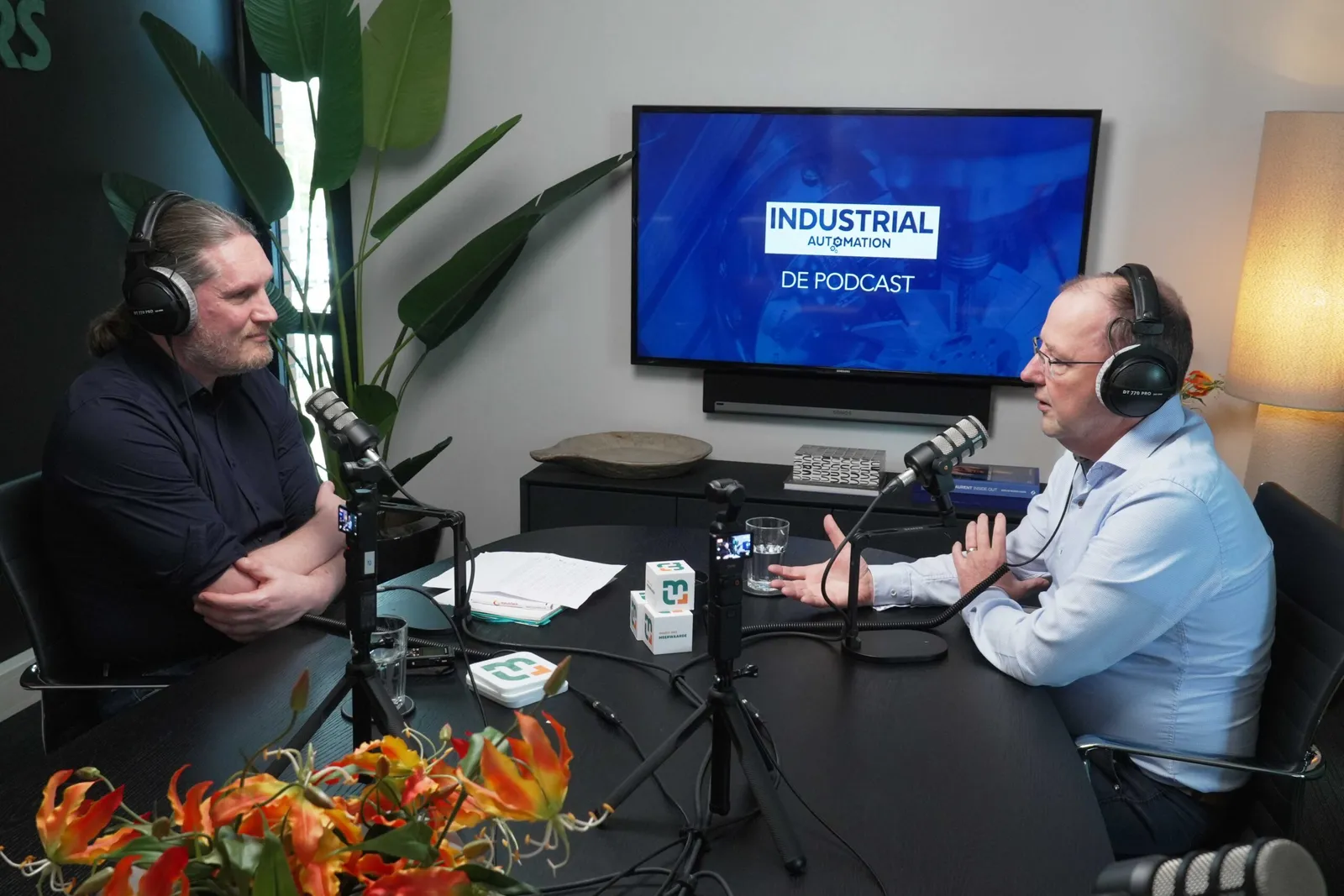
Conversation with Thom van Oss: Host: Alexander Pil
In this episode of the Industrial Automation Podcast, moderator Alexander Pil talks to Thom van Oss of Apex Dynamics about the role of gearboxes in industrial automation. Apex Dynamics develops and supplies mechanical drive components such as gearboxes, racks and couplings, which are essential for applications in robotics and machine building.
Thom van Oss explains how gearboxes act as speed reducers and torque amplifiers in servo motor applications, and why they remain crucial in an increasingly automated industry. The discussion also covers the importance of inertia, precision and reliability in modern production lines.
He also discusses Apex Dynamics' growth in the Benelux, its strategy of standing out through fast delivery and service, and its evolution from component supplier to engineering partner. Through tools, automation and collaboration with customers, Apex Dynamics helps optimise machine designs.
The conversation also touches on manufacturing in Taiwan, the role of automation in the factory and the impact of geopolitical risks on supply chains. Finally, Thom looks ahead to the future of the sector, including developments in robotics, humanoid applications and AI-driven engineering tools.
This episode offers practical insights into industrial automation, motion control and the technological developments shaping the manufacturing industry.
Full transcript
Alle hoofdstukken (38)
- Introduction to the podcast and episode
- Introducing Apex Dynamics
- Question about gearboxes
- How gearboxes work and what they do
- Visibility of components
- Hidden but essential component
- 20 years of Apex Dynamics
- Market entry and positioning
- Competition and positioning
- Strategy and collaboration
- What sets us apart: speed
- The importance of a quick response
- Fast quotes and service
- Process automation
- Extensive automation and supply chain
- Stock and European collaboration
- Stock strategy and European coverage
- Breaking through in the market
- First breakthrough and growth
- Collaboration and assembly
- Assembly and precision
- Production in Taiwan
- Factories and production process
- Automation and quality control
- Geopolitics and risks
- Impact of the geopolitical situation
- Logistics and transport challenges
- From component supplier to engineering partner
- Evolution towards engineering and consultancy
- Application complexity and component selection
- Using tools and validation
- The importance of knowledge and experience
- The future of the industry
- Innovation and future applications
- Digitalisation and AI in business processes
- AI and new commercial opportunities
- The future of product selection
- Closing remarks
Introduction to the podcast and episode
Alexander Pil Welcome to the Industrial Automation Podcast, where technology, innovation and industry come together. We discuss everything happening in the world of manufacturing and process automation, from robotics and smart software to connected machines and workplace digitalisation. Industrial automation is the driving force behind more efficient, smarter and more sustainable production processes today. In this podcast, we talk to the experts, engineers and entrepreneurs who are building the factory of the future every day. No theoretical stories, but practical insights, real-world cases and ideas you can put to use straight away. Whether you work with motion control, IT/OT integration, AI or smart production lines, this is where you can find out what is changing, what is possible and how to keep moving forward. In this episode, we’re talking to Apex Dynamics. My name is Alexander Pil and I’m here with Thom van Oss. Thom, perhaps you could start by introducing your company. What do you do, and who are you?
Introducing Apex Dynamics
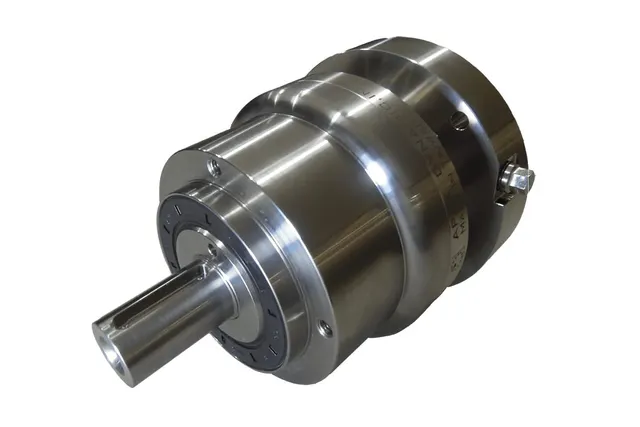
Thom van Oss Sure. My name is Thom van Oss, owner and director of Apex Dynamics BV. Apex Dynamics is a manufacturer of mechanical drive components. These include gearboxes, planetary, bevel and hypoid gearboxes, as well as pinions and racks, and, more recently, couplings and lubrication systems. Our factory is in Taiwan, where everything is manufactured. We at Apex Dynamics BV make sure the products are sold and delivered in the Benelux.
Question about gearboxes
Alexander Pil You mentioned gearboxes, which may not be familiar to all our listeners. What do you need a gearbox for?
Read the full transcriptCollapse transcriptnog 35 hoofdstukken
How gearboxes work and what they do
Thom van Oss They are needed for a great many applications. A gearbox is also sometimes called a speed reducer or reduction gearbox. That already gives you some idea of what the product does. A gearbox slows down the motor and reduces its speed. That is one of its most important characteristics, but perhaps even more important is that the gear ratio means that when a gearbox slows a motor down, say by 10 to 1, it also increases the force, or torque, at the output shaft. So if you use a motor with a 10-to-1 gearbox, the output shaft is 10 times stronger than it would be without the gearbox. That enables you to make a motor much more powerful. Our gearboxes are often used in servo motor applications. Servo motors can reach speed very quickly, while also delivering the specified torque at any speed. Standard electric motors have to be brought up to speed using a frequency inverter, and at first they do not deliver the torque you actually need. A servo motor does, but even then it often cannot deliver the torque required by the application. If you fit a gearbox between them with a gear ratio of 10 to 1, 100 to 1, or whatever you need, the servo shaft can deliver the required torque. Another important function of a gearbox is managing the inertia ratio. A gearbox can balance inertia so, for example, a robot arm does exactly what it is supposed to do, without being affected by gravity or the mass being moved, and comes to a stop at the right time. I always compare it to a caravan behind a car. If you have a light car and a heavy caravan, you can just about make it up the hill. But when you go downhill, the caravan overtakes the car. You don’t want that. Fit a gearbox between them, and it keeps the caravan safely behind the car.
Visibility of components
Alexander Pil I imagine these are components that are, how shall I put it, almost hidden within a system. Not everyone will immediately spot the gearbox.
Hidden but essential component
Thom van Oss No, that’s right. It is really an extension of the motor. When they are neatly assembled together, you hardly notice it, apart from the whole unit being a little longer. But yes, as you rightly say, it is a hidden component. Perhaps a necessary evil, but many applications need more power than the motor can provide.
20 years of Apex Dynamics
Alexander Pil This year, Apex Dynamics Nederland is celebrating its 20th anniversary. You have been the distributor in the Netherlands for 20 years. Looking back to 20 years ago, how did you win over the market? You were the new kid on the block. How did you manage to penetrate the market?
Market entry and positioning
Thom van Oss Yes, it was a challenge. We saw a need for healthy competition in the field of planetary gearboxes. The company I worked for at the time already sold gearboxes, but we were really looking for our own brand, and found it in Apex Dynamics in Taiwan. 20 years ago, that gave us the opportunity to set up a separate subsidiary, Apex Dynamics BV, which would sell only products from the Apex factory in Taiwan. So you enter an established market of brands with a product that already exists, but under a new brand. That is difficult, and you have to find a way to penetrate the market.
Competition and positioning
Alexander Pil It wasn’t easy at first. Did you have to compete with German brands or others?
Strategy and collaboration
Thom van Oss Yes, mainly German brands. We came to the market with an Asian product, a Taiwanese product. Taiwan already had a very good reputation for quality at the time, which helped us a little. We really had to prove ourselves and open doors. That is not easy when nobody knows your company name. When we turned up at someone’s door and said, “We’re from Apex Dynamics”, the door would barely open, if at all. So we looked for a strategy that would help us get those doors open. It was an obvious choice for us to work with the servo motor brands our product would always be paired with. These were often big names that already had doors open to them. So we started looking for partnerships with servo motor brands. These included the servo motor manufacturers themselves, if they had a representative in the Benelux, or distributors of servo motor brands that did not have their own local subsidiary. It didn’t all happen overnight, of course. We had to prove ourselves. Is the product good? Can you deliver on time? Is there continuity? Can you deliver it today, and also next week, next year and ten years from now? And quality was probably the most important factor of all. So you just have to give it a try and convince people: take one of our products, give it a go and see if you like it.
What sets us apart: speed
Thom van Oss So what is the advantage? Let’s be honest, our competitors make very good products too. We could distinguish ourselves on quality, but the other brands’ products were, and still are, very good. So we had to find another way to stand out. We found it in speed. Speed is now in our DNA and it shows in everything we do. Not just the speed of our gearboxes, which also run very fast, but above all the speed of delivery, with short lead times. And, very importantly, speed of response. When a customer is designing a machine or has a question, that is what they are working on at that moment.
The importance of a quick response
Alexander Pil And they want an answer then and there?
Fast quotes and service
Thom van Oss It seems to me that you want an answer at that point, so you can move forward without having to wait one, two or three weeks for a technical solution, or even just a quote, let alone a product. Speed is something we have always managed to distinguish ourselves on. So, as a rule, we aim to send out a quote within an hour, including drawings and everything else.
Process automation
Alexander Pil How much work does it take to put together a quote like that? Is some of it already automated?
Extensive automation and supply chain
Thom van Oss That is exactly why we are successful. We have extensively automated our business processes. This means that, in the fastest cases, we need about five minutes from receiving an enquiry to issuing an invoice. It can be very quick. An important factor is that our factory in Taiwan also produces for stock. Robin Cheng, the owner of Apex Dynamics in Taiwan, has always said that anyone selling Apex Dynamics products must hold stock themselves. So we have a substantial stock in Helmond to draw on, but the factory in Taiwan also keeps just about every product you can think of in stock, in every quantity. Some products may not be fully assembled yet, in which case they need to put them together, but they will have the product ready within 24 hours and it can be shipped. The only thing is that it has to get from Taiwan to the Netherlands, but in principle we can have everything on its way within a week. Allow three, four or five days for air freight, and we can deliver anything in our portfolio within two weeks. We now have more than 22 different versions, in an almost infinite range of sizes, gear ratios, shaft configurations, accuracies, you name it. And as I say, we can deliver every item we have within two weeks. That is fairly unique.
Stock and European collaboration
Alexander Pil And how much can you supply straight away from Helmond? You have stock there too.
Stock strategy and European coverage
Thom van Oss We already have a fair amount of stock there. After 20 years, our statistics give us a pretty good idea of what customers in the Benelux need. We also have a number of regular customers who buy certain products, which we know we will always have in stock. But given the enormous variety of options and configurations, it is almost impossible to have exactly the right product in Helmond at all times. Alongside Apex Dynamics BV in the Benelux, there are 13 other Apex companies in Europe. They are all independent businesses, each running its Apex Dynamics operation at its own risk and for its own profit. We are in close contact with each other. We have also set up a system that lets us see what stock is held elsewhere in Europe. So we can check 13 other warehouses to see whether a product is there. If it is not, it will have to come from Taiwan, but even then it will get here quickly.
Breaking through in the market
Alexander Pil Going back to 20 years ago, when you were trying to break into the market. Do you remember the first time you thought: yes, we’re really going to make it now?
First breakthrough and growth
Thom van Oss It always starts with the first one to take the plunge. Fortunately, we found a company with a good reputation that saw the potential and recognised that it could be a win-win situation. They told their sales representatives: take the Apex brochure with you, because you’re already visiting that customer. And if they have indeed sold a servo application, then, as far as we know, a planetary gearbox is used on about 60 per cent of every servo axis, so in those cases you take an Apex Dynamics gearbox along too. And then it really is a case of one thing leading to another. The market became aware that there was an independent gearbox supplier not tied to any one brand, whose products we could include in our offering. So we were no longer just adding value, we were also providing customers with a complete solution. That is the most important thing. An application does not stop at the servo motor. In many cases, it also needs a gearbox.
Collaboration and assembly
Alexander Pil So they could offer it to their customers as part of a package.
Thom van Oss Yes, that is why we can do this with a relatively small team in Helmond. We supply our partners, as we call them, and they provide a complete package, with the entire motor drive, including the gearbox, going to the customer. We also assemble them together in Helmond. Sometimes the customer asks for the gearbox to be fitted to the motor. We do that in Helmond. The motor supplier sends the motor to Helmond, we fit the gearbox and deliver the complete assembly to the specified address.
Assembly and precision
Alexander Pil So you really are there in Helmond with Allen keys and screwdrivers?
Thom van Oss Good point. Allen keys? No, we use torque wrenches. That is very important, because fitting a gearbox often goes wrong. Everything has to be tightened or assembled to the correct torque. You do not want a shaft to slip or anything like that. An Allen key alone will not do the job.
Production in Taiwan
Alexander Pil You have mentioned Taiwan a few times. You told me before the interview that you had been there recently. It sounds like quite an impressive factory, as I understand it.
Factories and production process
Thom van Oss That is right. It is no longer just one factory, there are three. But yes, that is exactly right. It was one of the reasons we chose Apex Dynamics at the time. When we first went there, we were struck by how clean and tidy everything was, which is not always a given in that part of the world. We were also particularly impressed by the people at the factory and their strong focus on quality. That was one of the reasons we chose Apex Dynamics as the brand to represent in the Benelux. Robin Cheng is indeed the founder and president. The CEO reports to him, but Robin Cheng is the owner and founder, and I have a great deal of respect for him. When I first met him, he radiated such passion and vision that I thought: he is going to go far, and I would like to be part of it. And yes, the factory is hugely impressive. It currently has a capacity of more than 50,000 gearboxes per month. That is quite a lot. As I said, they have three factories. The second factory to open is dedicated specifically to gear racks and pinion applications. The third factory is still something of a question mark. It is still largely empty, although they have started filling it with machines. All the machines Apex uses are high-end. Robin has always said: if I want to compete on the global market, I need to manufacture using the best machines. So all the production machinery in our factory is German, Swiss or Japanese-made and can match the best in the world. It is hugely impressive to see how smoothly everything runs there. You can see the bar stock coming into the factory at the bottom left, so to speak, and the finished products coming out at the top right, ready to be put into stock. They make everything themselves apart from the seals, bearings and bolts. All the machined parts for the gearboxes, gear racks and pinions are made entirely in the factory. They have all the surface treatments and hardening processes in-house, everything they need to manufacture the complete product.
Automation and quality control
Alexander Pil How much of that is still manual work, and how much is done by machines? How many people are still working there?
Thom van Oss I think there are about 700 people working at the factory at the moment. Some work is done by hand, but everything that can be automated is automated. Robin also started making XYZ robots, so he knows the automation industry well and how to automate production. He also uses many of his own robots in the factory. They are all CNC machines. You load the workpiece and start the programme, but then comes the most important part: checking, measuring, measuring, measuring. A huge number of measurements are taken to make sure every part coming off the machine meets the requirements and tolerances needed to produce low-backlash gearboxes.
Geopolitics and risks
Alexander Pil Taiwan is also in the news geopolitically. Something could happen there. Of course, we all hope it does not. But I imagine that could be quite a risk for you here at Apex Nederland. If something happens, who knows what. How do you view that?
Impact of the geopolitical situation
Thom van Oss Yes, we chose to represent a brand, to be able to supply products under that brand name. That comes with a risk: if something happens to the factory or the brand, you have a problem. At the moment, particularly from a geopolitical perspective, that is a concern. You read about it in the newspapers almost every day. Recently, I watched some excellent television series about the situation in Taiwan. The threat is real. Many of my customers ask what would happen if Apex Dynamics, the factory in Taiwan, could no longer supply us. Well, then Apex Dynamics BV would have a problem. But, honestly, I think gearboxes would be the least of the world's problems at that point. As long as 60 per cent of all microelectronics comes from Taiwan, with factories such as TSMC and Micron there, which are enormous, because TSMC happens to be a good neighbour of the Apex Dynamics factory, the whole world would be unable to get hold of electronics. Of course, a lot of work is being done to find alternatives, but they are so far ahead that if something happened there now, we would all have a massive problem. Gearboxes would be small beer by comparison. As I say, there are alternatives, and although they would not be from Apex, we could potentially still help the customer.
Logistics and transport challenges
Alexander Pil We would rather that did not happen, of course.
Thom van Oss No, let us hope it never happens. But that is the state of the world at the moment. I flew back from Taiwan last week, and I was curious about the route the plane would take. Apparently, there is still a route between Russia and the Middle East that allows flights to and from Taiwan to operate safely.
Alexander Pil It has to, because you still fly a lot of those goods over as well.
Thom van Oss That is right, we have air freight shipments every week. It is a problem at the moment. Flights are operating, but all flights via the Middle East with stopovers have been cancelled. So there is currently a serious shortage of air freight capacity. That is pushing up prices, but the most important thing for us is to do what we promise: deliver within two weeks. And when an air freight shipment is cancelled, that is not easy. But I have to say, so far our service providers have been very resourceful, and we have still managed to get the goods here on time every week.
From component supplier to engineering partner
Alexander Pil Over the past 20 years, your company has also changed in character. At first, you mainly supplied components, but you have increasingly become an engineering partner. Can you tell us how that happened and what you do now?
Evolution towards engineering and consultancy
Thom van Oss I can. If all you supply is a planetary gearbox, which is where it all began, or a low-backlash gearbox in general, then you are a component supplier. Of course, you need to advise customers on which one is best for their application. You need to consider overload, torque, overshoot, you name it. But essentially, you are a component supplier. Many of our customers, especially because we work with partners, sometimes know what they need even better than we do. But that changed when we added racks and pinions to our range. Just to be clear: a gearbox produces rotary motion. A pinion and rack can convert rotary motion into linear motion, moving from side to side. This is needed in many machines and applications. But it also brings in another aspect: engineering. For many companies, calculating the requirements for an application becomes much more difficult, because a different set of forces comes into play.
Application complexity and component selection
Alexander Pil I can imagine those components also affect each other, so you have to find the right combination.
Thom van Oss Exactly. You need to find the right combination of gearbox, pinion and rack. And there is no exact science to it. We have developed a number of tools, though. We have a design tool on our website, and we have Dynamics on our website, where customers can enter many of the parameters and variables for an application themselves and get a proposal. But even then, it is important to look a little further. That is something we now do for our customers very often. We ask customers to provide us with the details as soon as possible. Don’t order first and then ask afterwards, ‘It’s not working properly, why not?’ No, ask during the machine design stage: we want to move this many kilos over this distance at this speed, which components would be best for the job?
Using tools and validation
Alexander Pil Is that actually right, or could it be better?
Thom van Oss Dynamics in particular. It produces a comprehensive report listing all the specifications and showing all the calculations. It also gives a very clear indication of whether something is in the red or the green. Green is good and red is bad. That tells you that you are outside the operating range. That is not necessarily a problem, but you need to know about it. That way, you can take it into account in the application. Many of our products are used outside their specifications. But by, for example, limiting the motor current or taking account of acceleration and deceleration or the required torque, you can still use a product that is actually undersized. What we often do as an industry is oversize, to be as safe as possible. But that also costs more. In our case, it means a larger gearbox and heavier components. That is not always desirable, when a smaller component will often do the job perfectly well, provided it is used correctly.
The importance of knowledge and experience
Thom van Oss That is the knowledge we have built up over those 20 years and, fortunately, managed to retain. There are five of us, but most have been with Apex Dynamics for a long time. So that knowledge is still here. That is an important point: having knowledge and preserving it. It is something we are working hard on, too. This is essentially the engineering work we are doing more and more often, even though we are neither design engineers nor machine builders. Everyone needs to stick to what they do best. We supply the components, but we can help assess and calculate whether those components are right for the application. We do not take the machine builder’s place, we work alongside them.
The future of the industry
Alexander Pil How do you see the future of your industry, your customers and the market?
Thom van Oss If you want to look to the future, you first need to look at the past. Twenty years ago, people said that gearboxes were a finite product, that they would be overtaken by digitalisation, new motors and direct drive. But the opposite has proved true. More and more processes are being automated and robotised. Wherever precise movement is required, a low-backlash gearbox is still an important component. Just look at humanoid robots. They have an average of 40 gearboxes in them. That is exactly what we do. So I see plenty of applications in the future. The technology is old, but it has undergone a great deal of development. The products have only got better.
Innovation and future applications
Alexander Pil What did you see in Taiwan last week that made you think: I want to bring that to market quickly?
Thom van Oss I’m not allowed to say yet, but there is more to come. We started with six series and now we have 92. Development continues. It is in the field of cobots and humanoid robots. There are opportunities there. The question is whether they are in Europe, because that market is mainly in China and America. I am also personally interested in applications in healthcare, for example for people with spinal cord injuries. Exoskeletons are developing rapidly. They used to be heavy devices, but now they are suits you put on. These are exciting developments that I would like to contribute to.
Digitalisation and AI in business processes
Thom van Oss We focus not only on products, but also on process optimisation. At some point, you think automation has reached its limits, but AI opens up new possibilities. Not just for processes, but for marketing too. The way people search has changed. They used to search on Google, but now they speak a query and get an answer straight away. Often, they are also told where they can buy it. It is up to us to make sure we feature in those results.
AI and new commercial opportunities
Alexander Pil And how is that going now? Have you had any success with it yet?
Thom van Oss Yes, it starts with awareness. My son joined the company and opened our eyes to it. We are working hard on new tools and opportunities, both for marketing and for product selection. We are even developing an API that will be integrated with our website, so that a simple question will give you the right solution straight away.
The future of product selection
Alexander Pil So in future, you will be able to select the right gearbox via a bot?
Thom van Oss That would be great. You could say: I have a machine that needs to do this, and immediately get advice on the motor, gearbox, rack, pinion, coupling and lubrication system. It will never be quite that simple, but it can save you a lot of time. We have already developed a quick finder to help customers decide which direction to take. That is where things are heading: speed and taking the hassle away.
Closing remarks
Alexander Pil And really, achieving the highest speed possible.
Thom van Oss Yes, our slogan was ‘we go the extra mile’ for a reason. So we need to step up a gear, literally and figuratively.
Alexander Pil Yes, exactly. Thanks for the conversation, Thom.
Thom van Oss Thank you for having me. It was great.
Companies in this story
Keep following this
Get an email when a new story is published. No account needed.
- ThemeFlexible production with robots
- SubjectMotion, gears & drives
- CompanyApex Dynamics