From ‘choosing a motor’ to ‘optimising a system’
Text Christobal van LeeuwenImage Unsplash, Wikimedia Commons en AI-gegenereerd
Why drive engineering is now a design exercise, not a component choice
Today, specifying a drive rarely means buying ‘a motor with an inverter’. In an increasing number of applications, from pumps and fans to conveyors, winders and test benches, the focus is on optimising the complete drive system: motor, drive (VFD or servo), mechanics, control and data. This is not a semantic shift, but a direct response to three simultaneous pressures: energy prices, regulation and the need for production flexibility. Whereas component efficiency used to be enough, system efficiency is now the priority.
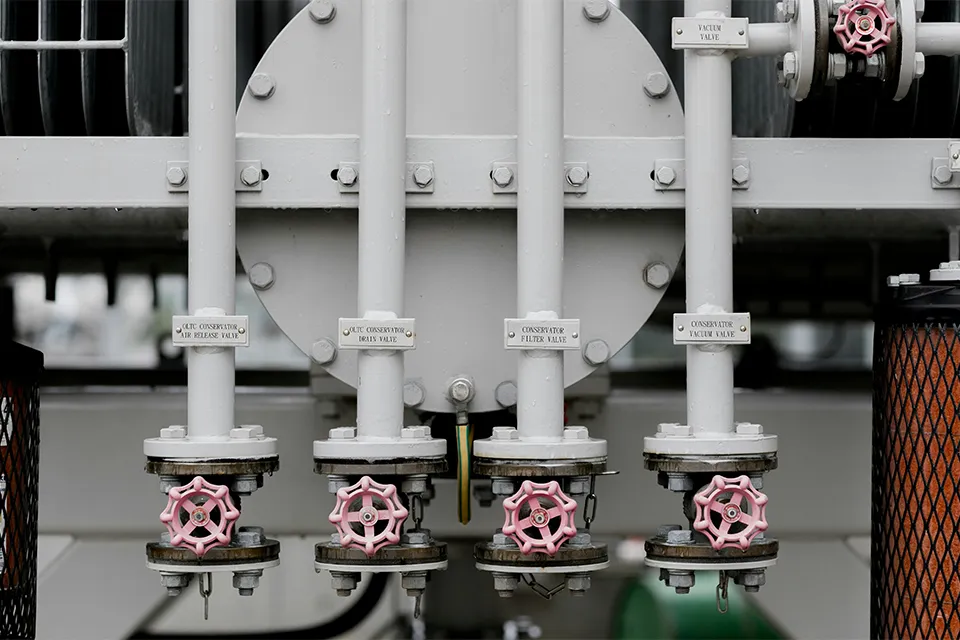
Regulation makes efficiency a design parameter
The European Ecodesign Regulation (EU) 2019/1781 has raised the bar for electric motors. Since 1 July 2021, stricter minimum efficiency requirements (such as IE3) have applied across a wider power range, with further tightening from 1 July 2023, including IE4 for certain power classes. In practice, this means efficiency is no longer a ‘nice-to-have’, but a fixed design parameter in specifications and retrofit projects. There is, however, a pitfall: the focus often remains on the motor alone, whereas in many installations the drive and operating point profile are at least as decisive for overall energy consumption.
A fan or pump that runs at partial load 80% of the time requires a different approach from a conveyor that operates mainly under rated load. Failure to make that distinction means missing out on efficiency gains, even with a ‘good’ motor.
From component efficiency to system efficiency
This broader perspective is supported by the IEC 61800-9 series, which treats the complete motor drive system as the unit of evaluation. IEC 61800-9-2 defines efficiency classes and test methods for power drive systems, among other things, and emphasises that the optimum solution depends on the architecture, control and load profile. This is particularly relevant because many industrial applications rarely operate at their rated point. Consider ventilation, compressors or mixers: there, partial-load behaviour accounts for most of the energy bill. In such cases, a different combination of motor design, drive and control strategy can deliver more than moving up one motor IE class.
SynRM is back, but not automatically better
Alongside the conventional asynchronous motor, synchronous reluctance motors (SynRM) and variants designed specifically for use with a drive are becoming increasingly common in industrial settings. They are often presented as efficient, robust and attractive across a wide speed and load range. This is true, provided the application allows for it.
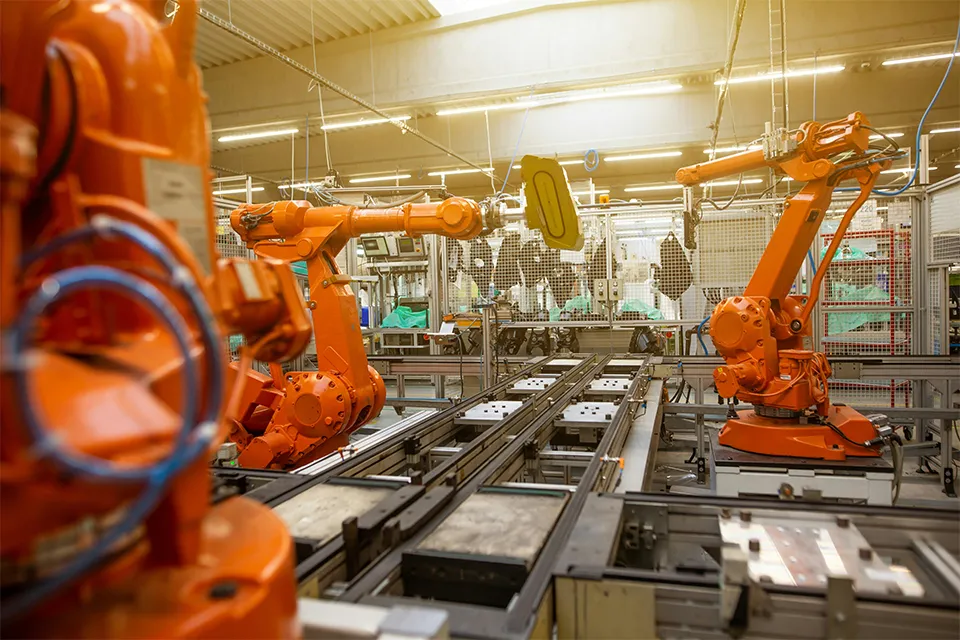
The benefits of SynRM depend heavily on:
• the proportion of time spent at partial load;
• the start/stop frequency;
• the dynamics required;
• the quality of the control.
For engineers, selection is therefore shifting from the nameplate to process-related questions: how cyclic is the load, how sensitive is the process to speed fluctuations, and where does the actual energy demand lie? SynRM is not a universal answer, but it is a powerful tool in the right context.
Regeneration and braking energy: measure before investing
In cyclic applications such as lifts, centrifuges, winders and high-inertia transport systems, braking energy is often dissipated as heat through braking resistors. Regenerative drives can feed this energy back into the grid or reuse it within the system. Regeneration, however, is not automatically worthwhile. In processes where braking is rare, for example only during an emergency stop, a conventional braking resistor remains the more economical choice. The business case only stacks up with frequent, prolonged or predictable regenerative operation. The crucial design question is therefore: how much energy, how often, and how reproducibly? Measurements or simulations based on real operating cycles often make the difference between a worthwhile investment and over-engineering.
Power quality and harmonics: TCO often flies under the radar
Drives inevitably bring harmonic and EMC challenges. As a result, projects increasingly involve discussions about line reactors, passive or active filters, 12- or 18-pulse solutions and active front ends. Technical guidelines such as IEEE 519 make clear that there is no universal ‘best’ solution. The right choice depends on:
• the number of drives on a single supply;
• the short-circuit capacity;
• the requirements of the network operator or installation;
• the criticality of the process.
For maintenance and production, the issue goes beyond power quality: poor power quality can cause unexpected trips, additional thermal loading of cables and transformers, and faults that only become apparent after commissioning. These are classic TCO costs that are rarely factored into the initial design.
Drives as data sensors
One notable development is that drives are increasingly serving as a source of condition data. Techniques such as Motor Current Signature Analysis (MCSA) make it possible to identify signs of both electrical and mechanical problems from current and voltage signatures, without adding sensors to every motor. Manufacturers have shown that this can provide early warnings of bearing wear or winding problems. The challenge is not the technology, but the organisation: without clear alarm thresholds, workflows and follow-up, condition monitoring remains ‘nice data on a display’.

What comes next?
At policy level, a review of the Ecodesign Regulation is under way. The European Commission gathered input in 2024-2025 for a further revision, with a view to stricter requirements towards the end of this decade. This means systems thinking, considering the motor, drive, control and grid impact together, will only become more important.
Not the motor, but the process
Drive engineering is making a definitive shift from component selection to system optimisation. Not because motors have suddenly become worse, but because energy, regulation and flexibility demand a broader perspective. Anyone designing or replacing drives today is no longer optimising a motor, but a process.
Question about this story? Ask your question
Keep following this
Get an email when a new story is published. No account needed.
- ThemeTailored motion and drive systems
- SubjectMotion, gears & drives