igus promotes the circular economy with the world’s first energy chain made entirely from recycled material
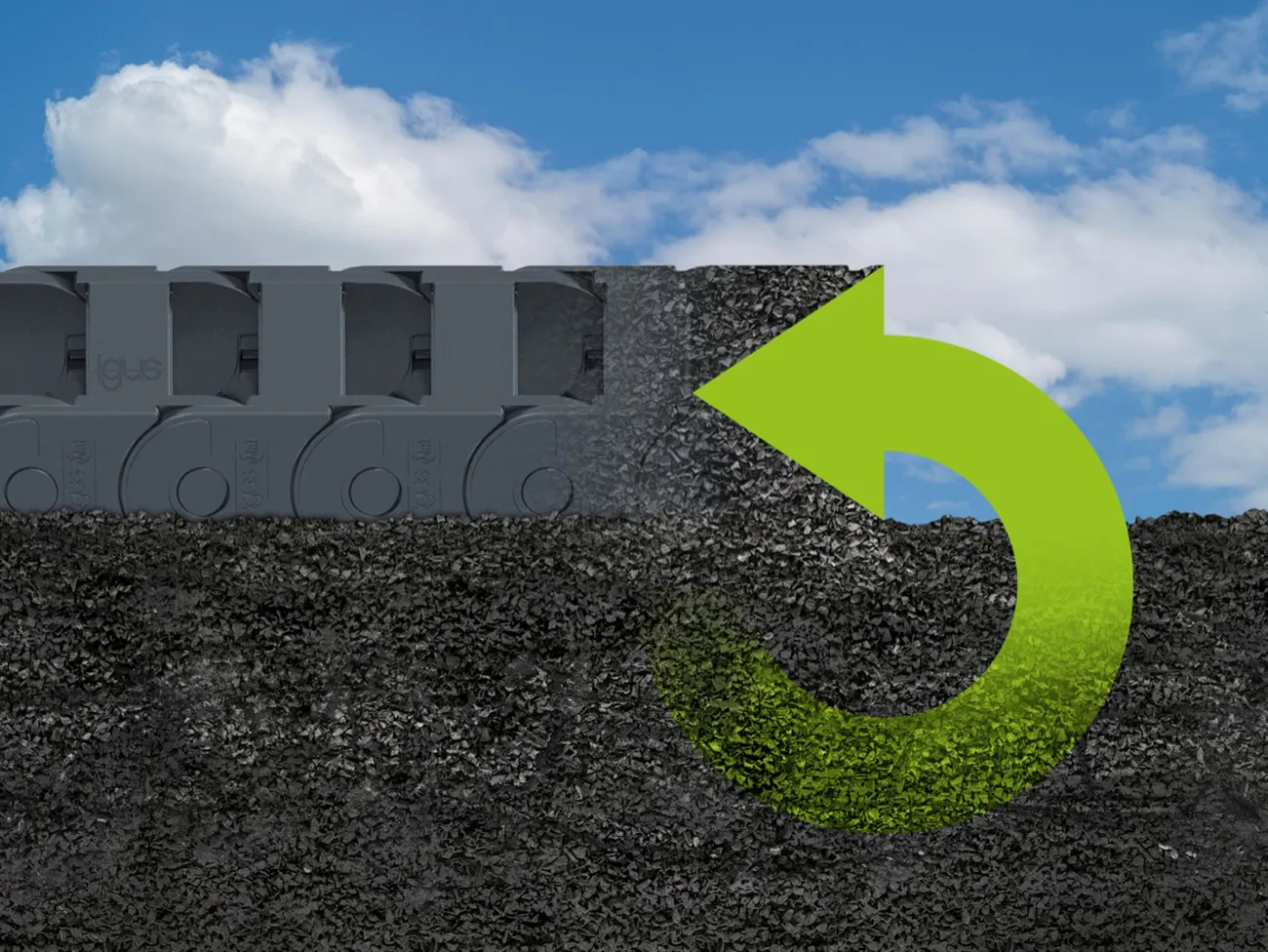
Cradle to cradle: this is the principle behind the circular economy, which takes its cue from nature. The aim is to return consumer goods to the biological or technical cycle, thereby conserving valuable resources and raw materials. Motion plastics specialist igus is also pursuing this goal and has now developed the world’s first energy chain made from recycled material, based on its own “chainge” energy chain recycling programme.
Conserving resources and extending product life: these are the goals igus is pursuing with its new E2.1.CG cradle-to-cradle energy chain
From extreme weather and natural disasters to marine pollution, the climate crisis is worsening, and more and more people are becoming aware of it. “Our customers’ purchasing decisions are increasingly shaped by environmental considerations too. That is why we have invested considerable effort in product development to make production more resource-efficient, without compromising product quality,” explains Jörg Ottersbach, Head of the igus Energy Chains Business Unit. The result is the E2.1.CG cradle energy chain, a complete range of energy chains made from the new igumid CG material. Extensive tests in our own test laboratory show that the new energy chain has almost the same technical properties and load limits as one made from the standard igumid G material. Another advantage is that the cradle energy chain is available at the same price as energy chains made from the standard material. The new range is available from stock in five series and 28 energy chain types.
From discarded energy chain to recycled material
The cradle-to-cradle energy chain uses recycled material from the “chainge” recycling programme, among other sources. Since 2019, igus has collected used energy chains from customers through this programme, keeping them out of industrial waste. The service accepts both igus energy chains and those from other manufacturers. To date, more than 32 tonnes of material have been collected in 13 countries. For 2022, igus has set itself the goal of increasing this total to 500 tonnes. Waste material is sorted by type, cleaned and processed into new material. This is made possible by chemical analysis and formula tuning, a process in which the material is optimised for the desired properties, ensuring consistent product quality. The post-consumer material igumid CG is then used to produce the recycled energy chain, with no loss of quality in terms of wear behaviour, stability or flex fatigue.
Sustainable materials cycle, with 28% less CO2
With its new range of energy chains made from recycled material, igus is making a further contribution to conserving resources and promoting the circular economy. According to the Environmental Product Declaration, this sustainable materials cycle also reduces CO2 emissions by 28%. Jörg Ottersbach comments: “The focus should not be solely on the first use of products, but also on the reuse of raw materials. We see great cradle-to-cradle potential and aim to reprocess as many raw materials and discarded products as possible, so that precious resources do not become waste but are put to good use for as long as possible.”
Question about this story? Ask your question
Companies in this story

Keep following this
Get an email when a new story is published. No account needed.
- ThemeReliable industrial network connectivity
- SubjectMotion, gears & drives
- Companyigus B.V.