Inertia and inertia of great influence on drive train
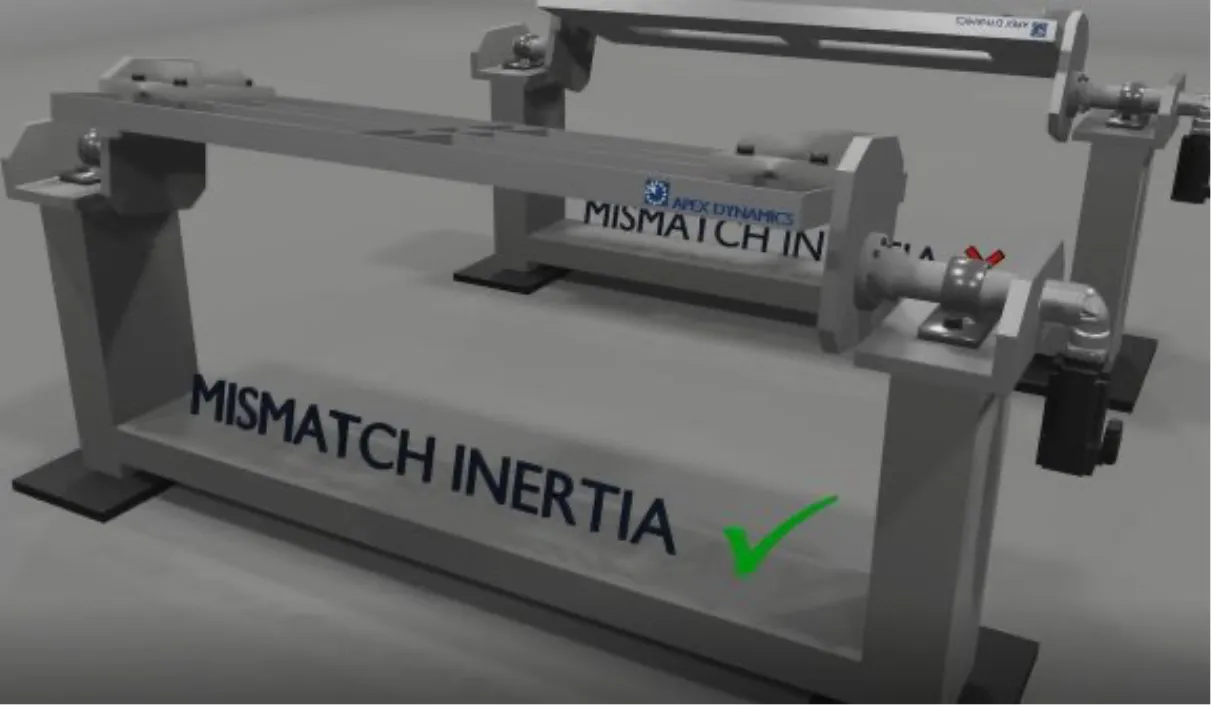
Wat als er een groot verschil is tussen de load inertia en motor inertia? In dit artikel bespreken we aan de hand van een video waarom het belangrijk is dat beiden een goede verhouding hebben.
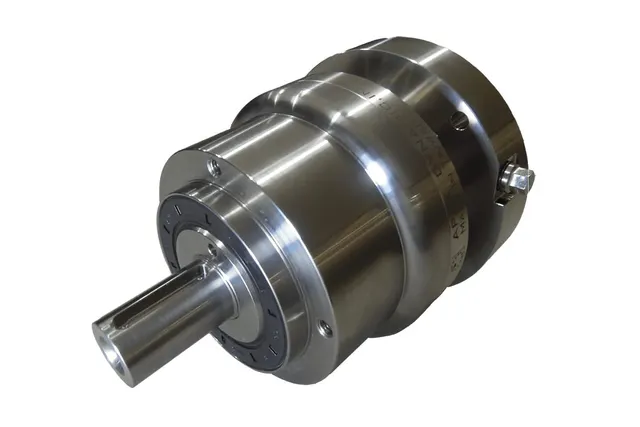
Using a gearbox solves this well and has the advantage of using a lighter, more accurate drive system.
One of the energy conversions used in almost all machinery is the transition from electricity to motion. The tool used to convert this is known as an "electric motor." Broadly speaking, electric motor applications are divided into S1(continuous running motor) and S5 (intermittent running and braking motor, duty cycle less than 60% and less than 20 minutes continuous). Especially with S5 operation, it is important to look carefully at the inertia ratios.
Video inertial difference
In the video about mass inertia you see an S5 application.Have you ever experienced anything like this as with machine 1? This problem arises because there is a big difference between the IL (load inertia) and IM (motor inertia) used. What is a good ratio of IL and IM To make the movement perfect like machine 2? This is a bit confusing because there are a number of answers : Make the load lighter, take a heavier motor, introduce a gear ratio, dampers, etcetera. We calculate it as follows:
Optimal inertia calculation
For an optimal inertia ratio, the empirical -and dimensionless- rule applies:
JL/ i^2 <= 4 JM.
JL = Mass inertia of the load, JM = Mass inertia of the motor and i = transfer ratio. The most ideal situation for the system is when met: JL/ i^2 = JM
From the above equation, many believe that weighting the motor or setting the JL to the servo motor parameters can solve the problem. That decision is correct only if the inertial difference is not too large. But what if the difference between JL and JM is much larger? Then how heavy should we choose the electric motor?
Using the formula JL/ i^2 <= 4 JM, we can obtain maximum results with a relatively small motor by using a gearbox with gear ratio (i).
Mass inertia practical example
The application from the video has a load of about 200 kg and needs to turn it 180 degrees in 1 second. Machine 1 is driven by a motor only, machine 2 by a gear motor. Of the latter, the motor specifications are only 750 watts at 3,000 rpm. A light, accurate and stable drive. Interesting right?
Take contact on with Apex Dynamics for advice regarding problems with your application, we are happy to help.
Question about this story? Ask your question
Companies in this story

Keep following this
Get an email when a new story is published. No account needed.
- ThemeTailored motion and drive systems
- SubjectMotion, gears & drives
- CompanyApex Dynamics