Motion: electric or pneumatic. Which technology is right?
With all the technological advances in drive systems, it is worth taking a fresh look at long-held assumptions from time to time.
If you avoided pneumatic drives in the past because they were traditionally considered an expensive solution, they could now turn out to be the cheapest option, even in operation.
The choice between electric and pneumatic cannot be reduced to a few rules of thumb. Technology, application and total cost each play a major role. The cheapest option to buy is often not the cheapest to run. And operating costs are becoming increasingly important. It is essential to weigh investment costs against operating costs, which can still be quite a challenge. There is simply no one solution that is best in every case. The function determines which solution is the best fit.
Application
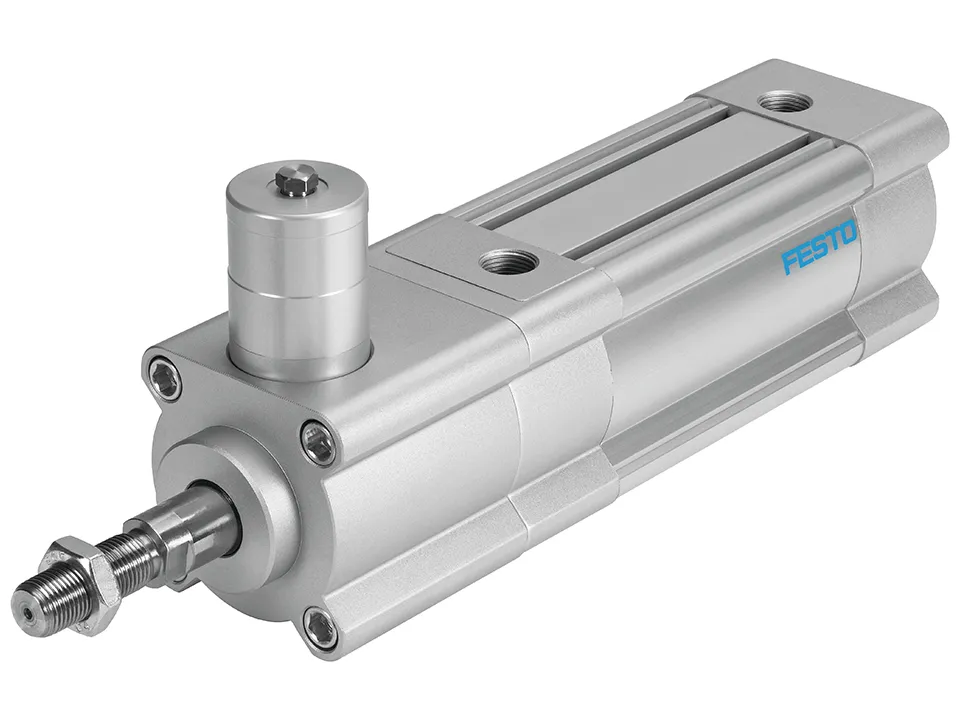
If the function is a simple point-to-point movement, a pneumatic actuator is the most obvious choice. For dynamic, programmable drives, an electric drive might seem the best option. But pneumatic drives are continuing to evolve and are becoming increasingly ‘smart’. Pneumatic actuators can achieve speeds of up to 3 m/s and accelerations of up to 30 m/s2. Most applications require speeds of between 0.3 and 1.5 m/s. Electric drives typically use a mechanical drive consisting of a toothed belt axis or screw axis coupled to a motor that provides the movement. Toothed belt axes can deliver high dynamics, with speeds of up to 10 m/s and accelerations of up to 100 m/s2. For screw axes, the maximum speed is around 5 m/s and acceleration is 50 m/s2. Typical values in applications are usually between 0.1 and 2 m/s and 10 and 20 m/s2.
Performance
In pneumatic drives, force is determined by the piston diameter. With electric drives, force can be scaled through the mechanical transmission (gearbox, screw lead). However, greater force always comes at the expense of speed. In general, toothed belt axes offer high dynamics but limited force, while screw axes deliver high forces but low dynamics. Pneumatic actuators are attractive from an installation perspective because of their compact design and high force density, but weight is also a factor. Their low weight makes them particularly suitable for use on robot arms, for example in pneumatic grippers and end-of-arm tooling for robots. In addition to the mechanical axis, electric actuators require a motor, mounting kit and gearbox, so they take up relatively more installation space. This increases the machine’s overall footprint when it is electrified. Drives also generate heat, which may mean that an additional air-conditioning unit is needed in the machine. The accuracy of pneumatic drives depends heavily on the type of cylinder, with or without guides and adjustable end positions, and ranges from 50 to 300 microns. Screw axes achieve the highest accuracy, down to less than 20 microns. Electric toothed belt axes have a degree of elasticity and are comparable in accuracy to their pneumatic counterparts. In potentially explosive atmospheres, a pneumatic or servopneumatic solution is easier to implement. Pneumatic drives are also often a cost-effective solution in humid and corrosive conditions, thanks to their robust construction and freedom to choose materials.
Sustainability
Pneumatics has a poor reputation when it comes to energy efficiency, but it certainly has a place in a sustainable world. A compressor uses around 15% of its electrical energy to compress air. The rest is lost as heat, but that heat can be reused, for example to heat process water. Compressed air losses caused by leaks can be easily prevented through good maintenance or smart monitoring systems. Pneumatic components themselves leak very little and also have a low environmental footprint during production. Correctly sizing the drive is crucial to energy consumption. People naturally tend to oversize, and in many processes every component has a safety factor, resulting in the entire process being massively oversized.
A sizing tool can help prevent oversizing and deliver substantial savings. For example, a piston diameter of 50 mm may be in use when 40 mm would be sufficient. The tool provides immediate insight into energy consumption. There is a simple rule of thumb: pneumatic actuators are energy-efficient at high loads and with few movements. Electric drives are efficient with many movements and low forces. The application therefore has a major influence on energy efficiency. Pneumatics may seem like an expensive solution, but in practice it can turn out to be the cheapest. For a fair comparison, all cost categories need to be made transparent: purchase costs, installation costs, energy costs and maintenance costs. The first two can be obtained from the supplier. Total energy costs are calculated using the application parameters, while maintenance costs depend on a number of factors, such as environmental conditions.

The bigger picture
Broadly speaking, electric drives are highly accurate, fast and easy to control. Pneumatic drives are more compact for the same force. Energy consumption is becoming an increasingly important factor, but little is often known about the point at which one technology becomes more advantageous than the other. For example, one customer has a machine that cuts tubes to length. This was previously done using a pneumatic two-position cylinder. The machine had to be adapted to handle seven different sizes instead of two. The customer initially thought that servopneumatics would be a good solution, but electric proved by far the most cost-effective. The lightest motors were selected, based on stepper motor technology. The recommendation was based on the function of the drive and the requirements specified. Which drive is best in a particular situation depends on more than just the movement required.
Simplified Motion series
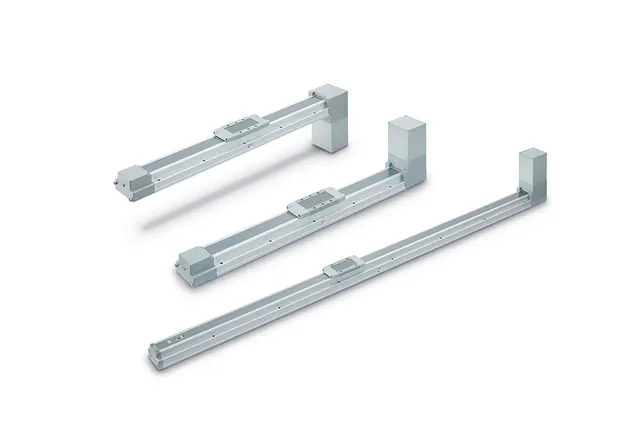
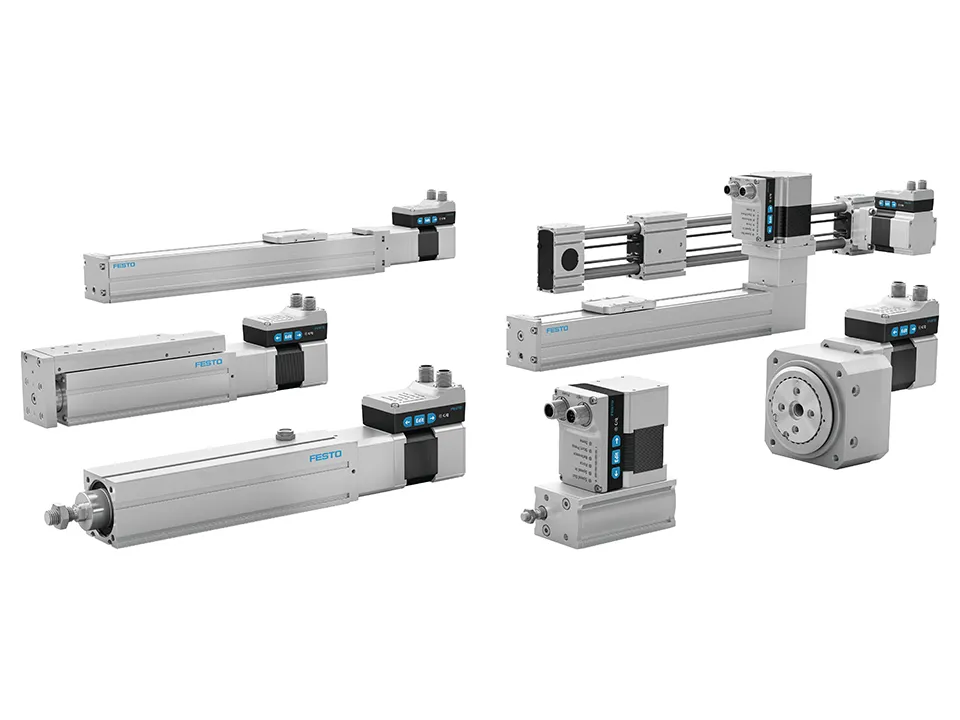
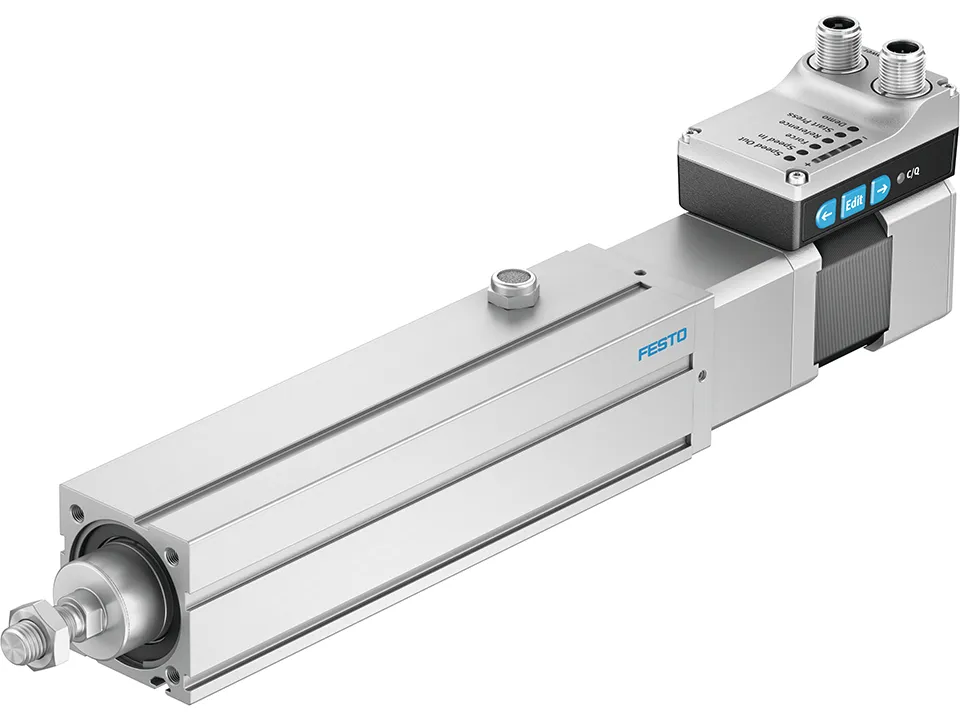
The Simplified Motion series consists of electromechanical actuators designed for simple, easy installation and operation, much like pneumatic actuators. Movements include end-to-end positioning and pressing/clamping. Each axis consists of an electromechanical actuator with an integrated motor to minimise installation time and space requirements. A wide range of options and stroke lengths is available for a variety of applications.
Question about this story? Ask your question
Keep following this
Get an email when a new story is published. No account needed.
- ThemeTailored motion and drive systems
- SubjectMotion, gears & drives