Pneumatic cobot: a new era of human-robot collaboration is dawning
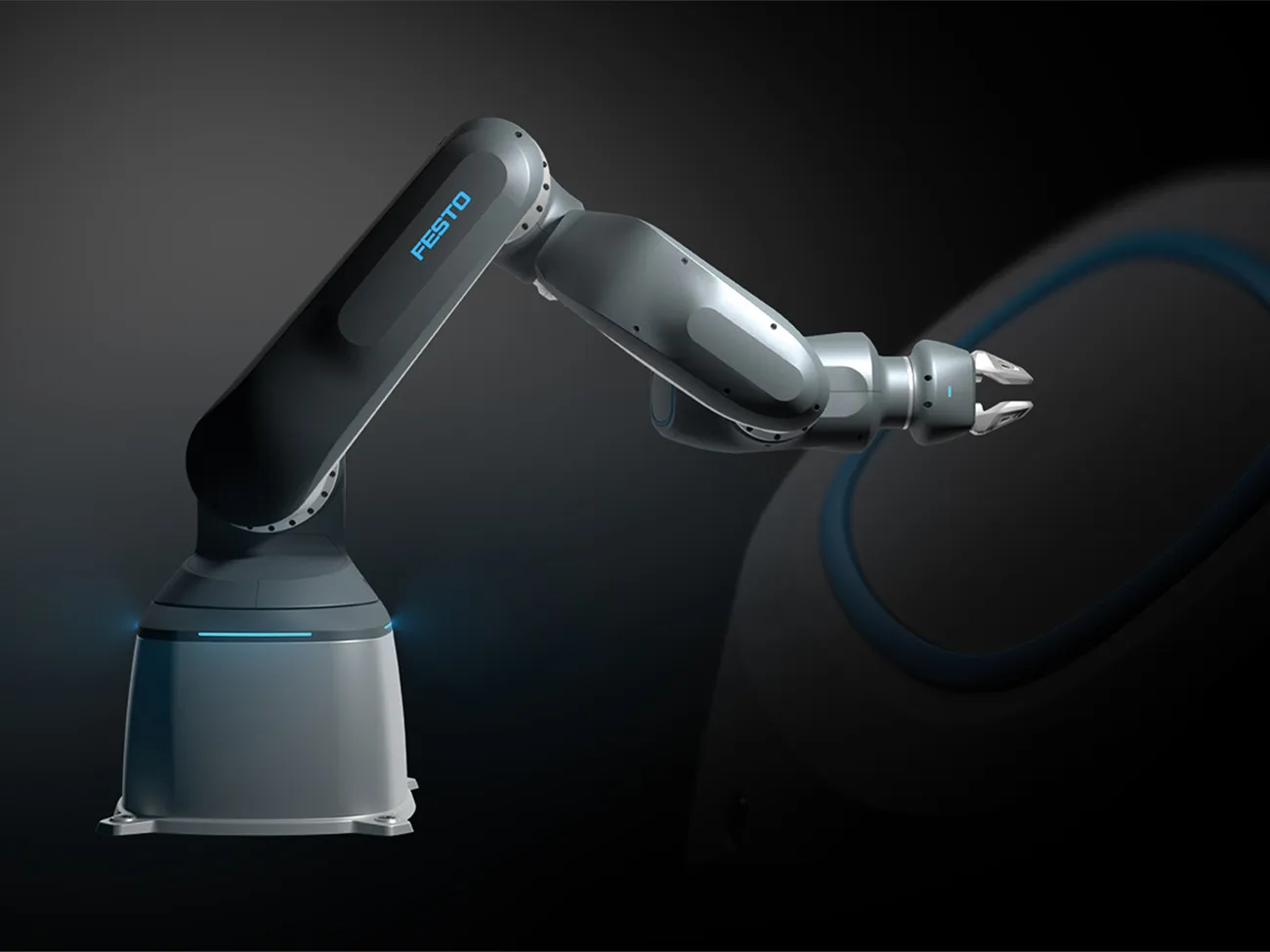
What if there were robots that were easy to operate, needed no safety fencing and were attractively priced? That would usher in a whole new era of human-robot collaboration. This era is now dawning with the world’s first pneumatic robot from Festo.
Festo’s operator-friendly cobot sets a new standard
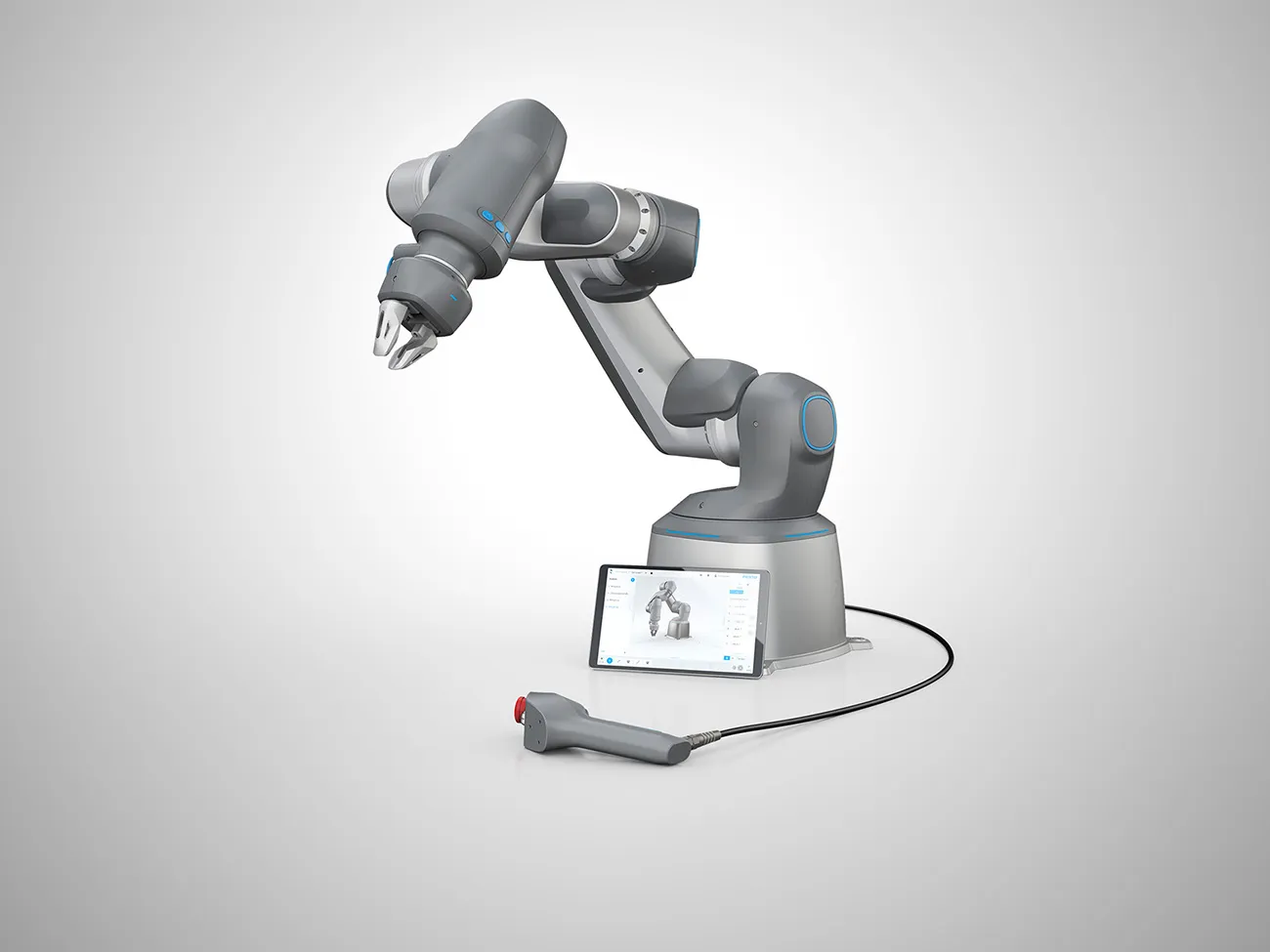
Few industrial market segments are set to grow as quickly in the coming years as human-robot collaboration. Cobots take on heavy or repetitive tasks, giving employees more scope to focus on other work while making their jobs less strenuous and healthier. Pneumatics offers the most flexible and ‘sensitive’ solution for making this collaboration comfortable and safe.
The benefits of pneumatics
The Festo cobot owes many of its advantages to pneumatics: its sensitivity, low weight and favourable price-performance ratio. The direct drives in the cobot’s joints, for example, are less expensive and lighter in weight. This contrasts with an electric version, which requires heavier drives and costly torque sensors. The world’s first pneumatic cobot is also the result of Festo’s exceptional expertise in controlled pneumatics.

An affordable option, including for SMEs
The Festo cobot brings cobots within reach of SMEs, where many processes are still often carried out manually. Its flexibility makes it possible to automate smaller batches and individual work steps. What’s more, intuitive commissioning and programming mean that employees can start working with the cobot quickly, without the need for expensive training programmes.
The pneumatic Festo cobot will also be less expensive than the electric version in the same class. Its price-performance ratio is particularly favourable in its primary application area: handling small parts weighing up to 3 kg. “When the Festo cobot comes to market in 2023, its ease of operation will set new standards for human-robot collaboration,” says Dr Frank Melzer, Director of Product and Technology Management at Festo.
Easy to operate and versatile
The Festo cobot comprises the robot hardware, a hand module and Robotic Suite, intuitive software that enables the cobot to be commissioned and programmed within a few hours. No prior knowledge of robotics is required, thanks to the clearly presented, standardised function blocks available in the software. The pneumatic drives also make it easy to teach the robot arm specific points or paths by hand, with no resistance.
SMEs in particular benefit from cobots that can be deployed quickly and pragmatically for new tasks, rather than simply carrying out the same task continuously. This is exactly where the Festo cobot excels. It does not require an additional, cumbersome control cabinet that is also difficult to connect. Instead, its space-saving integrated controller in the base makes it highly flexible. Simple connections allow the cobot to be deployed on an ad hoc basis, with no lengthy changeover times. Standard bus systems make it easy to connect to higher-level control systems. This also means it takes up less space.
Thanks to state-of-the-art lightweight construction methods, Festo has kept the cobot’s weight well below 20 kg. This means it can be moved quickly and flexibly from one location to another.
Safer, faster working
Like a human arm, the Festo cobot has an exact reach of 670 mm, making it the ideal third hand in a team. Like a real colleague, it moves within a range that is easy for the human operator to monitor.
Thanks to the flexibility of its pneumatic drives, the cobot works with sensitivity, moving at a speed suited to the situation and with smooth, harmonious movements. A touch therefore feels as gentle as human contact. The cobot’s pneumatic direct drive, combined with its low weight, also helps to reduce contact energy.
Christian Tarragona, Head of Robotics at Festo: “The precise pressure regulators in the joints allow the robot to detect when it is touched and respond with the appropriate safety functions.” This enables employees to work completely safely alongside their sensitive technical colleague.
Question about this story? Ask your question
Companies in this story

Keep following this
Get an email when a new story is published. No account needed.
- ThemeFlexible production with robots
- SubjectMotion, gears & drives
- CompanyFesto