Robots learn new tricks
Over the past ten years, the number of robots installed each year has tripled. At the end of 2019, the number of robots in factories worldwide stood at 381,000 units. The International Federation of Robotics (IFR) sums up the five key trends that will shape the industry in the years ahead.
New tasks lie ahead for robots. Combining software with artificial intelligence, vision and other sensory systems enables robots to master difficult tasks. One such job is bin picking, which in the past could only be done by human hands. By contrast, new generations of robots are easier to install, programme and connect. Advances in communication protocols also allow robots to be seamlessly integrated into automation and Industry 4.0 strategies.
Robots at work in smart factories
The automotive sector has led the way in smart factories. Industrial robots have dominated the automation of vehicle production along assembly lines for more than a hundred years. The future now lies in the networked interaction of robots and AGVs (automated guided vehicles), or perhaps they should be called autonomous mobile robots (AMRs). Equipped with the latest navigation technology, these mobile robots are much more flexible than traditional production lines. Car chassis move along conveyor systems without a driver. They can be removed from the assembly line and redirected to assembly stations to produce individual variants. When car models change completely, only the robots and AMRs need to be reprogrammed. In the past, this meant dismantling the entire production line. The increasingly popular workstations where people and robots work together will also mean fewer safety fences.
Robots enter new markets
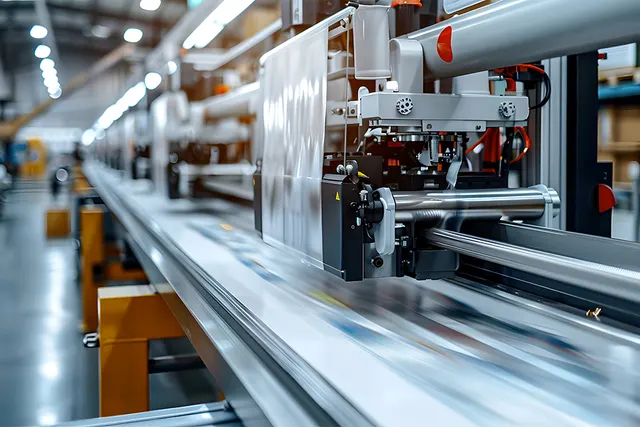
Breakthroughs in connectivity are expanding the scope for robots. A number of sectors are only now beginning to make full use of robotics on the shop floor, including food & beverage, woodworking and plastics manufacturing. This digital transformation will lead to entirely new business models, as it becomes easier than ever for manufacturers to diversify. In the smart factory, the same machines will assemble a mix of different products. The traditional production line will become a thing of the past.
Robots reduce the CO2 footprint
Investment in modern robot technology is also being driven by the need to reduce the CO2 footprint. Modern robots are energy-efficient, helping to lower energy consumption in production. Their greater accuracy means more products pass quality control, positively affecting the ratio of raw materials used to output. Robots also contribute to the cost-efficient production of renewable energy equipment, such as solar panels and hydrogen cells.
Robots help secure the supply chain
The pandemic exposed the weak points of globalised supply chains. Covid-19 did not spark any new trends in robotics, but it did accelerate the use of robots. They have become commonplace in production environments. Manufacturers are seizing this moment to look at logistics from a completely new perspective. When automation can boost productivity, manufacturers gain the flexibility they need to compete in high-wage countries. Robotics delivers productivity, flexibility and safety.
Question about this story? Ask your question
Keep following this
Get an email when a new story is published. No account needed.
- ThemeFlexible production with robots
- SubjectMotion, gears & drives