Platform on production and process automation

Whereas robots used to be primarily complex and dangerous "devices," they have now become ergonomic, easy to program and multi-purpose "friends. Friends because they still provide support in performing boring, dangerous or difficult tasks, but also because they increasingly literally cooperate with humans. In doing so, they are supported by advanced sensors and artificial intelligence, which ultimately determine the functionality of the modern robot.
Robots play an important role in industrial automation. Mainly because they go significantly further than, for example, standard pick&place solutions in which components are moved from point A to B and distances, forces and gripping openings are limited. Robots are freely programmable and deployable for more and different tasks.
With the first generation of robots, engineers did have some serious challenges: programming was relatively complex, and the high speeds and low safety measures also made robots relatively dangerous. Installing heavy industrial fencing and light barriers provided the best solution.
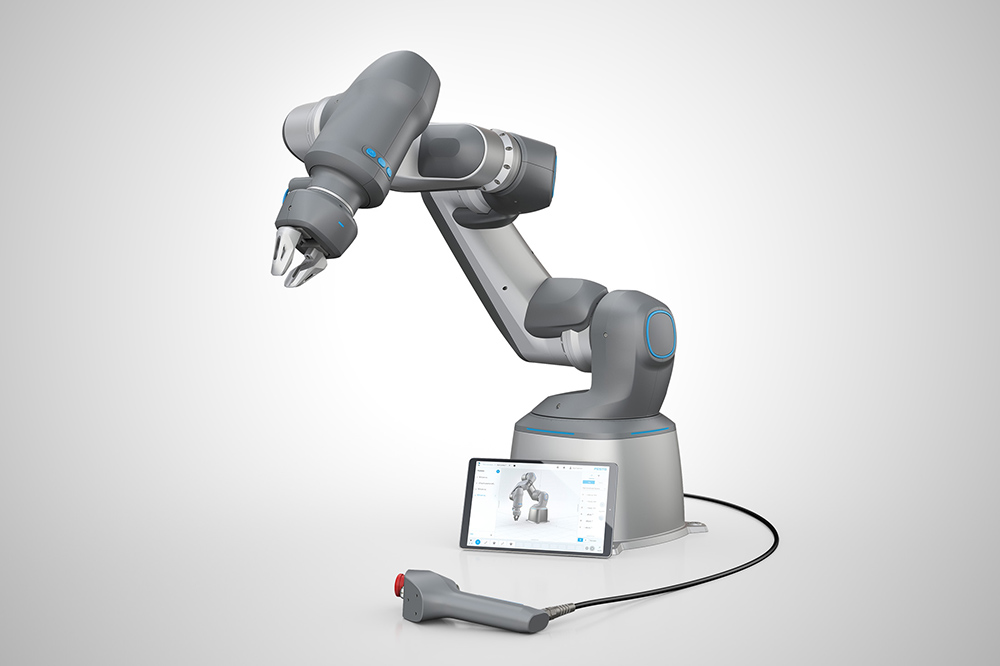
Fortunately, the current generation of robots has improved greatly. Partly due to developments in sensors, which have become not only better but also cheaper. In doing so, they deliver their benefits on several fronts.
For example, in the area of safety. Sensors are able to detect hazards and, based on this, make the robot react appropriately. Vision sensors see objects that shouldn't be there, while pressure sensors "sense" when the robot touches an object.
The same sensors have been distinctive in developing the so-called cobots. These collaborative robots work together with humans and thus cannot be placed behind heavy fences. Human and environmental safety is ensured by operating these robots at a safe speed. As a result, a "collision" will not result in serious injury. On the other hand, sensors are used to quickly detect a touch and respond by having the robot stop, pull back or reduce speed further.
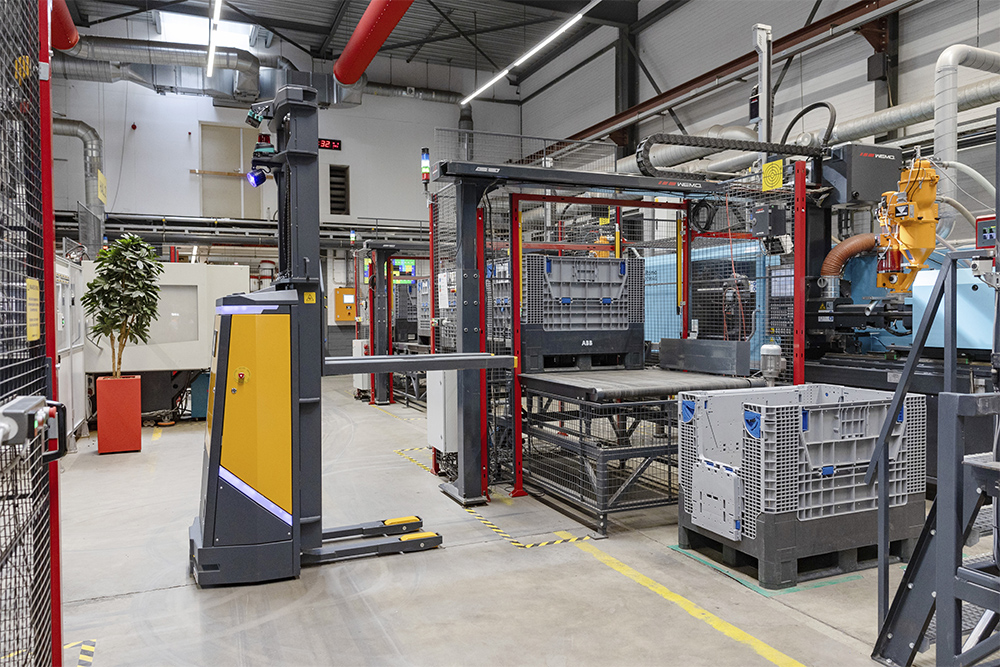
Sensors also play a leading role in terms of functionality. It is also said that the machine itself - the platform - is actually only secondary and that the functionality is in the tooling that the robot handles. Here, sensors determine the movements or pinch force or enable lightning-fast inspections.
And speaking of functionality, robots are becoming increasingly intelligent because of artificial intelligence, among other things. This means that they are not completely rigidly pre-programmed, but that intelligence determines in part how they move. A good example of this is unloading a container of packages of various sizes and weights. If you do not know in advance exactly how the container is loaded, you also cannot send the robot exactly to a point in space to grab a package. Vision then first determines which package is most convenient to grab first and then how the robot should do it. The same goes for picking products from bins or containers, then placing them correctly on an assembly line or performing a quality inspection.
In addition to the trends mentioned above, which are directly related to sensors, there are also ongoing developments related to so-called bionic robots. Bionic is derived from the word "bionics," which literally means "like life. The associated science therefore focuses on researching diverse processes in nature and then applying them technologically.
Finally, robots are increasingly easy to program. In fact, instead of typing program lines, the designer configures the robot by choosing function blocks and linking them together. It has been an important development for SMEs to also take advantage of robots to work more safely and efficiently.