












3D printing Notre-Dame?
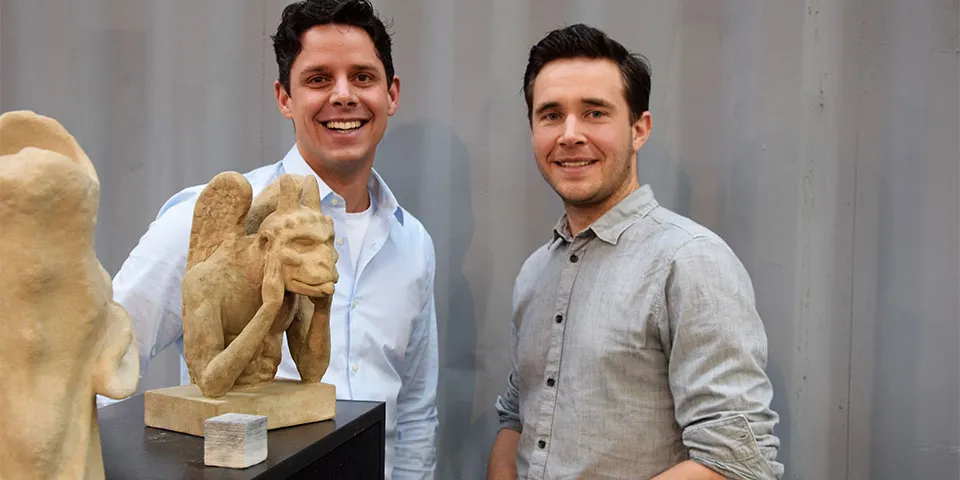
Bring Notre-Dame back from the ashes, literally, using 3D technology. Concr3de proposed using the burnt remains of the Paris cathedral as raw material to restore the damaged stonework through 3D printing. To develop its 3D printer, the Rotterdam-based company looked for and found a full-package supplier in Festo.
In its proposal, Concr3de pointed to the shortage of craftspeople and original materials needed to reconstruct the destroyed sections using medieval techniques. The company advocates the use of modern materials and techniques. Printing with the building’s ash is not only much faster, but also adds a story to the building. The scans needed for 3D reconstruction are available. In 2013, American scientist Andrew Tallon mapped the entire building in 3D. Concr3de used one of his scans to reconstruct an ornament from Notre-Dame, known as a Stryge. Using limestone powder and a binder, the company printed a 30 cm-high model of the ornament in five hours.
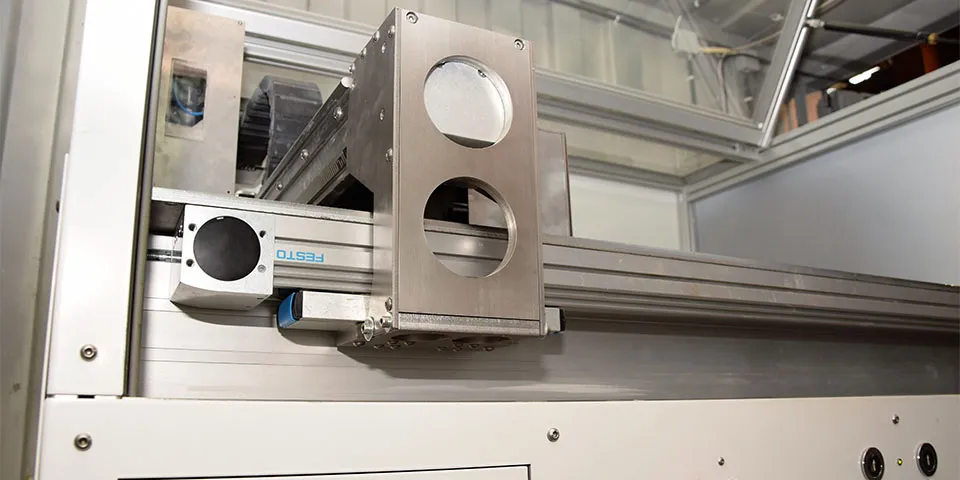
The ELGA linear actuator from Festo was also mounted upside down, ensuring that no dust could get in.
Actuator with overpressure capability
Designing a machine like this was no easy task. Evert Kranendonk explains the challenges involved in building it and how Jeroen ter Brake from Festo helped overcome them. The requirement was to use a linear actuator for the handling system that controls the movements of the printer head. Festo optimised the prototype design and made it scalable. The actuator used, the ELGA, has an overpressure capability. It also has a good protective cover. That makes it ideal for the conditions inside the printer. Kranendonk: “I’m a mechanical engineer, but I didn’t know such an actuator existed, or that you could have an overpressure capability on one. Jeroen recognised the challenge posed by a dusty atmosphere and knew exactly what was needed.”
Accuracy
As well as the ELGA, Festo supplied a controller, the Z-axis, components for the binder feed system and the pipework. Using data from Concr3de, Festo calculated the axes, accelerations, motor and controller in detail to achieve the right balance between all the mass moments of inertia. “We opted for servo technology because of its high accuracy. We’re now working with 60-micron steps, or pixels that are printed. The chemical process continues for a certain period after printing. So we had to work through all those reactions, the stable and unstable phases, with great precision,” says Kranendonk.
Question about this story? Ask your question
Companies in this story

Keep following this
Get an email when a new story is published. No account needed.
- SubjectNews
- CompanyFesto







