












ABISS 2019 | Smart data is the foundation for Industry 4.0
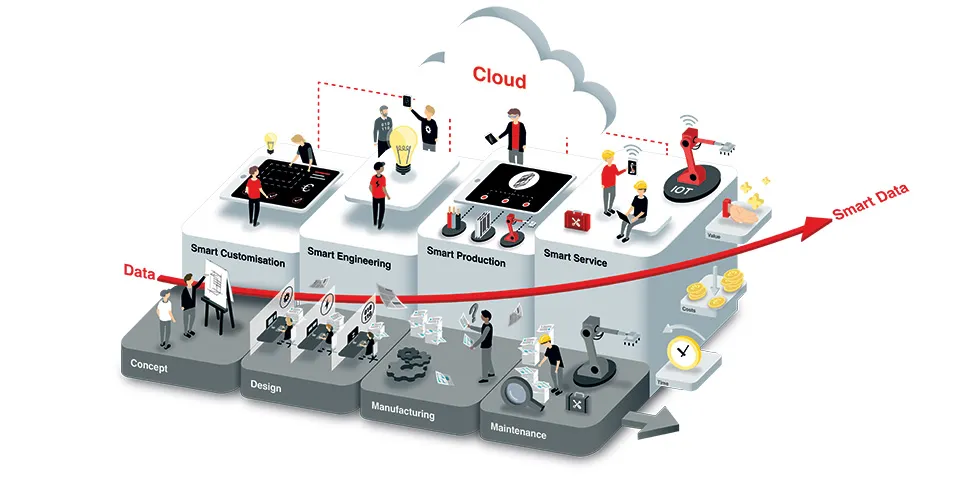
To take the step towards Industry 4.0, the first priority is to create a paperless environment where data is shared across departmental boundaries. The fast, digital flow of data via the cloud enables smoother communication between departments and significantly reduces lead times. Above all, it lays the foundation for smart customisation, smart engineering, smart production and smart service.

EPLAN offers solutions for using engineering data intelligently in production too.
Even companies aiming for paperless offices are by no means always ready to take the step towards Industry 4.0. “Digital does not always mean ‘smart’,” says Marijn Roels, consultant at EPLAN. “Many companies use a host of different ‘formats’: documents in CAD, Word, Excel, PDF … The result is that many different versions are in circulation, each kept up to date in different places. This is a consequence of the silo mentality that still prevails. This gets to the heart of why Industry 4.0 is still not a reality in many companies. To succeed, an integrated, cross-departmental approach is needed, in which data can be reused by everyone and is continuously enriched. Turn digital into the Industry 4.0 approach: smart and integrated!”

When a service engineer scans a machine’s QR code, they can access diagrams, manuals or even get remote guidance to carry out repairs.
Collaboration pays off
The process starts in the sales department, which often works out the project on paper together with the customer. “Engineering then has to turn these ideas into drawings and work out how to build them, which is not always straightforward and can take a great deal of time,” says Roels. “Our solutions enable companies to optimise this workflow considerably, for example by building configurators that allow customers to assemble their own product. Engineers can then use and develop this data immediately, without the risk of misinterpretation. This not only saves a huge amount of time, but also makes it easier to estimate the quotation and delivery time. We also offer IT solutions for sharing this information between departments. This has proved to be the biggest bottleneck, particularly for proponents of sequential engineering. Take, for example, a project that starts in the mechanical department. The bill of materials is sent to E&I, but the mechanical department subsequently makes further changes and forgets to communicate them to E&I. This often means that something does not fit when it is delivered, leading to extra costs and delays to the entire production process. Delivery times also suffer. It is far better for specialists from the electrical, mechanical and software departments to work together on the same virtual prototype of a machine or installation. This smart approach delivers additional value when the process is linked to production. EPLAN offers solutions for using data intelligently at this stage too, including to control machines and minimise manual intervention. Faster throughput and fewer errors are once again clear benefits.”
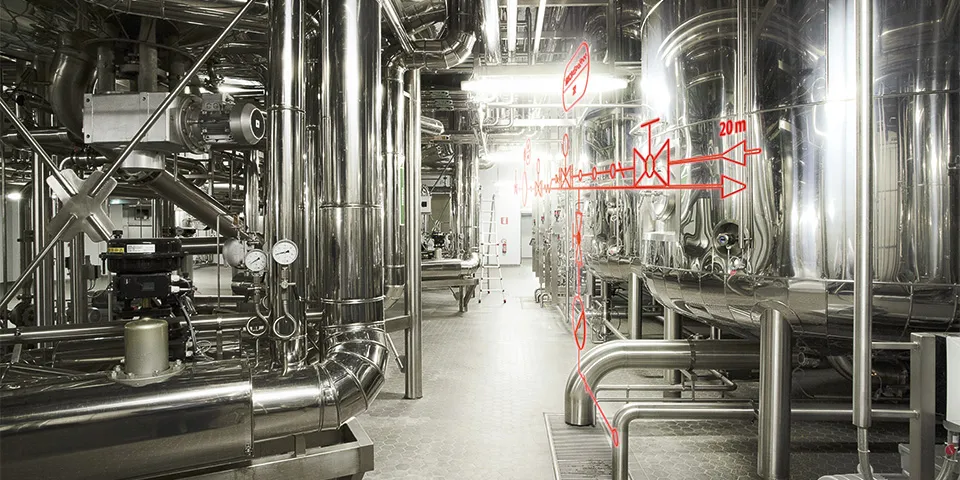
Configurators allow customers and the sales department to put together the solution, after which engineers use and develop this data, with no risk of misinterpretation. (Image: Stefano Gilera)
Smart, even beyond the factory walls
Even after a machine or installation leaves the factory, its project data can continue to be used. “Because all the information is in the cloud, the possible applications are no longer physically limited,” explains Roels. “This opens up a host of opportunities in customer service and smart service. For example, machines can be fitted with a QR code. When a service engineer scans it, they can access diagrams, manuals or even receive remote guidance to carry out repairs. The data can also be linked to information or solutions from other suppliers, such as remote and online machine analysis. This means errors can be resolved more quickly at this stage. Of course, there is no standard IT solution that can optimise every data flow for every manufacturer. But the Smart EPLAN Platform already puts you well on the way to optimising your engineering-related processes. We do not simply supply one or more software packages. Instead, we analyse your specific situation, advise you on how to optimise your workflows and data processes, and provide the software solutions to make it happen. The result is clear: shorter delivery times, lower costs and greater added value for the product.”
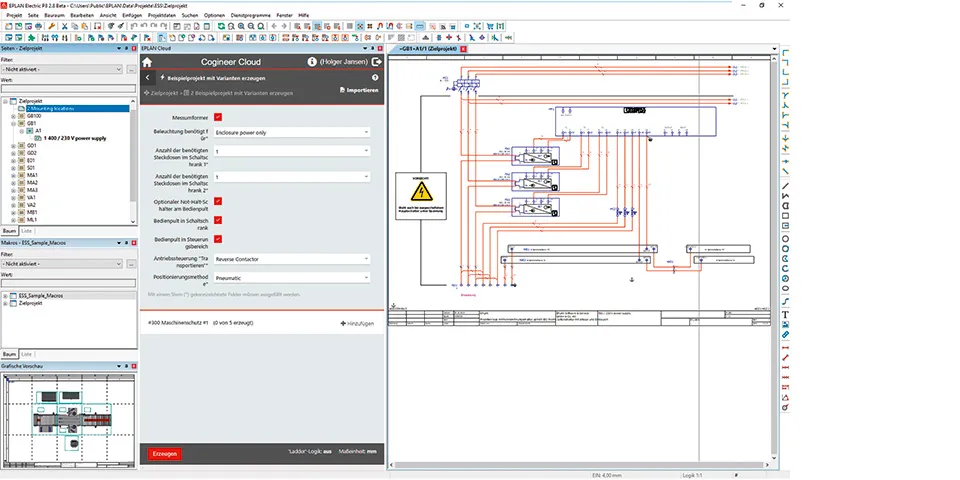
It is far better for specialists from the electrical, mechanical and software departments to work together on the same virtual prototype of a machine or installation.
Question about this story? Ask your question
Keep following this
Get an email when a new story is published. No account needed.
- ThemeFrom factory data to decisions
- SubjectNews







