












Artificial intelligence is transforming the world of grippers
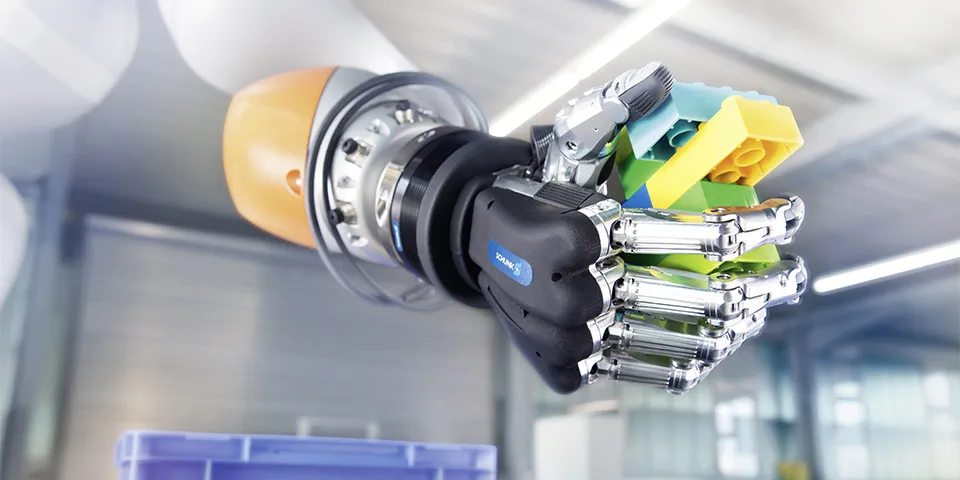
Grippers play a crucial role in moving products efficiently. After all, they ensure that enough force is applied to move an item stably, but not so much that it is damaged. In an era of high-mix, low-volume production, the challenge is to design grippers that can handle a wide range of different products. Artificial intelligence is the answer, enabling grippers to adapt autonomously to the items passing through. This is no longer just theory: the first smart grippers are already at work in industry.
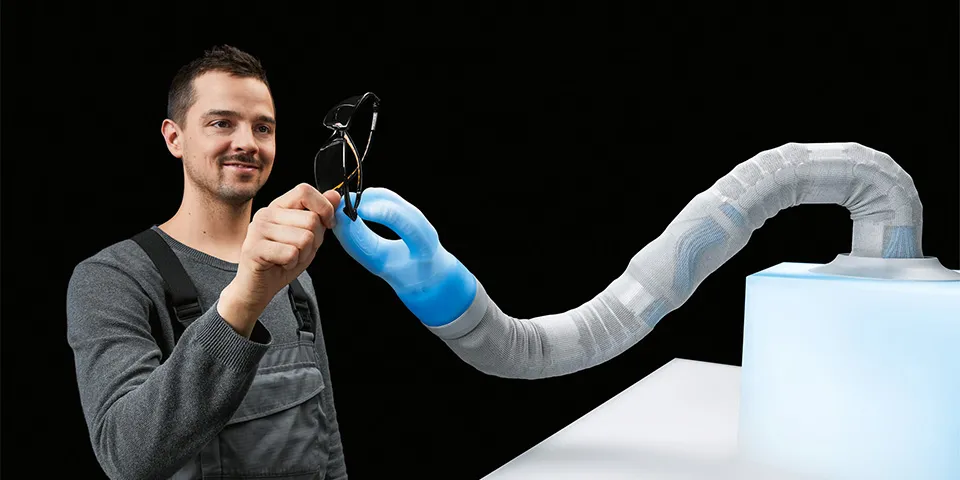
Grippers used to have it easier. Their job was to ensure they operated as quickly and reliably as possible. That was all there was to it. Grippers knew the geometry of the items, and the positions at which they had to be picked up and put down. In effect, this was a very rigid way of working. Reliable handling depended on the items being fed in exactly the same way, along predetermined paths and to specific coordinates at their destination. In modern production processes, however, the focus has shifted to flexibility. Digitalisation has brought automatic, fully connected and autonomous production systems gradually closer to reality. And this has had an impact on grippers, too.
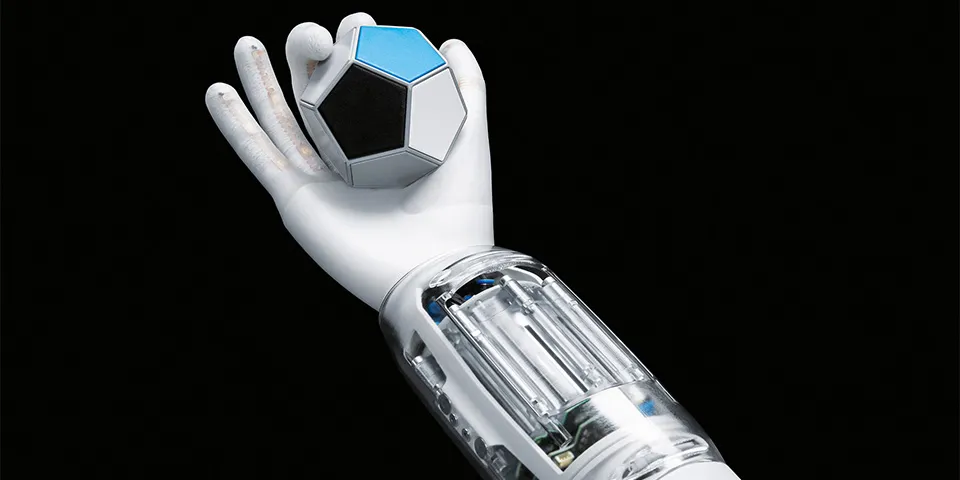
What makes these technologies particularly attractive is the ability to share lessons learned with, for example, other gripper systems used in similar applications across a production network or at different sites. (Image: Ruediger J. Vogel)
Adapting to different products every time
Grippers will have to learn to adapt to each product as it arrives, just like human hands. This process is taking its first tentative steps with the introduction of applications featuring cognitive intelligence. Using a camera, robots learn from operators how to perform certain gripping tasks independently. Training essentially involves learning to classify, so they know how best to handle each item. Artificial intelligence will play an important role in this evolution in the smart factories of tomorrow. Gripper manufacturers are working on algorithms to classify different geometries and configurations, as well as algorithms that can use this classification to develop an optimal gripping strategy. It is complex material, but the real trick is to keep that complexity behind the scenes and offer the operator a user-friendly interface. Plug and play.
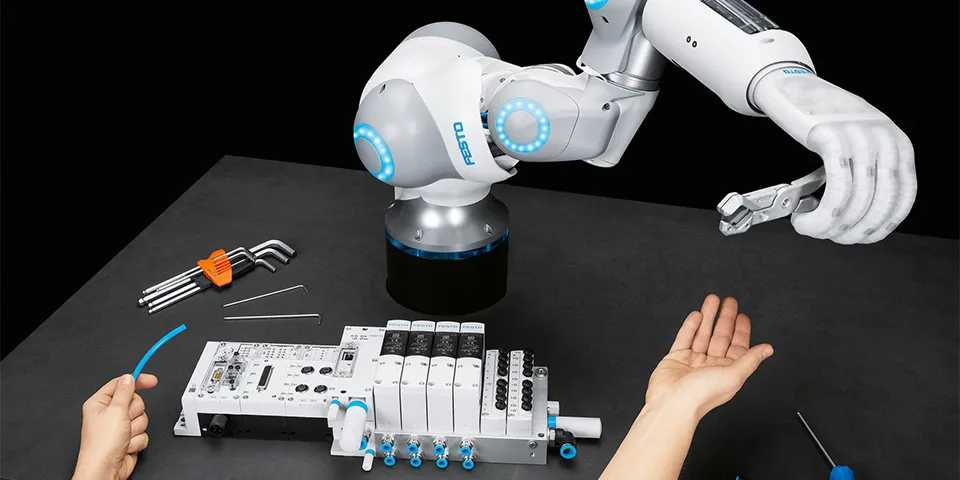
Just a few learning cycles are needed
These developments are no longer the stuff of some distant future. Specialists are already making it possible to put grippers to work intelligently and achieve good results after just a few learning cycles. Thanks to the empirical values they have learned, grippers can quickly determine the best way to pick up and transport the item being handled. This learning can also take place in different ways, using a camera system to help identify where items are and where they need to be placed. But grippers can also take on this task themselves, essentially feeling out their surroundings.
Communication is crucial
Another important part of the picture is that grippers learn to communicate. If they can pass on the information they have gathered about an object or workpiece to the next station, the necessary adjustments can be made there in advance, for example, to set the stroke or gripping force. Grippers will therefore be able to handle not only a wider variety of workpieces, but also a broader range of tasks. This can even extend to planning, with grippers handling all gripping tasks and communicating with components upstream and downstream in the production line or machine.
Sharing lessons learned
What makes these technologies particularly attractive is the ability to share lessons learned with, for example, other gripper systems used in similar applications across a production network or at different sites, for instance by using cloud solutions. If the object is already known, the optimal gripping movement is started automatically. If it is not known, the camera system records it and determines the best way to grip it without interrupting production. Lessons learned are then added directly to the system, further expanding the corresponding library of gripping strategies.
Question about this story? Ask your question
Keep following this
Get an email when a new story is published. No account needed.
- ThemeFlexible production with robots
- SubjectNews







