












Big data generates revenue: a new service model for private solar energy systems
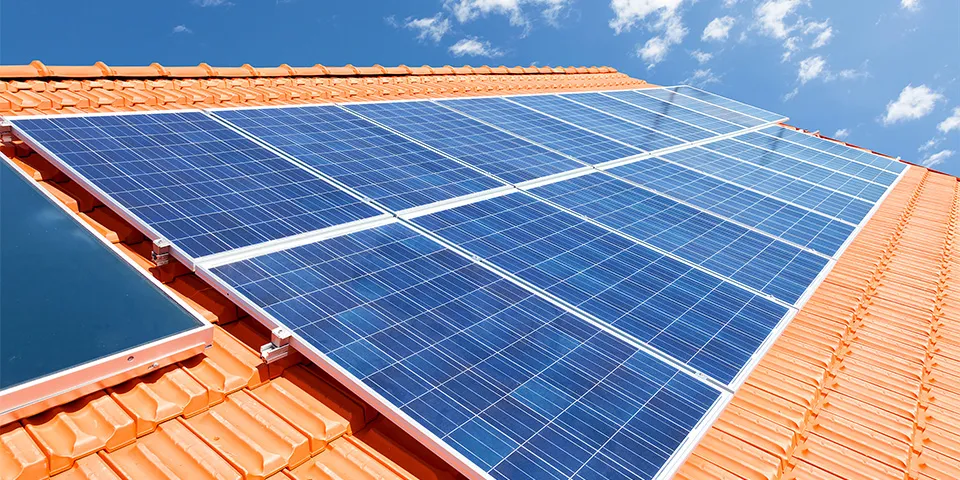
Homeowners currently buy their solar panels themselves. A US solar energy company is proving that there is another way. Under the new Power Purchase Agreement (PPA) concept, the solar energy company invests in installing and maintaining panels on the homeowner’s roof, while the owner buys the electricity they generate. To make this model possible, the company needed an edge-to-cloud solution. Big data, cloud storage and reliable wireless communications are essential to the concept. The US company developed solutions for accurate monitoring and billing using Moxa hardware products. Moxa is represented in Belgium by Technolec.
A US solar energy company has developed a highly innovative Power Purchase Agreement (PPA) concept, using big data, cloud storage and reliable wireless communications to make solar energy systems more accessible and affordable for the general public. “When the company and the homeowner sign a PPA contract, the company can install a solar energy system on the roof. In return, the homeowner agrees to buy the electricity generated by the solar panels at a fixed rate. The homeowner therefore does not have to buy or maintain the installation, while it provides the solar energy company with an additional revenue stream,” says Karel Mus, general manager of Technolec, the value-added distributor of products and components from companies including Moxa. “For the partnership to operate efficiently and effectively, and for the customer to receive an accurate bill, the supplier needs access to precise, real-time data. That is why they went looking for an edge-to-cloud solution.”
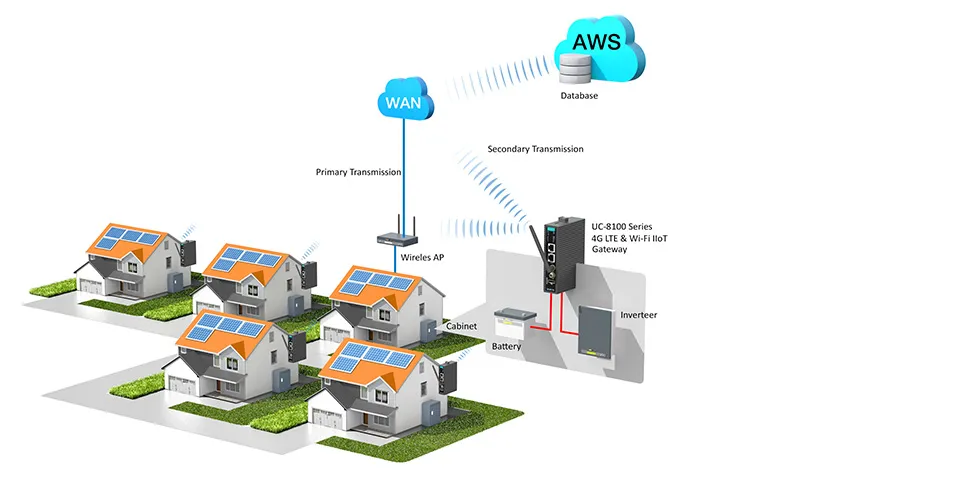
The Power Purchase Agreement model uses Moxa’s UC-8100 Series industrial ARM-based wireless DIN-rail computers, with two serial ports and two LAN ports, and its ThingsPro Gateway data acquisition software.
Moxa offers a solution
A reliable network system is essential for real-time monitoring of the end user’s energy consumption, and therefore for accurate billing. The solar energy company also needs this real-time data to balance energy supply and demand. IIoT gateways integrated into the solar energy system therefore play an important role in this project. They receive accurate energy production and consumption figures via Modbus communications. The data is then sent over wireless networks to an AWS Cloud with a ready-to-use data acquisition platform. These IIoT gateways enable the solar energy company to collect real-time data on the storage and consumption of many different solar energy systems across a large geographical area. To prevent data loss, the IIoT gateways incorporate a failover mechanism that automatically switches network communications to the secondary transmission method, the cellular network, if the primary method, Wi-Fi, fails. “When a fault occurs, the solar energy company can repair the Wi-Fi and, if necessary, change settings remotely using its in-house maintenance applications. RESTful APIs are used for this. Operators can therefore also carry out maintenance using their mobile devices,” Mus adds. “The Power Purchase Agreement model uses Moxa’s UC-8100 Series industrial ARM-based wireless DIN-rail computers, with two serial ports and two LAN ports, and its ThingsPro Gateway data acquisition software. The concept has already been well received in the US. Whether it will ever reach Belgium depends on the choices our policymakers make in the future.”
Question about this story? Ask your question
Keep following this
Get an email when a new story is published. No account needed.
- SubjectNews







