












Computing power in the cloud is crucial to the smart factory

In our daily lives, we have become accustomed to convenience. Smartphones have put it within easy reach. A simple example: photos are automatically backed up online so they cannot be lost and can be accessed on any device. We can even share them with family or friends. And as long as we have our voice, Siri and Alexa can answer any question we ask. These are all cloud services that we use without giving them much thought and without being able to explain exactly what the cloud is. With the promise of IoT, the technologies behind these services will increasingly find their way into industrial environments. In the future, the cloud and its computing power will be crucial building blocks for designing and controlling smart factories to their full potential.
What does working in the cloud actually involve? There is no fixed definition. For example, it refers to an IT concept in which resources (processing power, storage, applications, data, etc.) are delivered in real time over the internet to management or the billing department. Production resources and services can then be supplied on a scalable basis, depending on demand. A crucial element is the layer of virtualisation that separates the hardware from the applications. In fact, working in the cloud can be described as the industrialisation of IT services. Virtually unlimited resources can be made available to a virtually unlimited number of users. The result? Significant cost savings. This gives SMEs access to a level of computing power and data analysis that was previously the preserve of large companies. Collecting and systematically analysing large volumes of data over an extended period opens up opportunities for new business models. This is further driven by falling data transfer costs, increasing bandwidth, cheaper sensors and the digitalisation of production facilities.
What does the customer want to be offered?
A single sensor sending out digital signals is not Industry 4.0. Connecting a PLC to an internet router via Ethernet is not Industry 4.0 either. These are merely the technical foundations. Industry 4.0 is about digitalisation and networks, with the introduction of services, production models and business models at their core. Since Industry 4.0 is a relatively new development, most players do not have empirical data or benchmarks for comparison. They have to find their way through uncharted territory, without landmarks. How do we find the shortest route from analogue, linear business to digital, platform-based business in the future? We must not focus all our attention on the flow of data, but also consider the value chain. The question we should be asking is not ‘what can I offer my customers?’ but ‘what does the customer want to be offered?’. This means looking beyond the needs of the customer to consider the needs of their customers too. Whether it is specific functions or machines, data or services, the cloud can provide a solution. Data does not flow in just one direction: two-way communication is possible.
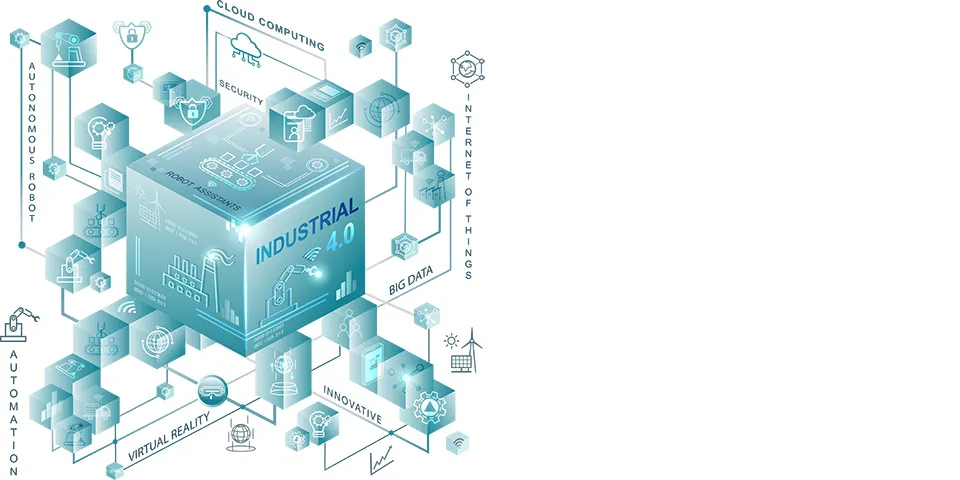
IoT is inconceivable without the cloud. Conversely, most cloud scenarios also derive their raison d’être, to a greater or lesser extent, from IoT concepts.
Conclusion
IoT is inconceivable without the cloud. Conversely, most cloud scenarios also derive their raison d’être, to a greater or lesser extent, from IoT concepts. Working in the cloud will completely change the face of the industry as we know it today. Companies will have access to virtually unlimited computing power and storage. This will transform not only the production process, but also relationships with suppliers, buyers and customers. This part of the digital transformation is still in its infancy. Companies need to understand what their business partners want and turn these wishes into their own digital services, using the existing ecosystem on offer.
How can working in the cloud add value for you?
Would you like to find out more about how you can apply these principles in your production process? You can! Lenze is offering its white paper on this subject free of charge. It provides practical tips and tricks in each of these areas to help you take your first steps in the digital transformation. Simply email marketing.be@lenze.com to request your copy.
Question about this story? Ask your question
Companies in this story

Keep following this
Get an email when a new story is published. No account needed.
- SubjectNews
- CompanyLenze







