












Connect and produce
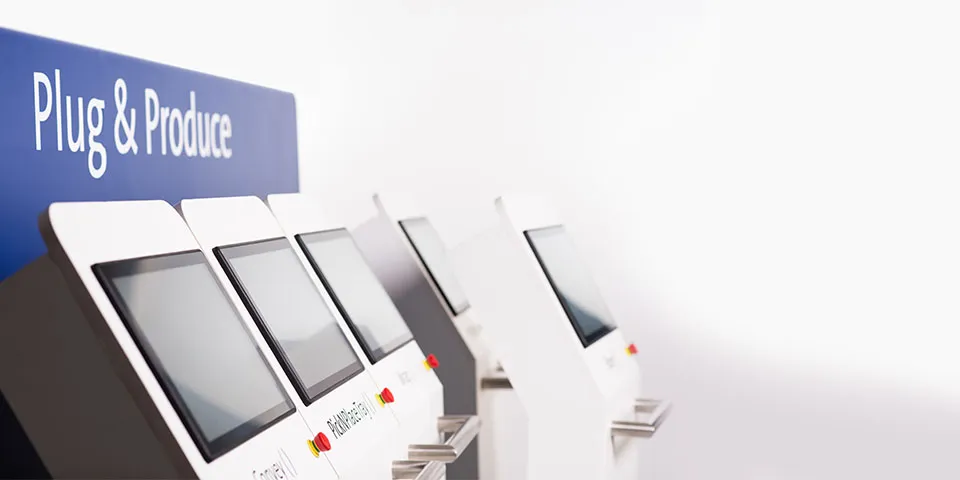
The market and its demands are changing rapidly. If consumers want more personalised products, producers must respond with shorter innovation cycles. This naturally affects the production process: smaller batches and more variations within and between products. Machine builders therefore need to deliver more flexible and adaptable production lines. But how can we meet this demand for greater transformability? A plug-and-produce concept is what you need to take the next step towards a smart factory.
Plug-and-produce can intuitively be summed up as a system that connects elements easily and immediately performs the right operation. The connected machines can communicate with one another straight away and configure the production parameters to meet the operator’s requirements. They can even assess and validate whether the operation is possible within the given configuration. Finally, they can prepare for production and, as soon as the start button is pressed, manage and optimise production by adapting to changing conditions. A truly workable definition of plug-and-produce might therefore describe a scenario in which machines can network autonomously, configure themselves and manage their own operations, with minimal manual effort from the integrator or operator. There are various forms of plug-and-produce, depending on what the machines collectively constitute. This white paper focuses on multiple machines that together make up a production line.
Standardised representation of functionalities
But what is needed to create a plug-and-produce environment? The first requirement is for machines to understand one another. This can be achieved by clearly defining interfaces. An interface contains a description of the asset, using a specific data structure, which other machines can also access. A standardised definition of this structure and its interpretation is therefore needed. PACKML and Automation ML already meet this requirement, but that is not enough. Since machines can operate independently and manage themselves, there is no longer any need for a central controller to direct everything. They do this themselves. However, each machine must be able to operate as part of a complete production line. Every machine in the line must therefore share its functionalities with the others. They need to know which services, or Skills, are available for interaction. These must therefore also be described in the interface, and their behaviour must be strictly defined.
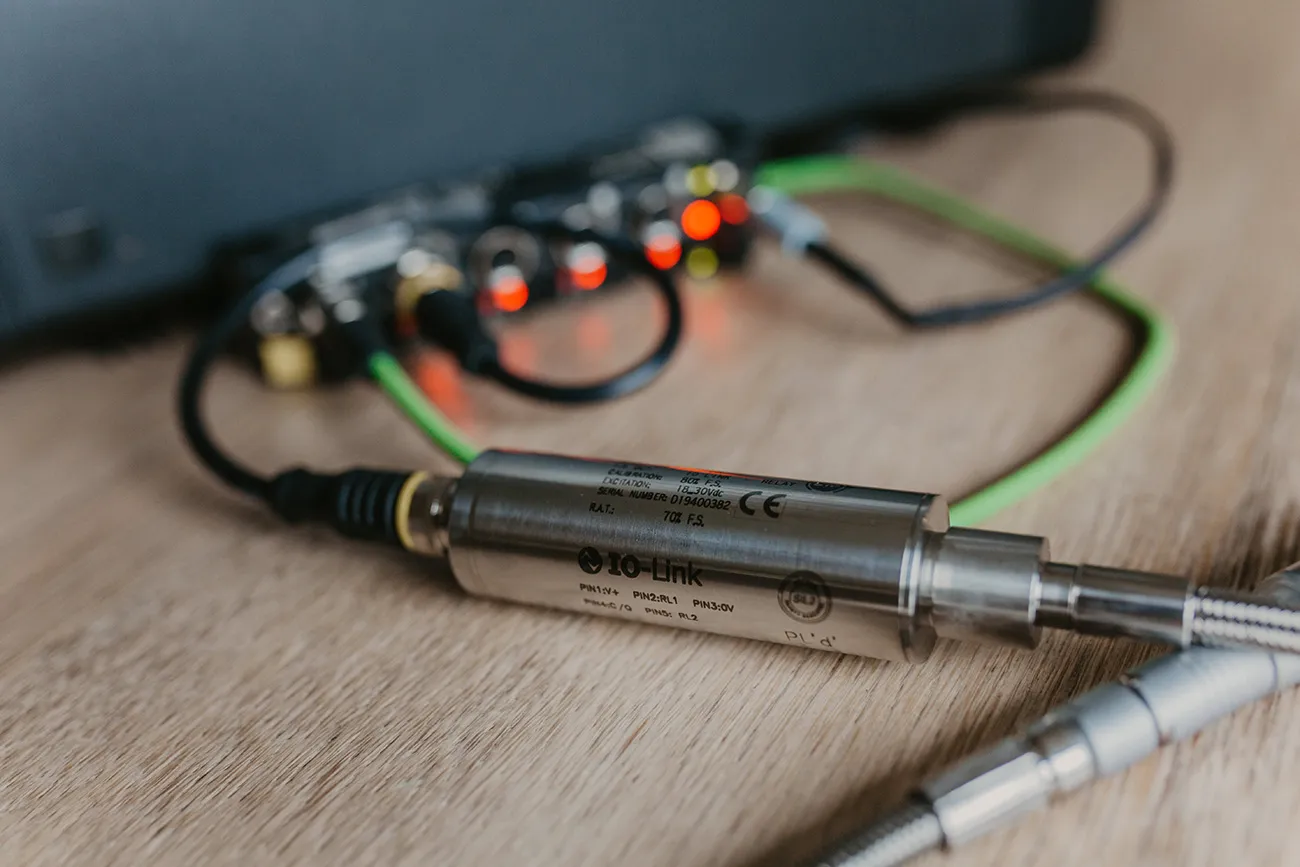
But what is needed to create a plug-and-produce environment? The first requirement is for machines to understand one another. This can be achieved by clearly defining interfaces.
Enabling machines to communicate securely and in a standardised way
There are currently no standards for these Skills. A new type of interface must therefore be developed to combine the information structure and Skills. Such an interface should also be easy to extend, leaving room for new architectural concepts in the future. One proposal for achieving this is the Asset Administration Shell. Think of it as a universal software layer that equips every machine. It is the access point for all the information and functionalities of a machine, and can contain various elements organised in a modular way. In other words, it can accommodate all information relevant to the asset. The next step is to introduce a universal language. Much is expected of OPC UA, an open approach to independent machine-to-machine communication. This standard offers all the capabilities needed to represent complex information structures and also supports encrypted connections to ensure secure communication.
Conclusion
Yes, the dream of a self-adapting, flexible production line is increasingly becoming a reality. The technology is already available and the concepts are clear. What is still missing is standardisation. The first working groups have now started implementing the AAS at device level, while discussions at machine level are getting under way. To be ready for the next steps, which will come quickly, consider whether your software and hardware are ready for modularisation, and actively contribute to defining the standards to come. It is up to machine builders and end users to rise to the challenge.
Question about this story? Ask your question
Keep following this
Get an email when a new story is published. No account needed.
- SubjectNews







