












Duracell factory is a beacon of innovation: “Sometimes you have to take a leap of faith”
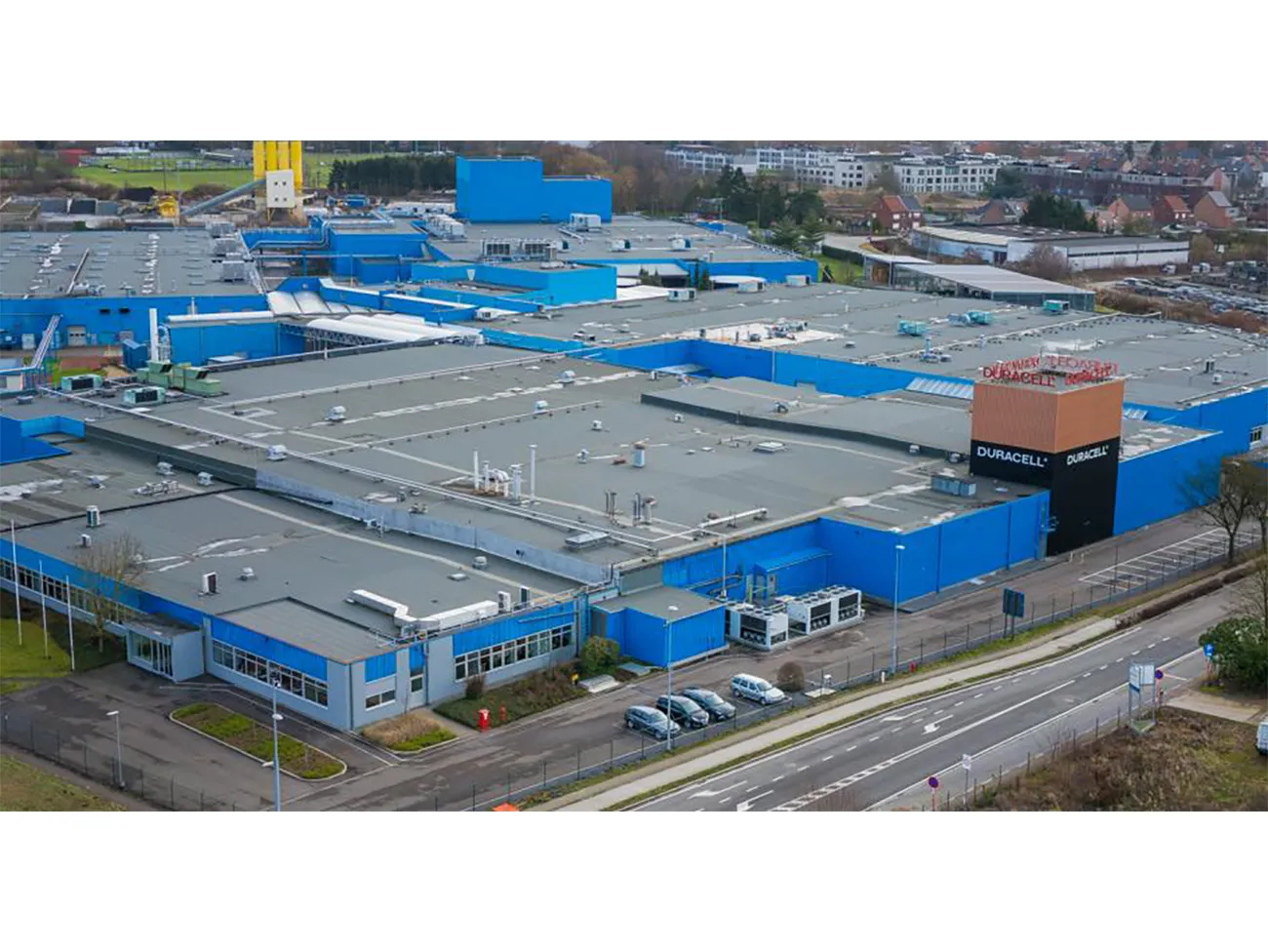
Duracell needs little introduction. The group’s most forward-thinking site is in Aarschot. From clearing a mountain of paperwork to creating virtual batteries, the factory has completed an impressive innovation journey in just two years.
Higher labour costs and a global supply chain are making it increasingly difficult for manufacturers in Belgium to compete with their Asian counterparts. Duracell has faced the same challenge: its Asian sister plants could produce more cheaply. The battery manufacturer in Aarschot therefore had to accelerate its digitalisation to remain competitive. The transformation into a digital factory set a series of innovations in motion, earning the site the Factory of the Future label within two years.
Duracell has four factories worldwide that manufacture batteries. There is only one in Europe: the plant in Aarschot, where the brand’s standard AA and AAA alkaline batteries are produced. The distribution centre in Heist-op-den-Berg then exports the batteries to Europe and Africa. The plant is managed by Jan Casteels. He has been a driving force behind the Factory of the Future programme, which began in 2018.
Factory of the Future in two years
Today, Duracell is a fully fledged Factory of the Future. An impressive achievement in just two years. Jan Casteels: “We joined the programme in 2018 with several very specific challenges. The biggest was our enormous mountain of paperwork. We wanted to get rid of it by improving connectivity between departments and functions.”
Digitalisation was high on the agenda partly because of the competition. “Internally, we compete with our mainly Asian sister plants for production volume,” explains Jan Casteels. “The wage cost structure in Belgium puts us at a disadvantage, which we have to offset. Our central location is an advantage, but it is gradually becoming less relevant. These days, non-perishable products such as batteries can be exported cheaply all over the world. So we had to eliminate the efficiency losses caused by the mountain of paperwork to remain competitive.”
Top of the class
What is the Belgian factory’s main advantage over the other sites? “The fact that we were able to digitalise so quickly,” says Jan Casteels. “Our highly educated workforce and innovative market gave us a head start. We identified several sources of loss and were able to eliminate them quickly.”
For the European market, for example, we need greater differentiation in product specifications. “We used to keep those instructions on paper, both during production and quality control,” explains Jan Casteels. “That resulted in a huge waste of time and risk of errors. The entire specification procedure is now stored centrally on a single digital platform. This means we can handle greater complexity than the other factories and, above all, respond more quickly to quality issues.”
“We brought together information from across the factory and from different systems on a single platform,” Jan Casteels continues. “We can now display all the data from the production lines, the Manufacturing Execution System, quality control and the ERP system in a single visual overview.” The result? The Aarschot factory is the most innovative in the entire group.
“The Duracell factory in Aarschot is the most innovative in the entire group.”
Digital twin
Consolidating all the data in real time and presenting it clearly to employees was just one of the innovations. Jan Casteels: “A second was implementing machine learning in our production. We wanted to improve quality management by predicting the performance of our batteries before production. We did that using a digital twin.”
A digital twin is a virtual representation of the production process. “By bringing together different process parameters digitally, we can create a digital battery that is an exact mirror image of the physical battery. We can then experiment with that twin to produce the best possible battery. The biggest challenge is finding the right process parameters to feed into the digital twin. There are hundreds of parameters, but it is not easy to define the impact of each one or how they relate to one another. This is an ongoing improvement process that is still under way today.”
“By bringing all the process parameters together digitally, we aim to create a digital battery that is an exact mirror image of the physical battery.”
Five-year plan
Jan Casteels now wants to maintain the lead the Duracell factory in Aarschot has established. “We have mapped out a programme for the next five years. First, we will continue to develop our existing data platform. At the moment, only the production department uses it, but we want to extend it to our support services. The R&D and engineering departments in particular would benefit from it.”
Further developing the digital twin is also on the agenda. “There is still room to improve battery quality,” says Jan Casteels. “We also want to fully digitalise quality control using a predictive model. That means collecting more data and continually feeding it into the machine learning algorithm.”
Finally, a pilot project is also on the table to extend connectivity beyond the factory walls. “We will expand our platform so that we can exchange information with customers and suppliers. That way, we would be connected not only within the factory but throughout the entire supply chain.”
“We will expand our platform so that we can exchange information with customers and suppliers.”
A cultural shift
What does it take to make that five-year plan a success? Jan Casteels: “First and foremost, a change in mindset. In our previous innovations, we focused on change management to get all our employees on board. We did this through innovation teams made up of volunteers. They were not necessarily people with an IT background, but anyone interested in contributing. A core team like that inspires the rest of the employees and generates enthusiasm within the company.”
Innovating beyond the factory requires the same shift in mindset across the supply chain. “It starts with a relationship of trust,” says Jan Casteels. “We are constantly looking for innovation partners who share our vision and want to join us on our journey. Today, too many service providers start from the premise that their job is to solve customers’ problems.
We need partners who actively drive innovation and show us what is possible.” “We need partners who create visibility around what is possible themselves.”
Duracell guinea pig
“These innovations do not even have to be relevant or demonstrable yet,” says Jan Casteels. “We are always willing to get involved in innovation, so we welcome parties that inspire us to do so. For example, the plan to extend connectivity beyond the factory did not come about at our request, but was proposed by a partner. We are happy to take a leap of faith to innovate, fully aware that there is always a risk of failure.”
“We are happy to take a leap of faith to innovate, fully aware that there is always a risk of failure.”
“Daring to take that plunge is advice I would gladly give to other manufacturers,” concludes Jan Casteels. “It is a process of trial and error. Do not try to map out and engineer your entire vision in advance. Start with one project. Identify where your losses are. Once you make a demonstrable and successful improvement, you enter a positive cycle of innovation. And then the sky is the limit.”
Question about this story? Ask your question
Keep following this
Get an email when a new story is published. No account needed.
- SubjectNews







