












Easily identify potential added value
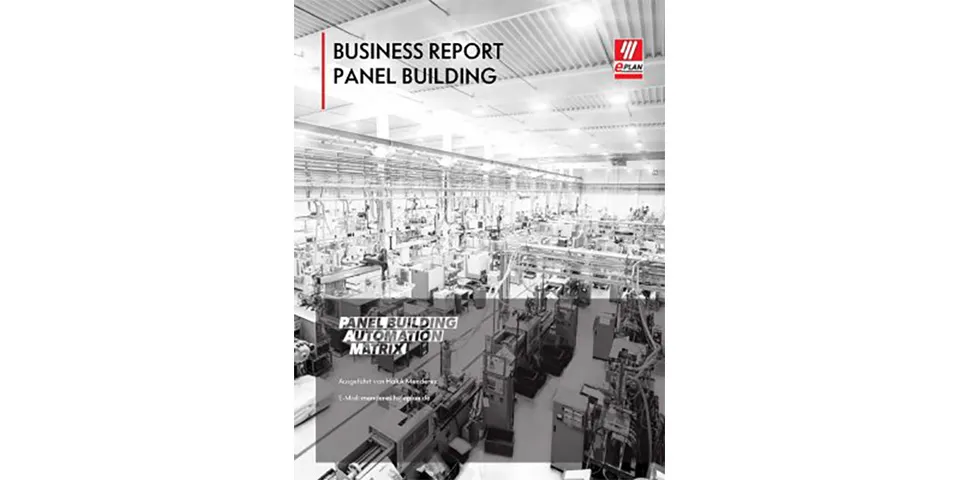
How can panel builders optimise the value chain? Where do companies stand today in terms of the digital and automated working methods currently available? Eplan is pleased to present the “Panel Building Automation Matrix” (PAM). It is based on market research involving 150 companies, including defined case studies. Eplan consultants use PAM to analyse a panel builder’s business processes in just a few minutes. A benchmark comparison then reveals specific savings opportunities that Eplan and Rittal can implement simultaneously in the areas of machine technology, software and consulting.
Target and actual status determined in just a few minutes
Digitalisation across the entire value chain and consistent data throughout all processes and systems: these are the prerequisites for automated processes in control engineering and panel building. But where does the industry currently stand in terms of digitalisation? Where is there still potential? Companies often do not know where to start.
Analysing working methods through benchmarking
Eplan offers a new solution in this area: this software-based method uses market research involving 150 companies worldwide to identify the optimisation potential that panel builders can realise in the areas of machinery, software and consulting, in close collaboration with Eplan and Rittal. Another benefit of this analysis is a higher level of digitalisation in production and the automation of repetitive tasks. “With the Panel Building Automation Matrix (PAM), we have developed a tool that analyses a company’s working methods in control engineering and panel building virtually at the touch of a button, and reveals untapped potential in the production process,” says Eplan managing director Haluk Menderes.
Easily identify potential added value
PAM analyses and evaluates the current workflow for panel production in terms of profitability and efficiency. The evaluation includes recommendations for optimisation, their implementation and the investment required. Of particular interest to customers are lists detailing the time savings possible in various areas of the workflow, including wiring, device labelling and NC production. A precise ROI analysis, for example, shows when an investment in software will have paid for itself.
Professional advice, reliable results
Eplan has been using PAM worldwide since the beginning of May 2019, and feedback from its first customers in the US has been very enthusiastic. “With PAM, Eplan has combined its decades of expertise in panel building into a practical, individual ROI plan for our workshop,” says Wright Sullivan, president of A&E Engineering Inc. Jacob Wilson, director of Engineering, Sales and Development at Design Ready Controls, says: “After an analysis lasting just twenty minutes, PAM was able to reproduce our current labour processes and production times accurately.” This naturally encourages Eplan and Rittal to add even more process steps to the analysis in future. Plans include integrating additional Rittal software tools, as well as an ROI analysis for, for example, purchasing the new Rittal Wire Terminal for automated wiring or the fully automatic Perforex machining centre. The PAM analysis is carried out by the sales department. It is, of course, free of charge and entails no obligation to purchase Eplan or Rittal products.
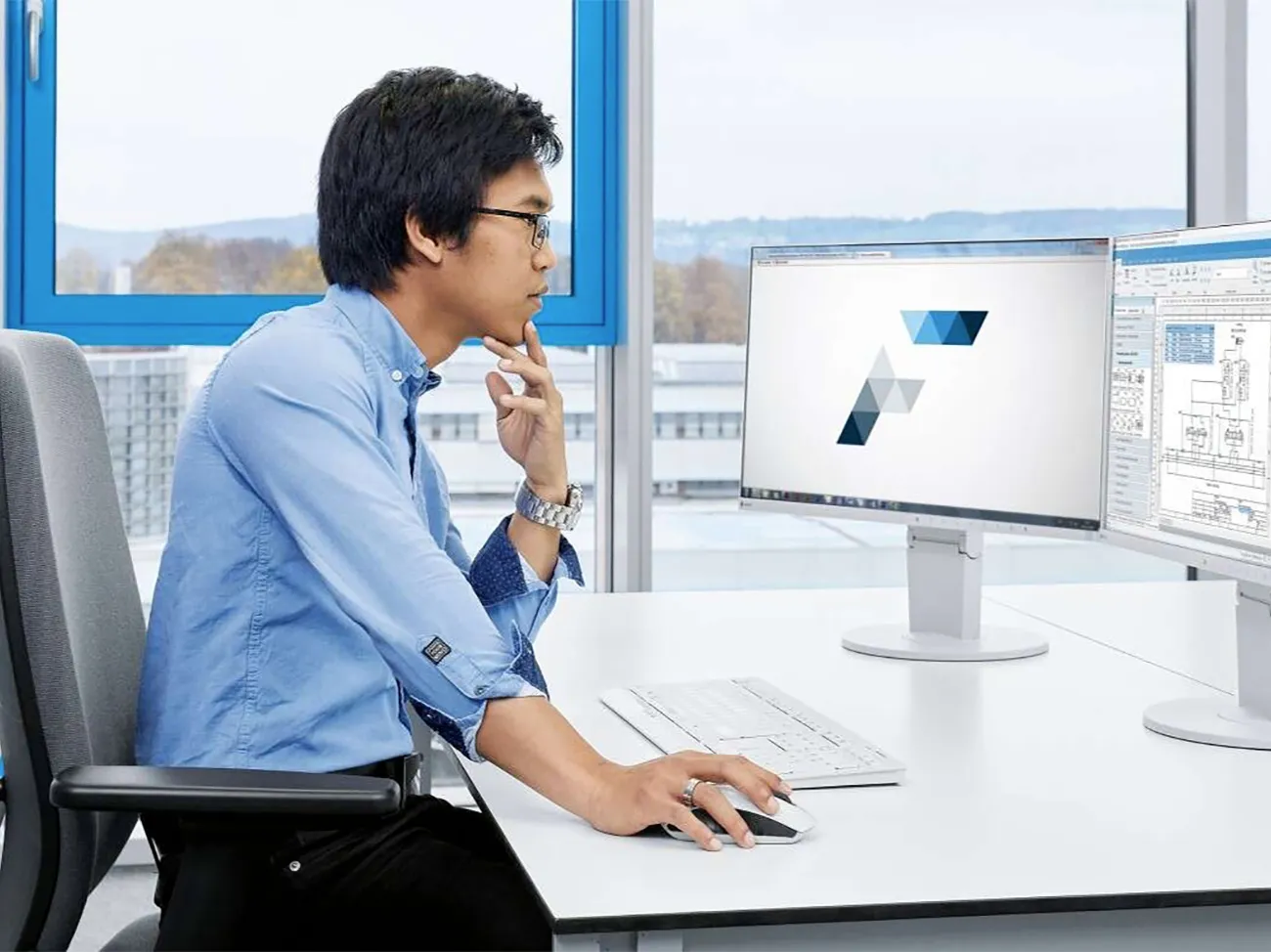
Today, processes in control engineering and panel building need to be faster, more economical and more precise. Eplan and Rittal offer the right answer.
Research shows: digital wiring instead of manual wiring
The average time an electrical engineer needs to make an electrical connection in the panel, following the schematic, is 4.5 minutes. Around 31 per cent of the time required is spent on purely preparatory tasks, such as reading the schematic and identifying the source and destination. A further 13 per cent is spent preparing the wires, for example estimating their length. The remaining 56 per cent of the processing time is spent on the wiring itself: cutting to length, fitting the ring cable lug, crimping and wiring (1). It is more the rule than the exception for electrical engineers to leaf through the paper schematic several times during the wiring process to gather the right information and add to it where necessary. This means that almost a third of working time is lost to reading and professionally interpreting the documents. A digital way of working eliminates these issues! The best system to choose in this case is Eplan Smart Wiring, which uses data based on a digital prototype that has already been tested and therefore only delivers correct results.
The goal: integrated processes
By connecting engineering and production, Eplan and Rittal can create perfectly coordinated combinations of software solutions, system technology, machines and services. The added value is clear: integrated solutions also make it possible to achieve integrated gains in productivity and efficiency in production and subsequent processes. To this end, engineering and design on the one hand, and production planning and production on the other, are integrated into a single continuous process. Digital device data, software-based tools and standardised interfaces are prerequisites.
The increasing complexity of control technology and its associated components, customers’ demand for customisation, national and international standards, last-minute changes and ever-shorter delivery times are putting panel builders under enormous cost pressure.
Background:
The increasing complexity of control technology and its associated components, customers’ demand for customisation, national and international standards, last-minute changes and ever-shorter delivery times are putting panel builders under enormous cost pressure. Instead of a future based on files containing bills of materials, assembly plans and schematics as the central production documents, processes that add value in control engineering and panel building need to be made faster, more economical and more precise. Achieving this requires a change in mindset in a sector that has traditionally been rather conventional. But companies have realised that the greatest potential for standing out from the competition and creating unique selling points lies in configuring their value chain individually.
Question about this story? Ask your question
Keep following this
Get an email when a new story is published. No account needed.
- SubjectNews







