












How sorting technology helps ensure food safety and profitability
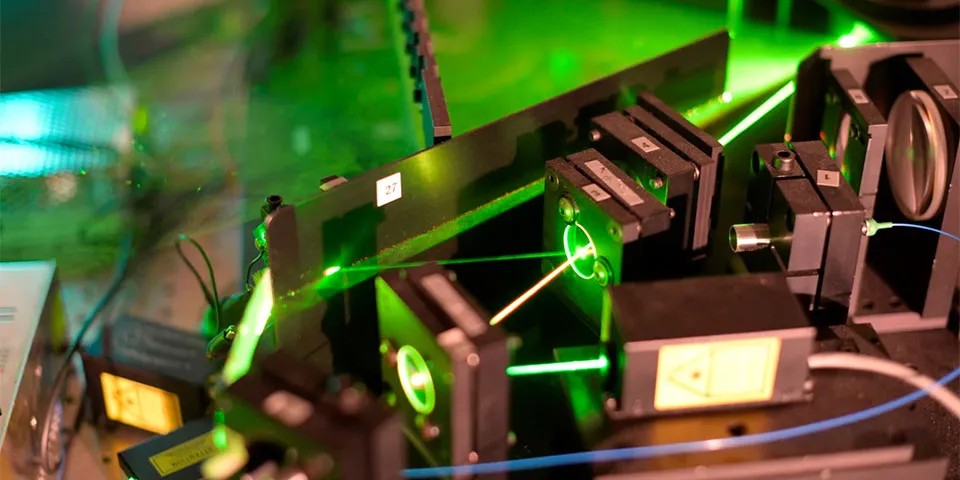
Food companies are increasingly turning to automated sorting machines to remove contaminants from food streams. Manual inspection can become inconsistent or subjective, whereas sorting machines use cameras and/or lasers to inspect products with the same efficiency every time. They also help reduce labour costs, improve operational processes and even boost sales. This is increasingly important, as more and more customers are imposing zero tolerance for contaminants in products.
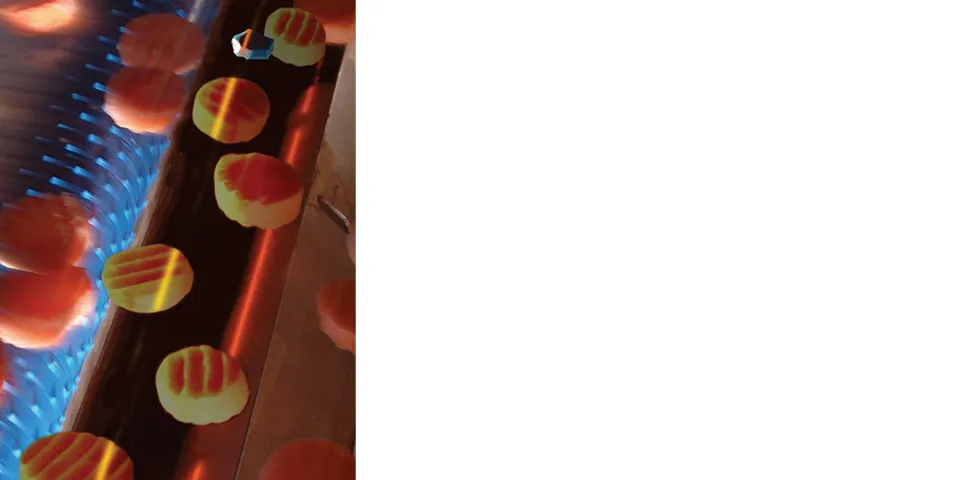
To optimise the differentiation between ‘good’ and ‘bad’ products, it is important to identify the right wavelengths.
Sorting machines can use different technologies, such as cameras or lasers, or a combination of both, to inspect products from end to end. They can monitor a range of parameters, including colour, size, shape and even certain structural physical properties, such as chlorophyll content. The product to be inspected determines the most suitable configuration for the sorting machine. However, there are some basic principles that apply to every application. Products should ideally be fed onto the conveyor belt in a single layer before reaching the sensor. This is usually done mechanically and can also perform an initial size-based sort. The sensor takes measurements and sends the captured data to an image processing system, which then controls a mechanical or air-ejection system to remove detected deviations from the conveyor belt. Typical applications can handle up to 25 m³ tonnes of product per hour.
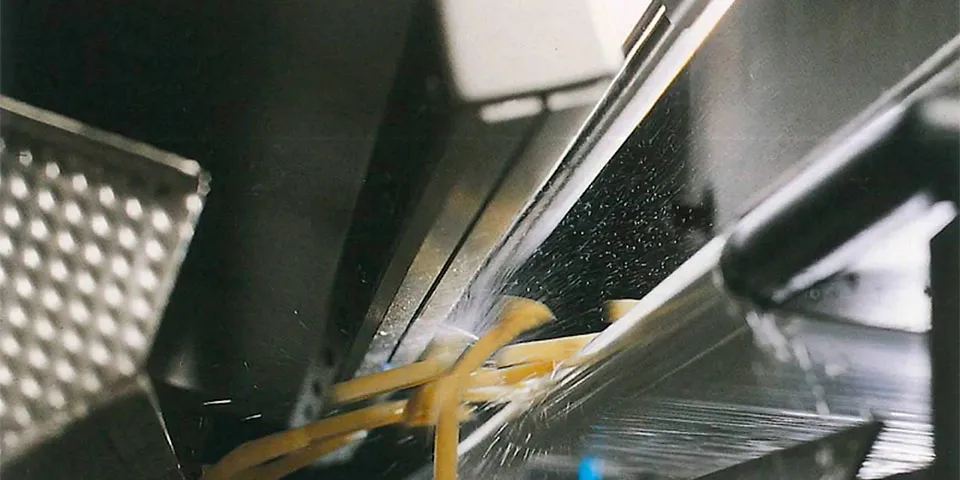
Sorting technology has moved from being a competitive advantage to becoming a crucial part of food producers’ operations.
Identifying the right wavelengths
To optimise the differentiation between ‘good’ and ‘bad’ products, it is important to identify the right wavelengths. Each object has its own signature, making it easy to detect. Cameras use different parts of the light spectrum, both visible and invisible (red, green, blue, infrared or ultraviolet), to identify contaminants and defects based on colour, size and shape. Lasers, by contrast, are primarily used to examine the structural properties of a material. They can reveal contaminants and certain product defects.
Unlike cameras, they can detect the chlorophyll content of each product in a bulk stream. Tests will show which wavelength or combination of wavelengths works best for your product. Modern detection systems now offer a wealth of capabilities. They can identify millions of subtle colour variations, as well as defects and contaminants measuring 1 mm or less. This gives food producers greater control over optimal product quality.
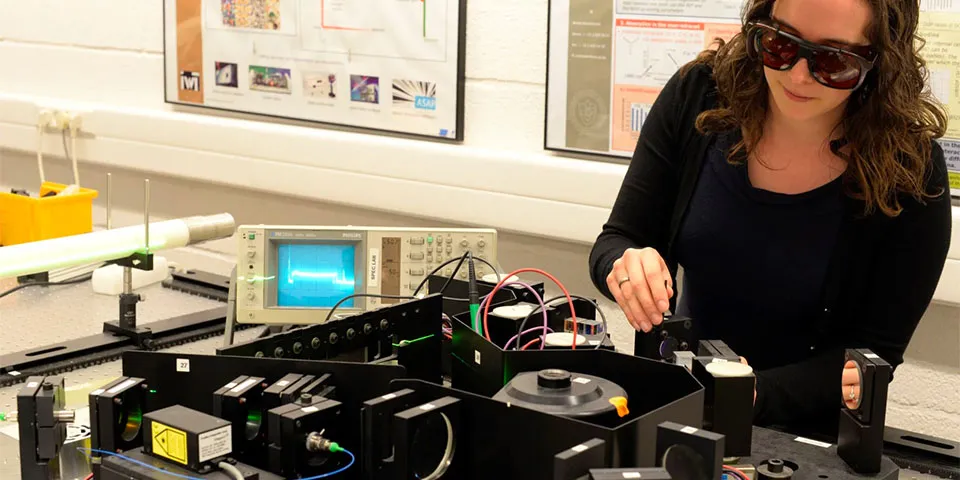
This identifies potatoes with an atypical chemical structure and an increased risk of acrylamide formation.
More than just food safety
Depending on the application, products may need to be illuminated from both sides to achieve the desired results. The aim is not just to identify specific defects. Take peaches, for example. Sorting machines can detect damage caused by insects, disease or mould, as well as products that are overripe or underripe. They can also ensure that products of exactly the same colour end up in a jar. This prevents the producer from having to contend with customers mistakenly assuming that the yellower pieces are unripe and leaving the jar on the shelf. Applying this sorting technology gave sales a considerable boost. And there are many more opportunities for producers to increase profitability.
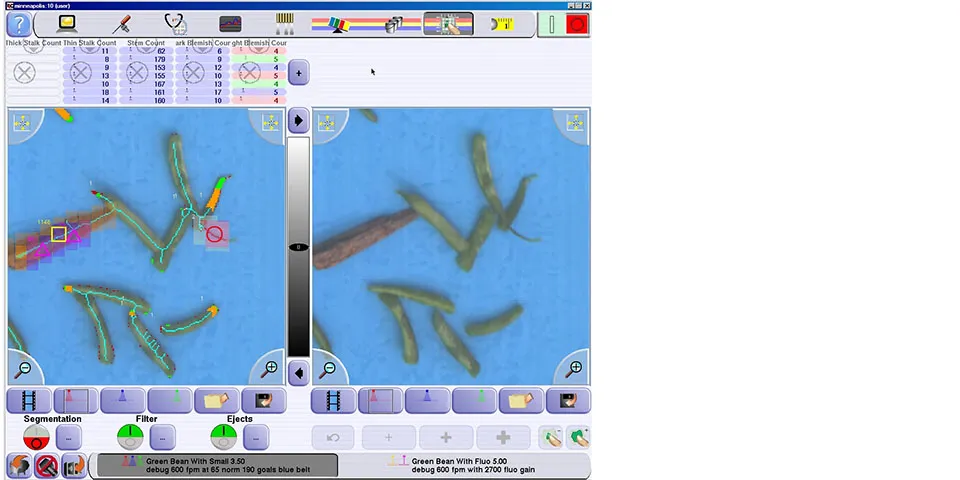
Lasers, by contrast, are primarily used to examine the structural properties of a material.
How to choose the right sorter
When choosing between systems, camera and laser resolution is an important first consideration. Also take the quality of the lighting into account. The better the products are illuminated, the easier it is to sort them correctly. Detection algorithms in the software are another important differentiator. They must process raw data into useful information and compare it with the threshold values you set. Modern sorting machines continue to evolve rapidly. It may therefore be worth considering modular solutions for your production, which are easy to upgrade or reconfigure. Finally, as with any machine purchase, the manufacturer’s service offering, from engineering through to after-sales support, will be decisive.
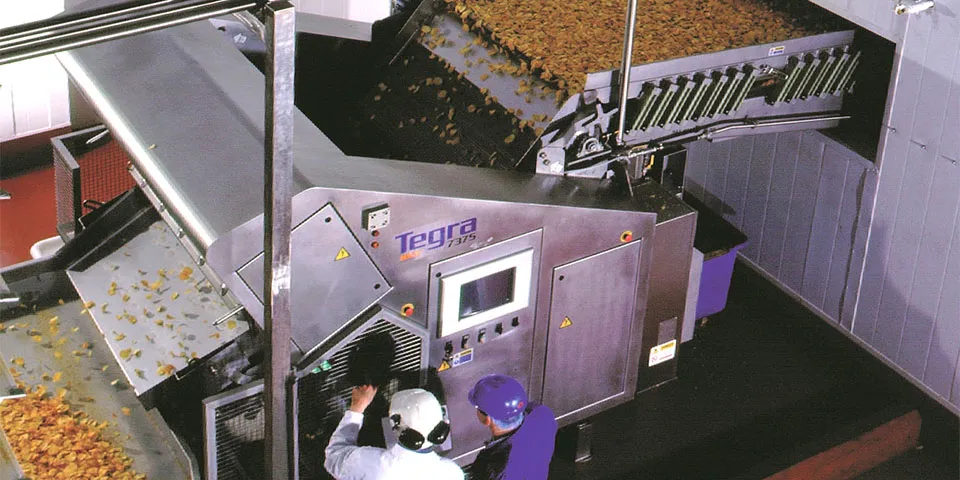
When choosing between systems, camera and laser resolution is an important first consideration.
Conclusion
Sorting technology has moved from being a competitive advantage to becoming a crucial part of food producers’ operations. Customers are increasingly asking for these technologies to ensure consistent product quality and trace any incidents involving contaminants in products. Can you afford to fall behind?
Question about this story? Ask your question
Keep following this
Get an email when a new story is published. No account needed.
- ThemeFlexible production with robots
- SubjectNews







