












Industrial safety: a new perspective for heavy industry
Door Jerry Huang, Vice President van Getac Technology Corporation
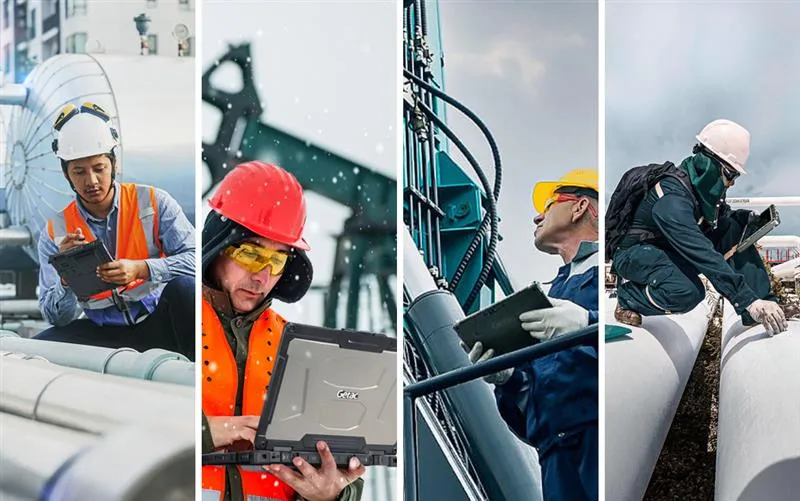
Ensuring safety in increasingly complex working environments
Heavy industry has made clear progress on occupational safety in recent years. Yet recent figures show that a number of sectors are still responsible for a significant proportion of workplace accidents, and that progress is beginning to stall in some cases. This demonstrates that prevention must go beyond traditional tools such as training, procedures and personal protective equipment.
Safety figures are clear: risks remain persistent
Data from Eurostat show that sectors such as construction, industry, transport and mining continue to face elevated safety risks. In the oil and gas industry, figures from the International Association of Oil & Gas Producers (IOGP) confirm that workplace accidents continue to occur, despite safety standards that are among the strictest internationally. This underlines the need to complement existing safety measures with technologies that provide better support for risk assessment and early warning.
Work situations with increased exposure to risk
Research and practical experience consistently point to a number of particularly high-risk activities, such as working at height, electrical work, operating machinery and heavy equipment, and working in confined spaces. Human and organisational factors also play an important role, including fatigue, high workloads, complex environments and rapidly changing operating conditions. Effective prevention therefore requires a broader approach that systematically takes these factors into account.
A survey of around 32 professionals working in sectors such as environment, health and safety found that 50% of them identified working at height and electrical work as the highest-risk activities. Next came the use of machinery and heavy equipment, and work in confined spaces. Other frequently mentioned risks include vehicle use, handling hazardous substances, loading and unloading, and working at high temperatures.
Digital technology to support prevention
Against this backdrop, digital technologies are increasingly being used to improve the management of safety risks. Artificial intelligence makes it possible to analyse data from installations, machines and working environments, enabling anomalies or potential faults to be identified at an early stage. Augmented reality provides on-site workers with contextual information in real time, while robotics, drones and semi-autonomous vehicles help limit human exposure during high-risk tasks. Virtual reality is also playing an increasingly important role in training and education by realistically simulating complex scenarios without operational risks.

Targeted deployment of safety solutions
Research shows that solutions which physically keep workers away from the most hazardous situations generally deliver the greatest safety benefits. Monitoring and alert systems, such as smart sensors and connected equipment, are a valuable complement, provided they fit well with day-to-day working practices and are widely embraced by the teams involved.
According to the study Industrial robots, Workers’ safety, and health, published in Labour Economics (Gihleb, Giuntella, Stella & Wang, 2022), a one-standard-deviation increase in exposure to industrial robots leads to a reduction of around 1.2 workplace accidents per 100 workers. This highlights the potential of robotics as a structural safety measure.
Tailored to the realities of the shop floor
To make a real impact, technological solutions must be suited to the specific conditions of heavy industry. This means being robust and easy to use, complying with regulations, and operating reliably in harsh conditions such as dust, vibration, extreme temperatures or limited visibility. The success of these solutions depends not only on their technical performance, but above all on their suitability for everyday use.
Ergonomics and practical usability are also crucial. Solutions must be easy to operate, even when wearing gloves or in low light, and must not impede workers or restrict their freedom of movement. Regulatory compliance also remains essential, including certification for use in potentially explosive or otherwise hazardous environments.
Safety requires technology and organisational change
Technology alone is not enough to deliver lasting improvements in industrial safety. A real impact is only achieved when it forms part of broader organisational development, with continuous training, employee involvement and a safety policy embraced at every level. Solutions from manufacturers such as Getac illustrate this approach, which focuses not only on the technology itself, but above all on its effective use on the shop floor.
A future-proof safety strategy for heavy industry therefore requires the considered deployment of technologies that fit real-world working practices and are embedded in a proactive safety culture. Only in this way can workplace accidents be reduced on a lasting basis and workers better protected in an industrial environment that is constantly evolving.
Question about this story? Ask your question
Keep following this
Get an email when a new story is published. No account needed.
- SubjectNews







