












Industry 4.0 products from an Industry 4.0 factory: market leader sets the pace
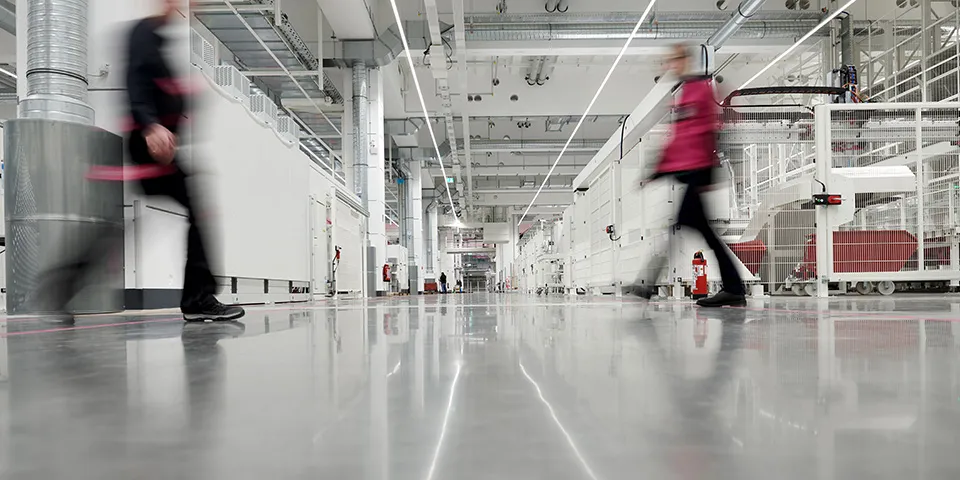
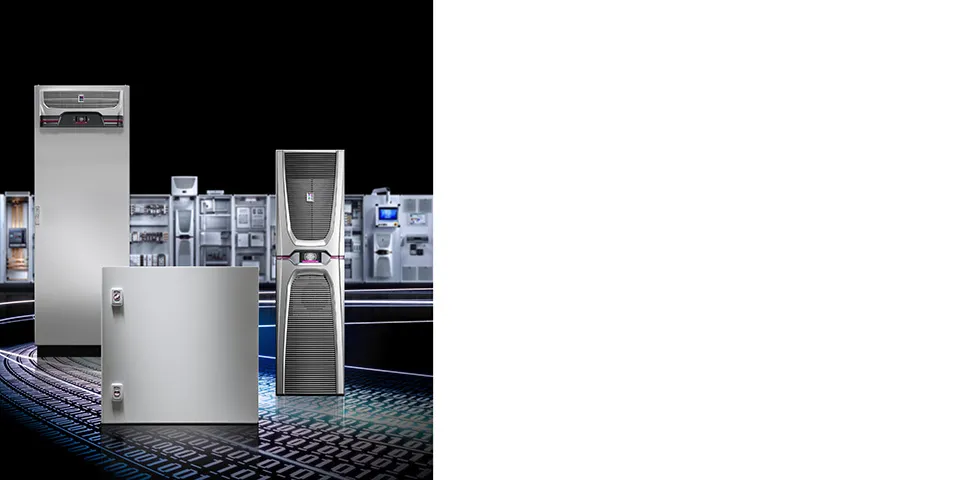
At Hannover Messe, the general public got to discover the new generation of compact enclosures. With the AX and KX series, Rittal has shown how the principles of Industry 4.0 can add value. They are evident not only in the new products, packed with innovative features, but also in the production process. The products roll off the line at the new Haiger factory, a true pilot factory for implementing Industry 4.0. Industrial Automation was given a behind-the-scenes look and spoke to Carsten Röttchen, Managing Director Production at Rittal.
With 35 million units produced, AE is the world's most popular compact enclosure. The new AX and KX will now build on that success in a digitised world. Rittal is introducing thirty new features designed to meet the trends towards greater decentralisation and more sensors and actuators for capturing data. Users will save 30% on assembly time and 30% on space with the new compact enclosures. In short, the new features make the enclosures more robust and ensure greater stability and reliability, even under dynamic loads. The new AX and KX are made in Haiger, at one of the world's most advanced factories, which operates according to Industry 4.0 principles.
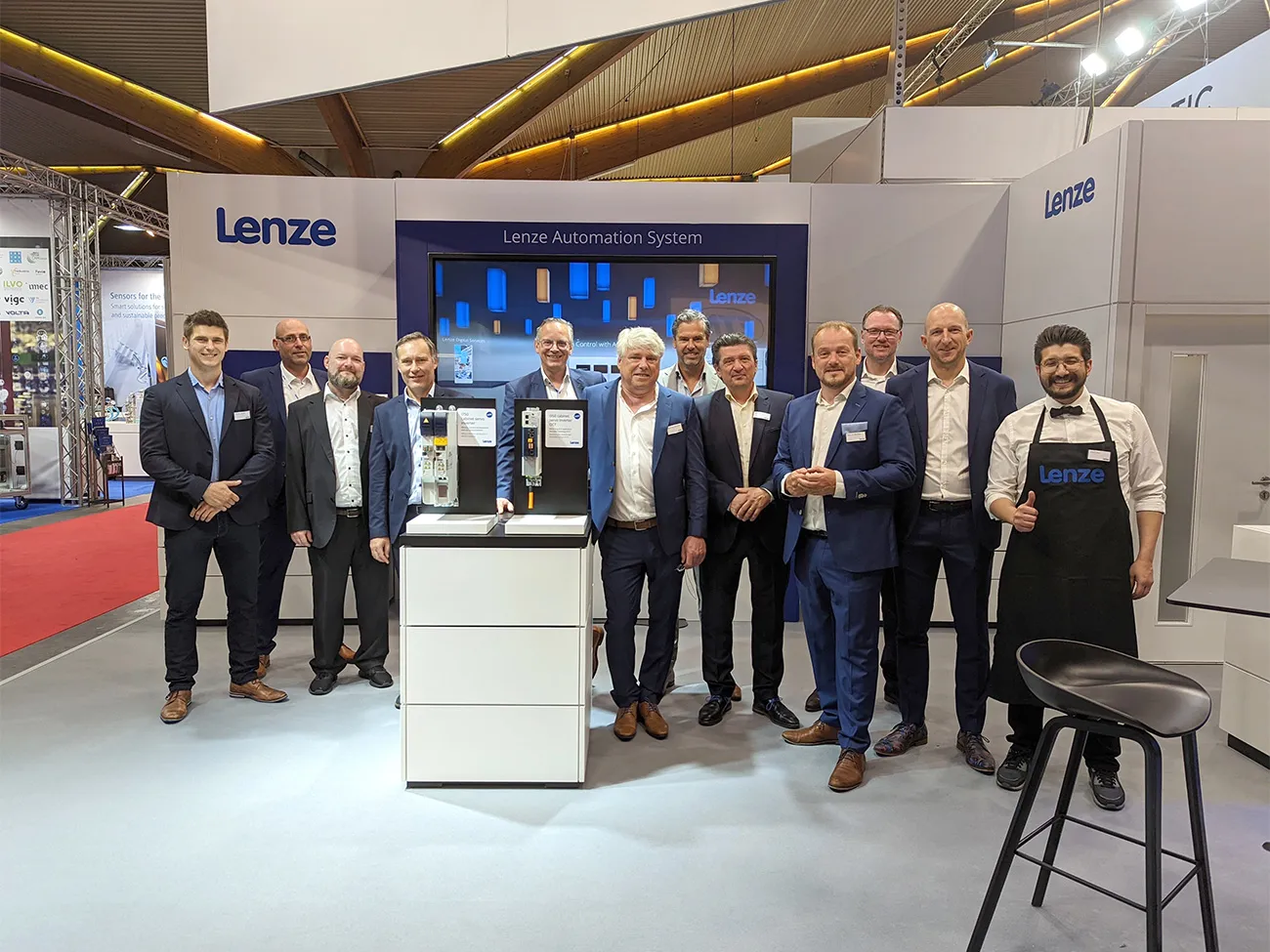
Every day, 11.2 TB of data will be generated, providing a basis for further optimisation.
Digitalisation the only way forward
Managing Director Production Carstten Röttchen explains why digitalisation was the only possible path for Rittal. “On an area of 24,000 m², we will produce 9,000 enclosures a day, with one rolling off the line every 10 seconds. Achieving the highest possible output with the best possible efficiency … given the scale and complexity of the production process, that is no longer possible on paper. Software makes it possible. We carried out 3,000 hours of simulation before construction began to arrive at the best-performing design. That is 125 days, or seventeen weeks. For example, simulations showed us that to be truly lean, we would still need a buffer stock. A small one, admittedly, but a buffer nonetheless. It is all the processes together that count, not each one in isolation. And that means you have to digitalise. It shows how closely IT and OT are intertwined in this project. We wanted to create a flow of data from the ERP system to the shop floor and back again. The IT infrastructure has become the backbone of our production process. Every day, 11.2 TB of data will be generated, providing a basis for further optimisation. We are still investigating what is essential, and there will also be a container for edge computing to process critical process data.”
Users will save 30% on assembly time and 30% on space with the new compact enclosures.
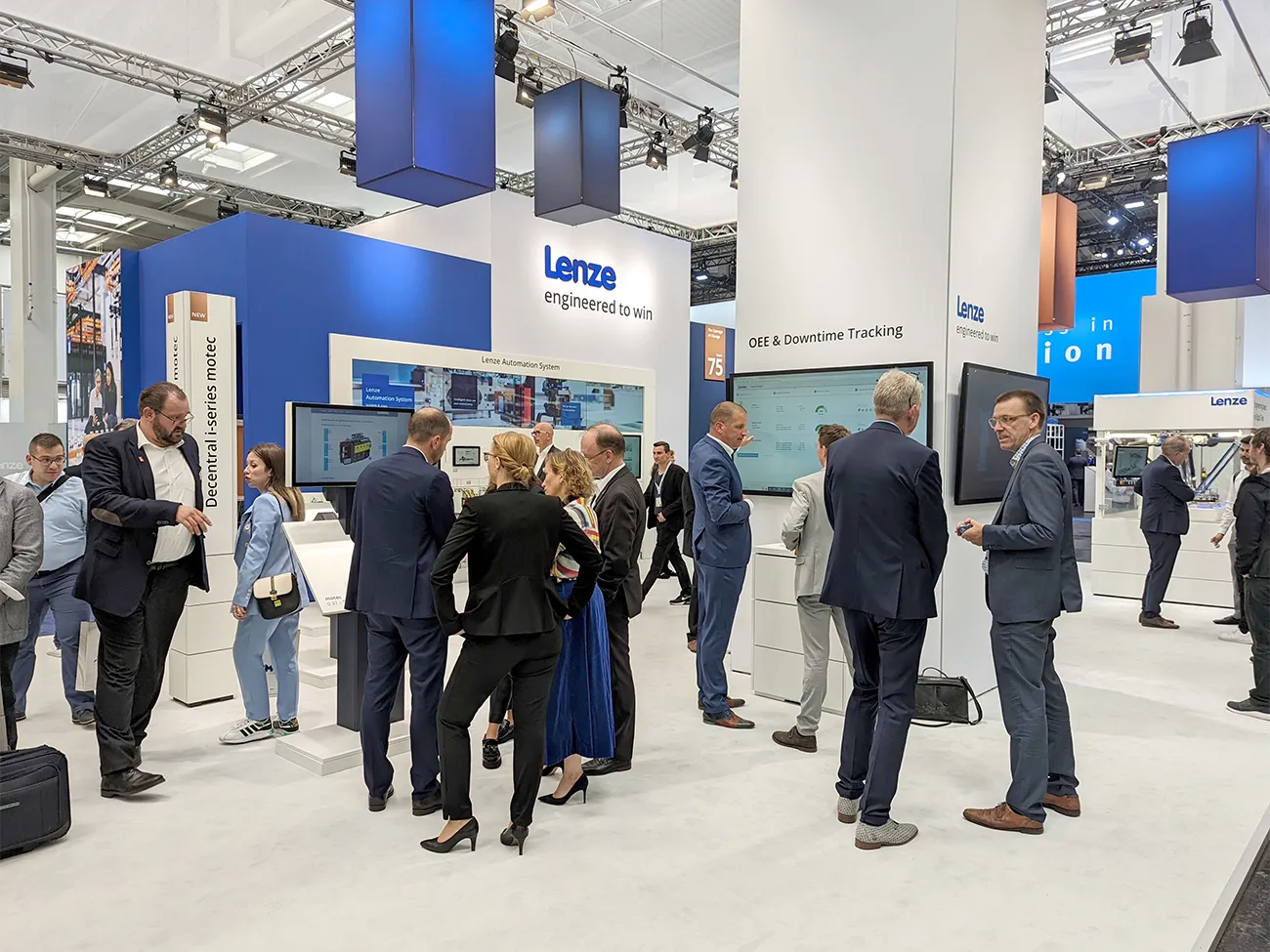
Carsten Röttchen: “All our machines now speak the same language. That may have been the biggest challenge in this project.”
Pioneering work
Building an Industry 4.0 factory was pioneering work. “Visits to factories, including Porsche in Leipzig, taught us a few things about what not to do. This is a new way of thinking and working that we had to learn, through trial and error. We kept one thing firmly in mind: innovation is not an end in itself, but an essential condition for remaining competitive in the future. In other words, everything we digitalise and connect must deliver added value. And we have achieved that. With the new factory, we will be able to achieve 25% greater efficiency with 25% fewer people. And those are only the direct benefits. In the longer term, our efforts will allow us to deliver across Europe within 24 hours. As market leader, we could of course have rested on our laurels and waited for others to prove certain concepts in practice. But we want to set the pace ourselves. With this Industry 4.0 plant, we gain tonnes of experience every day, and have tonnes more to learn each day. Make no mistake, it takes a great deal of courage, because you cannot do it halfway. There is no going back.”
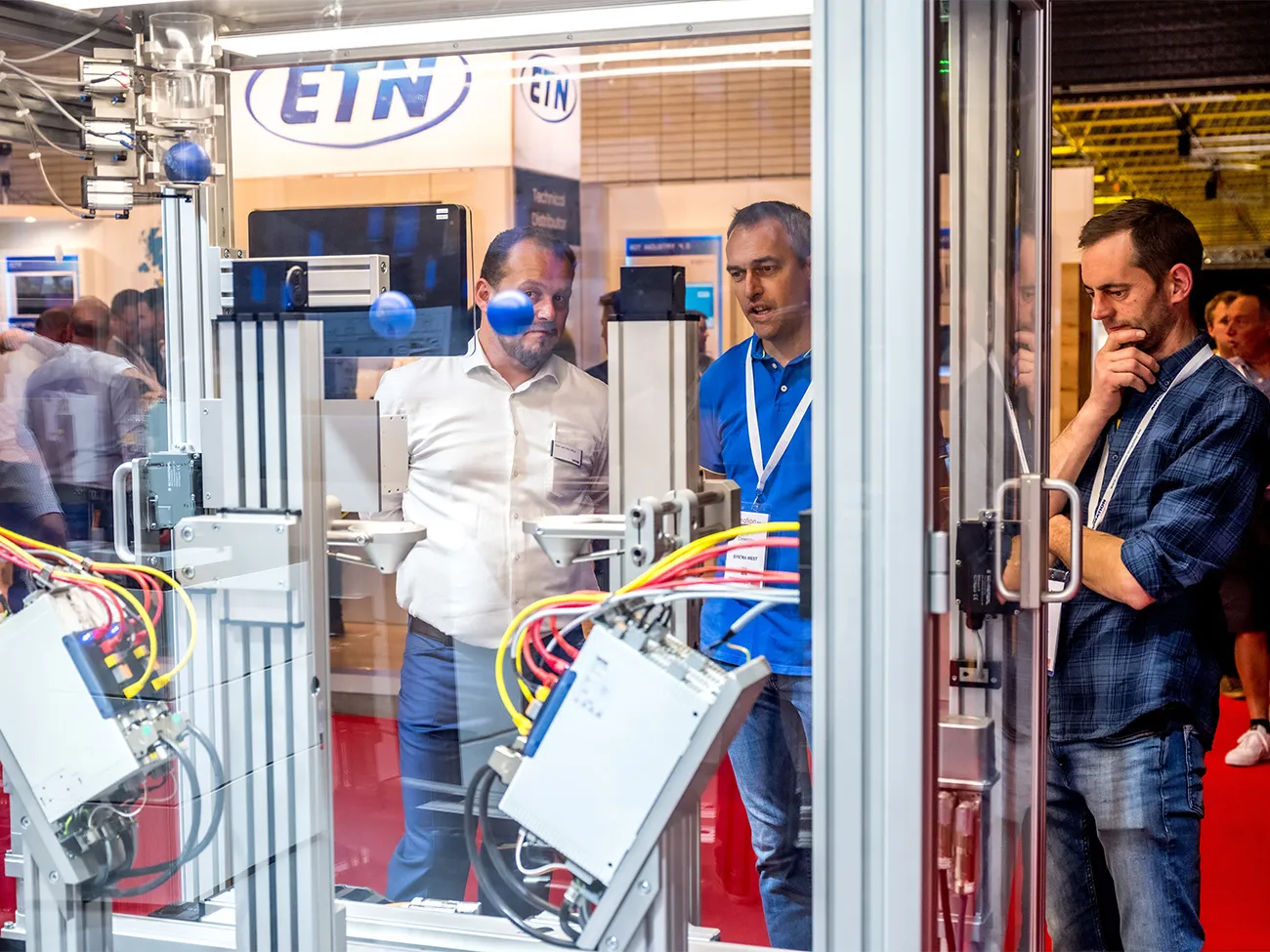
“On an area of 24,000 m², we will produce 9,000 enclosures a day, with one rolling off the line every 10 seconds.”
Machine learning starts with operators
From this summer, production at Haiger will ramp up to full capacity to manufacture the AX and KX compact enclosures. But this will not be the end point, it will be the starting point. “We are already running the machines and harvesting data to feed back into the process and use in simulations. But machine learning will only come fully into its own when we can capture real production data and train it to recognise patterns. Initially, this will be to detect anomalies or identify bottlenecks. Our operators will continue to play a decisive role on the line. We need them to teach the machines and share their practical experience. Without them, we will not be able to use machine learning to control production fully autonomously in the future. The second crucial requirement is the use of open standards for machines and communications. Machines must be open enough to allow data to be sent in and retrieved with very short response times. For some suppliers, this required changes in both mindset and technology. If we want the manufacturing industry to make its factories truly smart, even more standardisation will be needed. All our machines now speak the same language. That may have been the biggest challenge in this project.”.
Question about this story? Ask your question
Keep following this
Get an email when a new story is published. No account needed.
- SubjectNews







