












Investing in the future
To be one of the leading companies in factory automation, you need impressive figures. That is certainly true of FANUC, with more than 550,000 robots, 4 million CNC controllers and 19 million servo motors installed around the world. The company has 263 locations in 108 countries and employs more than 7,000 people. FANUC has 22 entities in Europe, with around 1,400 employees. The FANUC Benelux office in Mechelen is your local point of contact for Factory Automation.
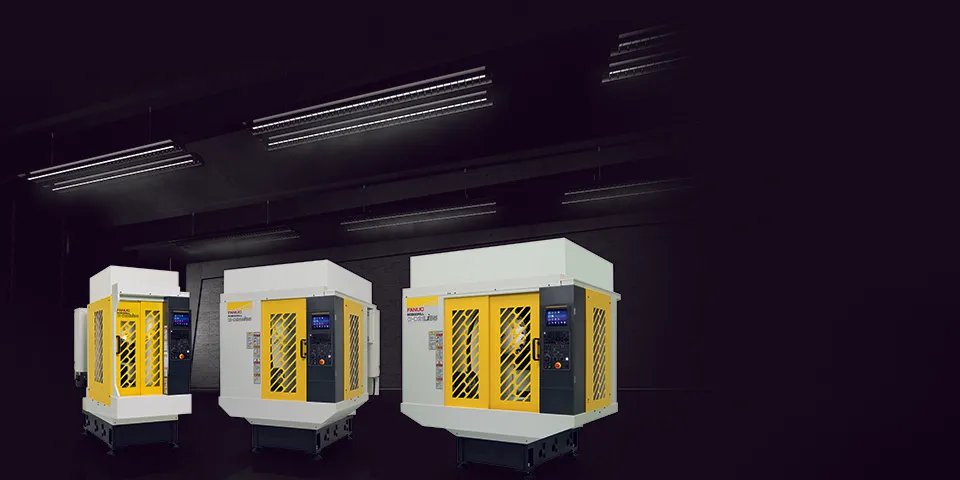
To keep innovating, FANUC invested heavily in its own production in 2018. FANUC is proud to have one of the most automated production sites in the world. The company uses robots for various applications at its headquarters in Japan. Together with a completely new R&D centre, this means FANUC, the robot, CNC, laser and machine manufacturer, is ready for the future. Paul Ribus, managing director of FANUC Benelux: “We currently have a monthly production capacity of 7,000 robots, 35,000 CNC Controls, 190,000 servo motors and 3,500 machines (ROBODRILL, ROBOCUT and ROBOSHOT). But FANUC will continue to invest and innovate in its own production to meet market demand. We will also continue to invest in new FANUC locations and existing local offices, including Mechelen. Only by staying close to customers can you understand what they need to produce even faster, more profitably and more effectively in the future.”
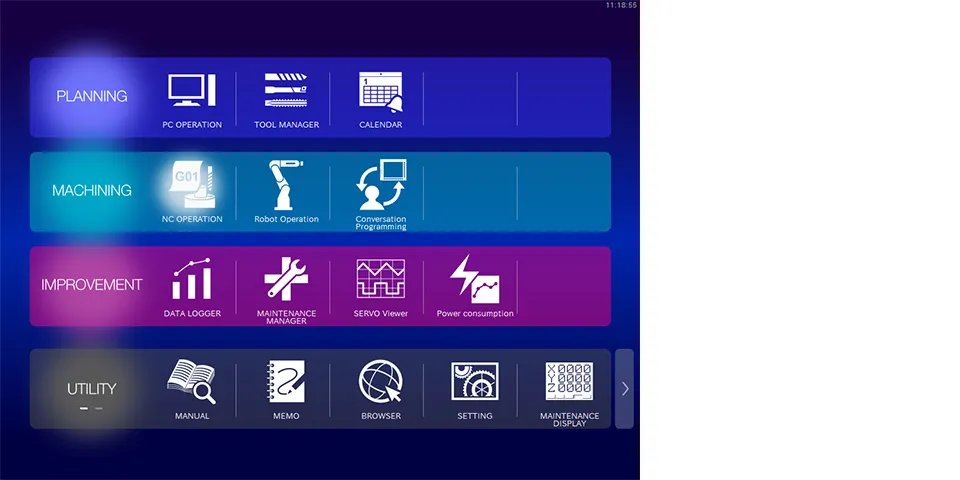
FANUC also placed considerable emphasis on ease of use, introducing the new iHMI user interface across its entire product portfolio.
New products, accessories and added features opened doors
FANUC already had the industry’s broadest product range of industrial robots, CNC controls and machines. Many new robots were added in 2018, but the biggest innovations came from adding accessories and features. Ribus: “This customisation means our products can now also be used in specific applications and/or environments. This approach opened doors to areas where automation had not previously been considered. These accessories and features can also deliver higher production performance. FANUC also placed considerable emphasis on ease of use, introducing the new iHMI user interface across its entire product portfolio.

The most notable addition to the FANUC robot range in 2018 was undoubtedly the SCARA robots.
SCARA robots make their debut
The most notable addition to the FANUC robot range in 2018 was undoubtedly the SCARA robots. “This technology was missing from our portfolio and was added in response to customer demand. The circle is now complete, and customers can come to us for any robot solution,” says Ribus. FANUC has also been active in cobot technology. The Japanese manufacturer is determined to offer its customers the broadest range here too. In 2018, this meant adding two cobot models with payloads of 14 and 15 kg respectively.
Laser package makes FANUC unique in the market
“There is no doubt that lasers are on the rise. Laser cutting, welding and additive manufacturing have further strengthened their presence in metalworking companies. FANUC offers both a CO2 and a fibre laser source. This makes us unique in the market, as we are the only manufacturer able to offer the control system, laser source and scanner as a package. This ensures that every link in the chain fits perfectly with the next, for optimal, high-performance production,” says Ribus.
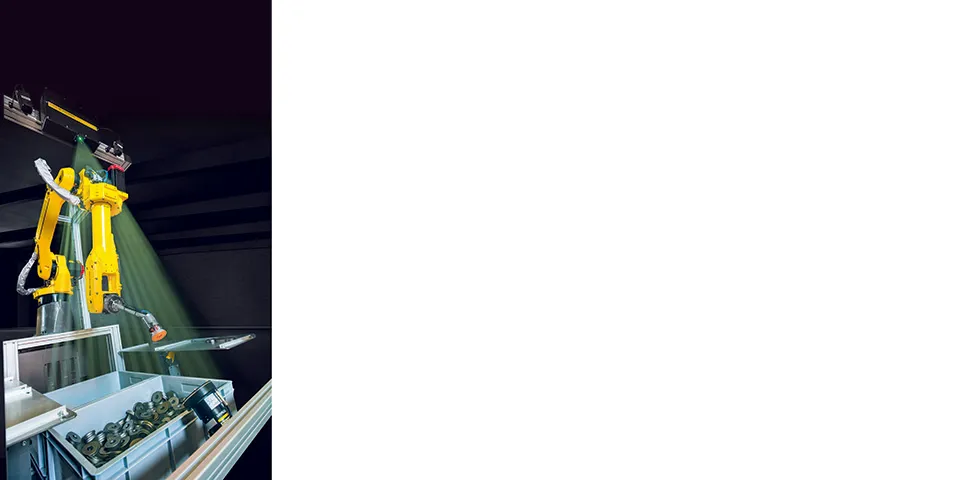
Many new robots were added in 2018, but the biggest innovations came from adding accessories and features.
Finishing to the nanoscale
The Roboshot, Robodrill and Robocut gained bigger siblings: compact powerhouses. “Companies want to be able to process larger products. It is up to us to provide a solution, and that is what we did in 2018.” In 2018, FANUC also introduced the ROBONANO machine, once again demonstrating that it is a pioneer in the market for ultra-high-precision machining.
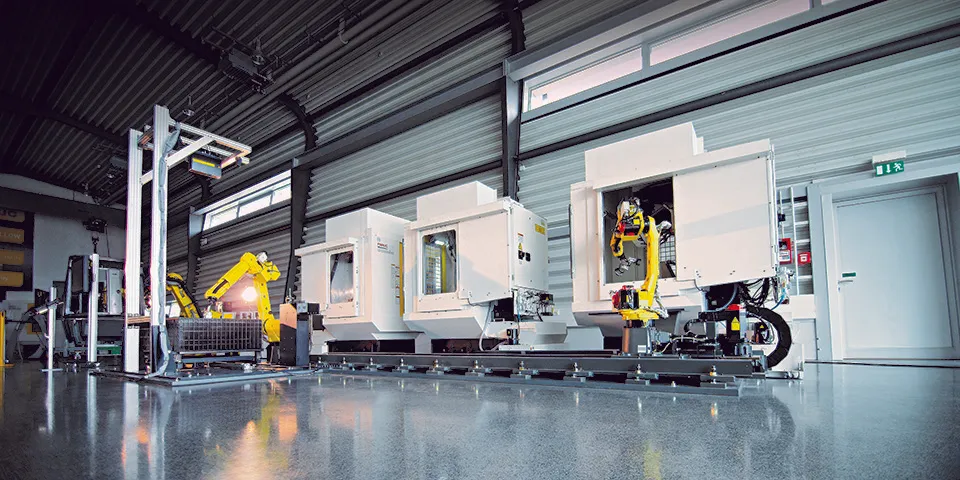
Only by staying close to customers can you understand what they need to produce even faster, more profitably and more effectively in the future.
Digitalisation is here to stay
In 2018, FANUC also focused heavily on further digitalisation, an essential part of the evolution towards Industry 4.0 and the Internet of Things (IoT). “Customers can come to us for everything they need to monitor every production machine in real time. Trends, dashboards and analysis of this statistical data help optimise productivity. The introduction of iZDT (Zero Down Time) reduces maintenance costs and enables maintenance staff to be deployed more efficiently by centrally managing the maintenance status of production machines. New products, ease of use, customisation, performance and digitalisation: that is the direction we want to continue in. These are the building blocks for productive and efficient manufacturing,” concludes Ribus.
Question about this story? Ask your question
Keep following this
Get an email when a new story is published. No account needed.
- ThemeFlexible production with robots
- SubjectNews







