












Making a profit through smart logistics
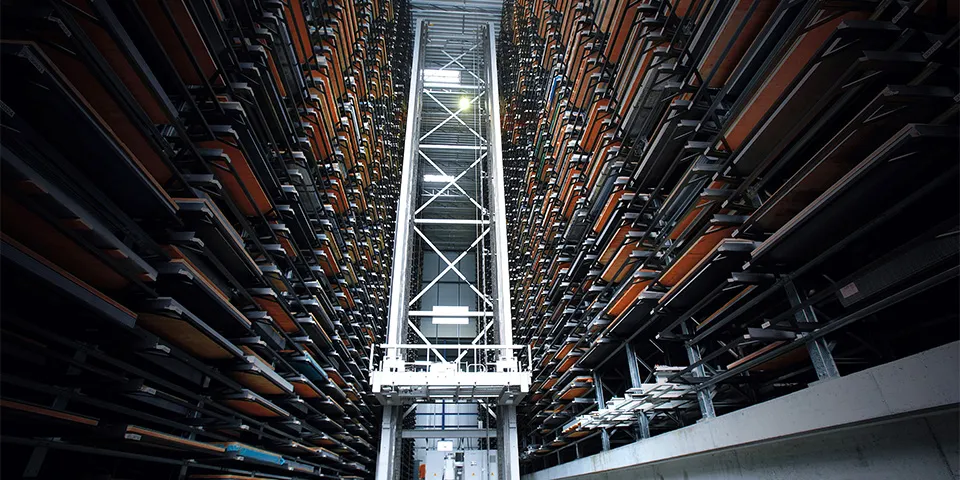
Companies are focused on how to produce as efficiently as possible. Logistics, despite being an inherent part of every…
Companies are focused on how to produce as efficiently as possible. Yet logistics, despite being an inherent part of every production process, often receives far less attention. Industry 4.0, with its connected machines and processes, shows that there are gains to be made by looking at the whole picture. In other words, organising your warehouse effectively and setting up an efficient logistics flow between your processes will enable you to reduce downtime in your production process and, therefore, make a profit.
A company can only really start making money once its products have left the premises. Without logistics, that simply will not happen. It goes without saying, then, that anyone who can achieve a few percentage points of efficiency gains here will not only ensure smoother logistics, but also a more seamless production flow. Have you ever calculated how long your workpieces sit idle during your production process? How much profit you could make if you no longer had to wait for your tools to be back in stock? How much time you would save if you no longer had to search for raw materials or products? An optimally organised warehouse is not an unnecessary luxury. It is an important step towards a more efficient production process. These rules of thumb will put you on the right track.

Industry 4.0, with its connected machines and processes, shows that there are gains to be made by looking at the entire production picture, including logistics.
1. Consider your products and materials
A storage system must first and foremost be suited to the type of product and material handled on your shop floor. This sounds obvious, and it is when you are setting up a business or investing in a warehouse solution. But this can change over the years of production. A manual system that works best for you today may, as circumstances change, be better replaced by a semi-automatic or automatic solution tomorrow. Although logistics is not your core business, it is worth reviewing your logistics processes regularly. To choose the right storage system, you need to take into account the shape and size of the product, the quantity you want to keep in stock and its throughput rate. The positioning of storage systems is another important factor. A general rule of thumb is to align the aisles with the flow of goods to minimise travel distances.

A storage system must first and foremost be suited to the type of product and material handled on your shop floor.
2. Consider your transport
Your logistics decisions depend not only on what you are going to store, but also on how you are going to transport it. This is also a factor that can have a major impact on costs, particularly in existing warehouses. The storage system is usually designed around the fleet already in place. A three-wheel forklift will quickly require more than 3 m of space, while a reach truck can operate in less. There are also specialised narrow-aisle forklifts that need an aisle less than 2 m wide. Also make sure that there are more aisles than forklifts that need to pass through them. Otherwise, the risk of congestion, and therefore lost productivity, increases considerably. If forklifts need to be able to pass one another, wider aisles will be required. Bear in mind that this will reduce storage capacity. Finally, consider how the forklifts are powered: electric, diesel or LPG. The trend is increasingly towards electric power. So make sure you allocate the necessary space in the warehouse for charging points.
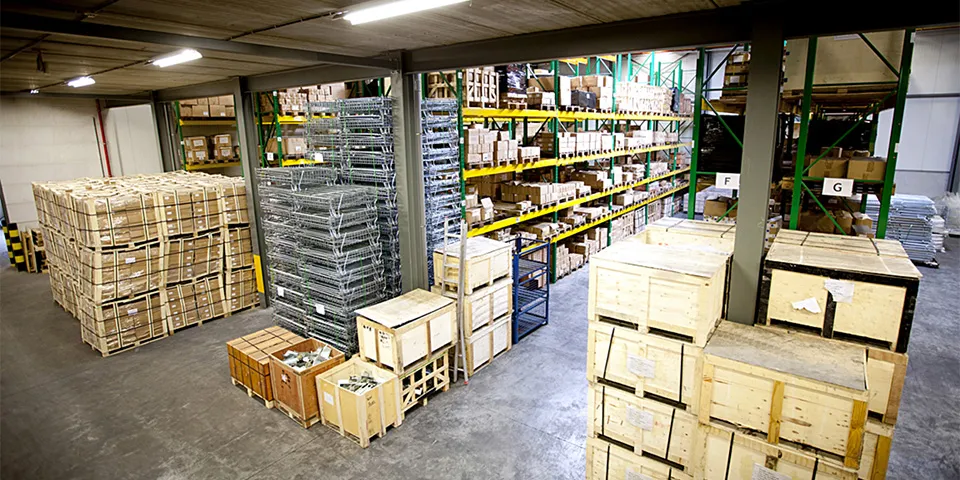
Your logistics decisions depend not only on what you are going to store, but also on how you are going to transport it.
3. Consider your software
Software and efficiency go hand in hand, especially in a warehouse where there may be a large number of products or people at work. A WMS (Warehouse Management System) can ensure that all available space is used to the full, tasks are allocated optimally among operators and traffic flows smoothly. Storage systems can also be linked to your ERP package, giving you a complete overview of your stock of materials and tools, for example, at all times. There is also a wide range of solutions available today that use software and scanners to enable fully paperless warehouse operations.
Question about this story? Ask your question
Keep following this
Get an email when a new story is published. No account needed.
- SubjectNews







