












Making more efficient use of digital data for more sustainable and flexible production
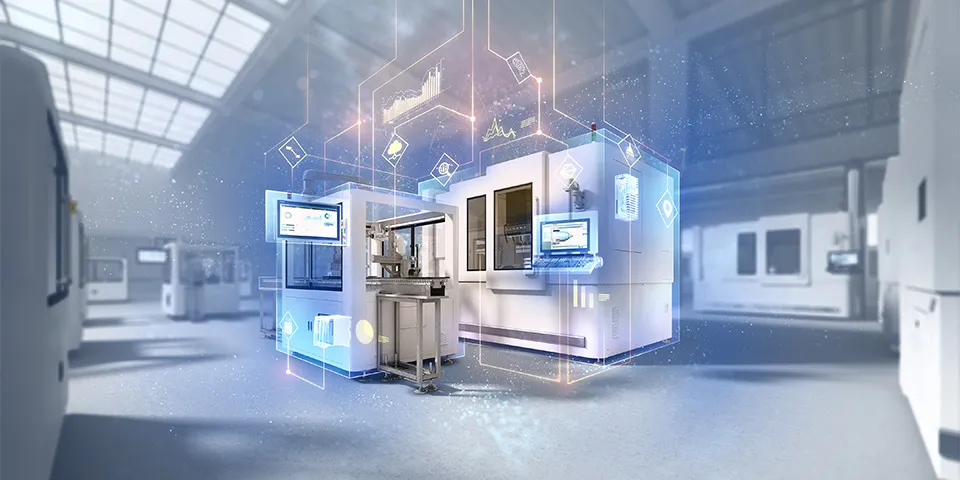
In the digital age, companies will be able to produce more efficiently, while also working more flexibly and sustainably. At the latest edition of SPS, Siemens presented its extensive Digital Enterprise portfolio. The products, solutions and services on its more than 4,000 m² stand were designed to help customers reduce their time to market and improve productivity, flexibility and efficiency.
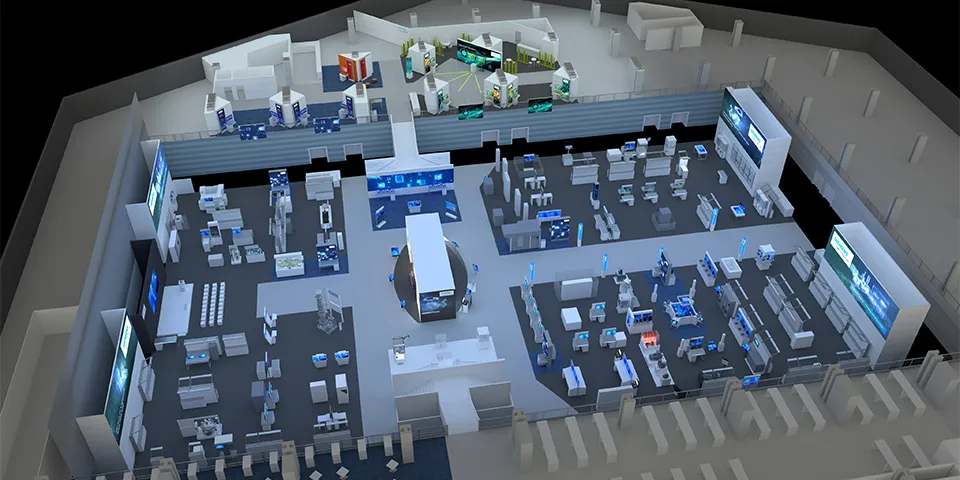
Using the automotive industry as an example, Siemens showed how development and production times can be shortened, regardless of the drive concept (diesel, petrol or electric).
Through innovation and the integration of advanced technologies into its Digital Enterprise portfolio, Siemens helps companies in all sectors achieve more flexible and efficient production. “The Digital Enterprise portfolio is already well established worldwide across all sectors for implementing Industry 4.0. Many applications demonstrate the tangible benefits these solutions offer our customers,” said Klaus Helmrich, member of the Managing Board of Siemens AG and CEO of Digital Industries, at SPS. “Now we are taking the next step: with numerous innovations and advanced technologies, we are taking the Digital Enterprise portfolio, and therefore Industry 4.0, to the next level.”
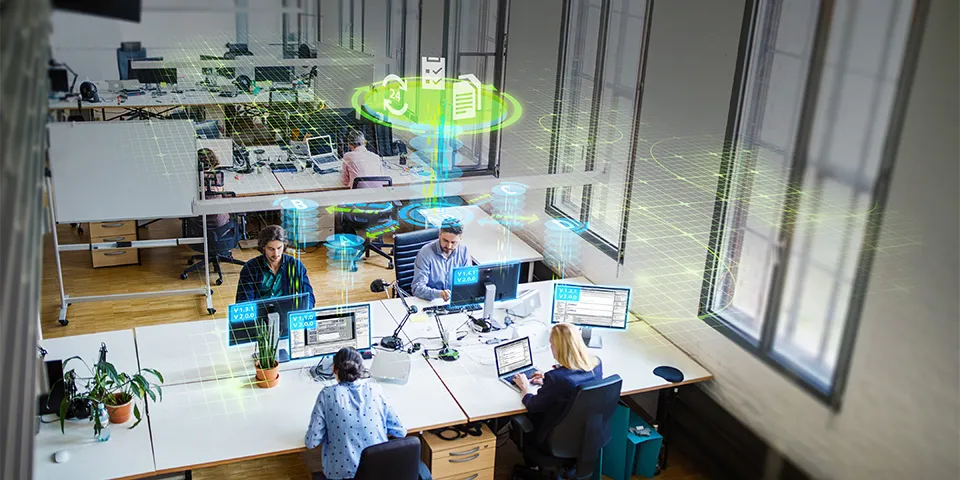
The innovations focus on the continuous integration of the development process. They include standardisation, integrated engineering across teams and an integrated functional test.
Modular, flexible and ecologically efficient production
At SPS, Siemens presented numerous innovations and sector-specific applications demonstrating how these requirements can be met with new products, solutions and services from the Digital Enterprise portfolio. For example, a more accurate and powerful Digital Twin can significantly reduce CO2 emissions during product development by providing an extensive simulation of actual production. Analysis of production processes shows where resources such as water and electricity could potentially be saved. Finally, the use of innovative production methods, such as Additive Manufacturing, can save materials and reduce waste. With this portfolio, Siemens is paving the way for modular, highly flexible and, above all, ecologically efficient production flows.
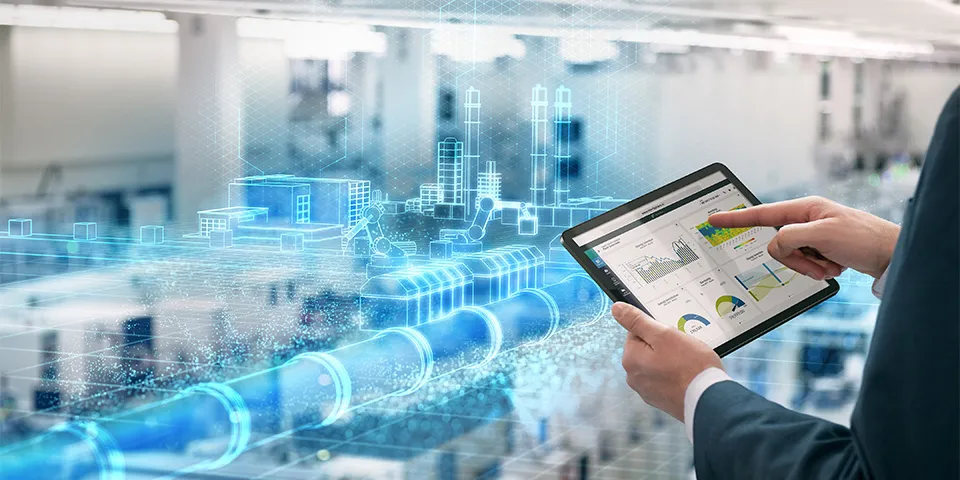
Through innovation and the integration of advanced technologies into its Digital Enterprise portfolio, Siemens helps companies in all sectors achieve more flexible and environmentally efficient production.
An integrated, scalable system is needed, from the field to the cloud
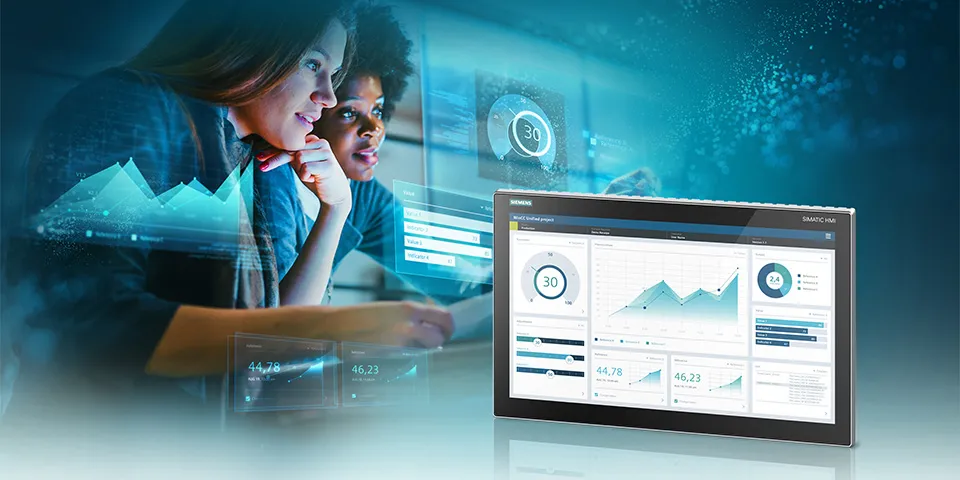
Growing demands for greater flexibility and productivity cannot be met by conventional automation solutions alone. An integrated, scalable system is needed, from production to the cloud. The technical requirements are already available in the form of end-to-end solutions across the entire value chain, connecting the virtual and real worlds for all manufacturing and process industries. This is made possible by platform innovations such as the first digital CNC, Sinumerik One, the innovative web-based process control system Simatic PCS NEO, the newly developed visualisation platform Simatic WinCC Unified and the Xcelerator portfolio, which combines the full range of industrial software and services, and MindSphere, with an extensive Mendix platform for developing low-code apps. This creates a comprehensive, seamless digital context across a wide range of information sources and data formats. Plant operators can benefit from the excellent reliability and quality of the information, and the resulting increase in the operational availability and reliability of their plants.
Reliability and security in industrial communications
The trend towards flexible and modular production concepts also creates challenges for wireless communications: more devices, greater reliability and lower latency. The key is connecting production and logistics elements, from network-controlled automation to more flexible production. Industrial 5G provides the foundation, offering ultra-reliable broadband transmission and extremely low latency for networks with large numbers of devices.
Digitalisation is leading to more networking, right down to sensor level. In automation, protection against potential risks is particularly important. To support users in this area, Siemens offers a comprehensive, wide-ranging protection concept that meets the recommendations of IEC 62443, the leading standard for security in industrial automation. A new concept presented at SPS is Industrial Security Services, specifically for Simatic automation systems, with solutions for security configurations and efficient vulnerability management.
The key is connecting production and logistics elements,
from network-controlled automation to more flexible production.
An ecosystem for data integration and analysis
Another element in the next step towards implementing digital transformation is the growing ecosystem for Industrial Edge and Cloud. This enables data integration, from data analysis on the shop floor through the automation system to the Cloud. Siemens is offering new Edge apps for production plants and machine tools. Siemens has also acquired Edge technology from US company Pixeom, strengthening its portfolio for simple app management and central app updates, even across distributed infrastructures. Siemens’ service experts support digital transformation with a comprehensive service offering, from consultancy and implementation to optimisation. This also includes AI-based services that connect the ‘field’ with edge and the cloud. Data is analysed both locally on the machine and in the cloud using AI-based algorithms. This enables customers to predict unplanned machine downtime and adjust product quality.
The transformation of industry
Digitalisation is increasingly transforming industry: stronger connections between the virtual and real worlds are taking us from the traditional showroom to the digital design and sales space, from the on-site foreman’s office to the factory simulation space, and from connected automation to the flexible shop floor. Using the automotive industry as an example, Siemens showed how development and production times can be shortened, regardless of the drive concept (diesel, petrol or electric). Fully automated production concepts offering high quality and precision, together with industrialised additive manufacturing, deliver improved performance, shorter installation times and a transparent process for battery development and production. The strengths of modular process plants were illustrated on the stand by a ‘plug and win’ separator from GEA, automated using Module Type Package (MTP) and supported by web-based applications and digital services based on MindSphere. These applications increase plant transparency and efficiency by optimising operational control and maintenance schedules.
Question about this story? Ask your question
Keep following this
Get an email when a new story is published. No account needed.
- SubjectNews







