












Rapid development of a face mask machine
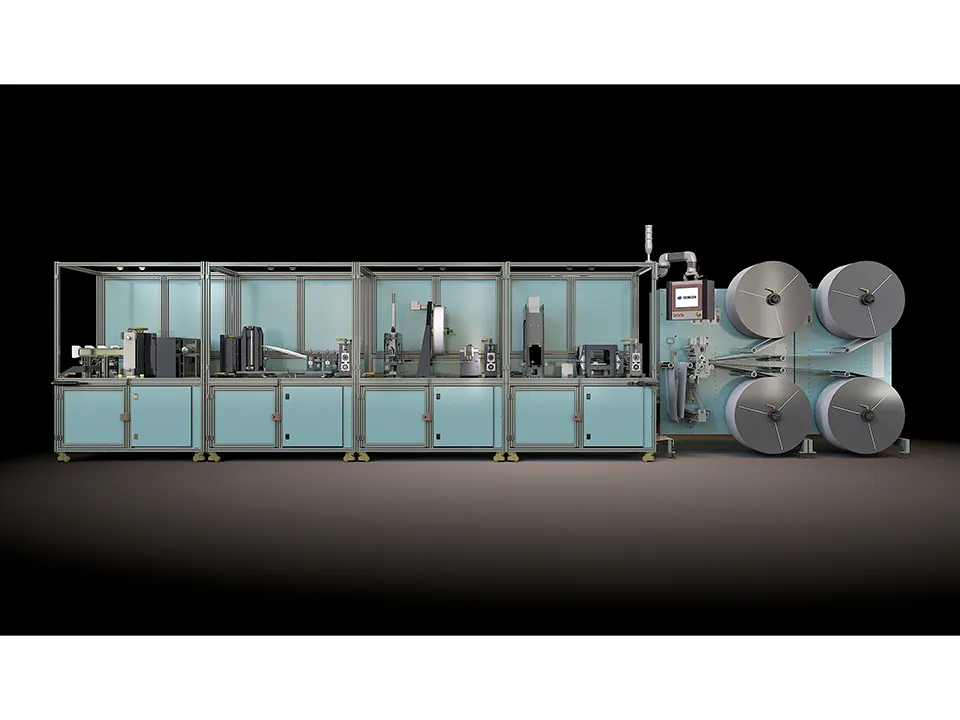
Shortly after the Covid-19 pandemic broke out, countries everywhere were urgently seeking face masks. Demcon Industrial Systems decided to take responsibility and develop a machine for the rapid production of FFP2 medical face masks.
It took just a few months to develop the modular machine and deliver it to Sneek. A vision system from Festo checks a specific control step in the final stage of the production process.
March 2020 will forever be remembered as the period when the Covid-19 pandemic dominated the news. Its impact on people and businesses was significant, as was the uncertainty about the future. Yet the first initiatives to control the coronavirus as quickly as possible and limit its effects were also launched soon afterwards. Demcon also took the initiative. Thijs Rupert, managing director of Industrial Systems, says: “The board decided that we could take responsibility by developing a machine capable of quickly producing medical FFP2 face masks. We wanted to design our own innovative machine to solve the problems faced by other manufacturers at the time. That meant producing high-quality face masks that would not be rejected, with the shortest possible cycle time (3 to 4 seconds) and lead time, so that we could make a substantial contribution to addressing the shortage.”
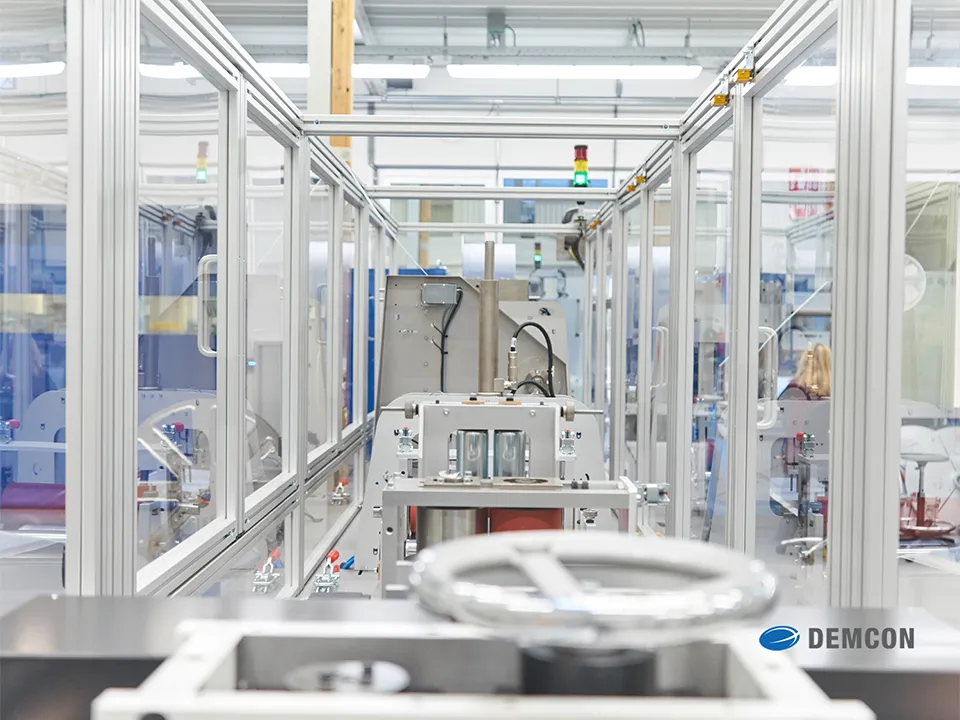
Modular design
The final design is modular. The process starts on the right, where material supplied on rolls is fed into the machine. The textile from the rolls is brought together and guided through a feed roller. The rolls turn at a speed that feeds the textile continuously towards the roller. A dancer roller after this acts as a buffer. At the following stations, the components are processed while stationary, using a start-stop process. The buffer ensures that, as soon as the products move on to the next station, enough textile is immediately available to feed into the machine. At the first station after the dancer roller, an aluminium nose clip is fed in, cut to length and placed between two layers of textile. The outer contour is also ultrasonically welded. At the second station, the elastic headband is attached and the mask is printed. The semi-finished products are then folded at the third station, after which the fourth and final station secures the folds with an ultrasonic weld. At the final station, the mask is also cut out of the textile and discharged.
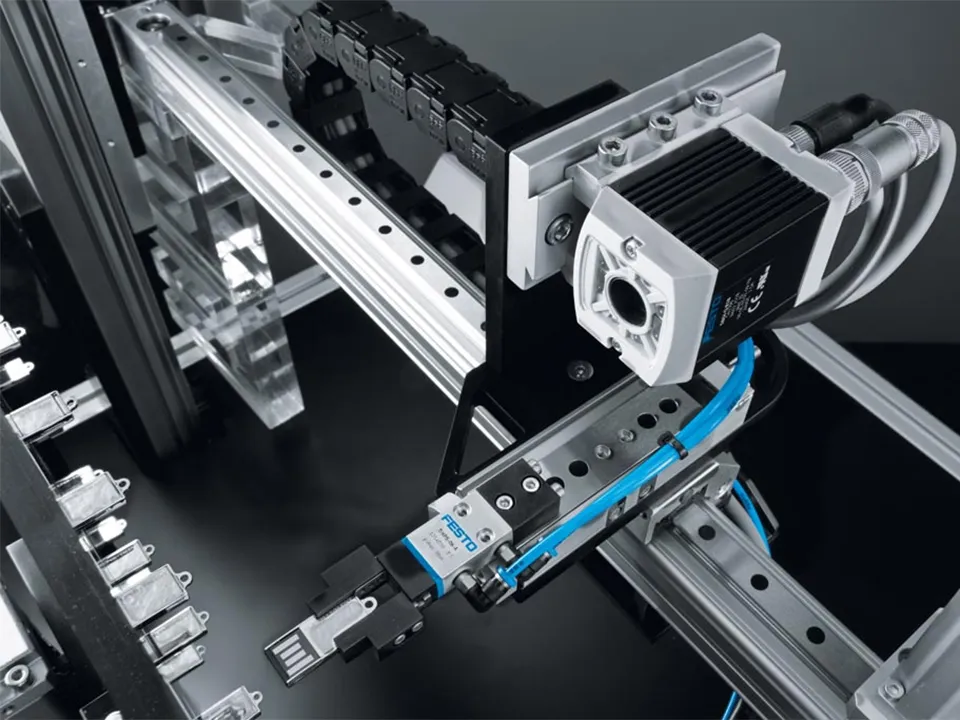
Inspection with a Festo vision system
Before the masks are cut out, they are checked using a vision system with a configurable SBSI Smart Sensor. The system first checks that the nose clip and headband are in the correct positions. If they are not, the cutting unit could be damaged. This check is therefore specifically intended to protect the machine and prevent downtime. The vision system also checks that the pattern is correct and that the intended cutting line matches the previously made weld line. If not, this indicates that something has shifted somewhere in the machine, a phenomenon known as ‘pattern drift’. Detecting this at an early stage makes it possible to adjust the settings immediately and prevent unnecessary rejection of face masks.
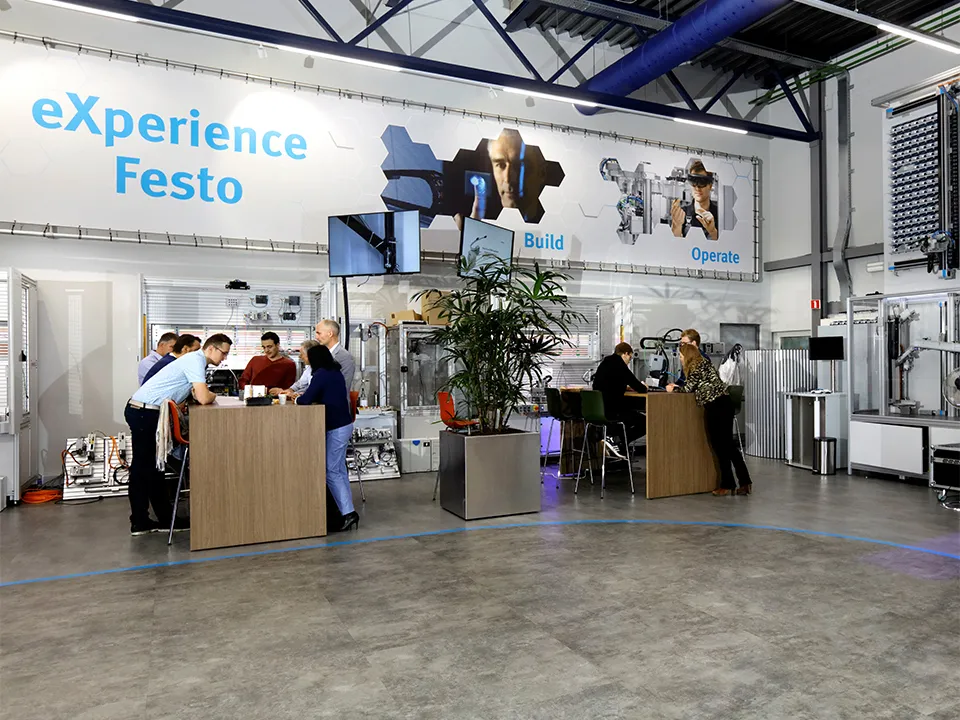
Expertise and a high-quality product range
Demcon chose Festo for the vision system and pneumatic drive technology. “It is a company with enthusiastic employees who know their business and are also willing to think things through with us. In that respect, we are a good match. Festo also has a comprehensive, high-quality product range, which means we can source many components from a single partner. Before this project, we visited their impressive Experience Center and attended various training courses. Festo employees also came to our site to provide expert training for our engineers, enabling them to work effectively with the software for the SBSI cameras. This vision system is not only highly accurate, but also allows us to configure the sensors ourselves and deploy them flexibly for different functions. What is more, it is a proven product that was available off the shelf. In that respect, we were better prepared for the project than anyone. When we started, all the hardware, software and expertise were in place.”
Question about this story? Ask your question
Companies in this story

Keep following this
Get an email when a new story is published. No account needed.
- SubjectNews
- CompanyFesto







