












Resistance to digital transformation is futile
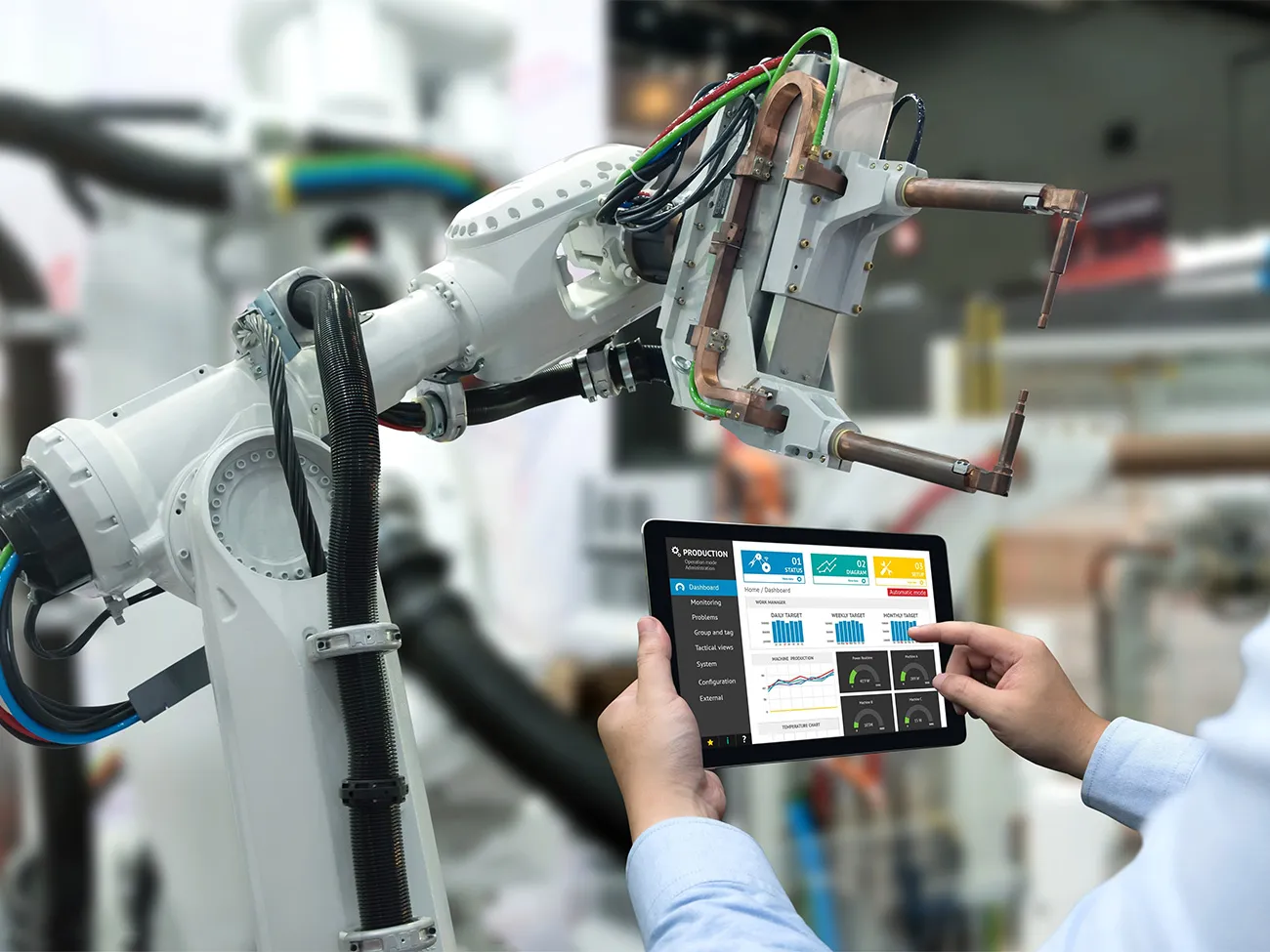
Covid has turned our way of producing on its head. The digital transformation has shifted up a gear dramatically. Work that would have taken years has been completed in months, as business leaders realise that going digital is the only way to future-proof their businesses. But what will automation look like in the post-Covid world?
Innovating for innovation’s sake is a thing of the past. The pandemic may have proved a major driver of digital transformation, but pragmatism has always come first. By 2022, 70% of all organisations will have accelerated their use of digital technology to increase customer engagement, boost productivity and build resilience. While only 27% of companies have undergone extensive digital transformation so far, that figure will reach 75% by 2024. Digital is rapidly becoming the new normal in business and society. By applying hyperautomation technology alongside reimagined production processes, companies will be able to cut their costs by as much as 30% by 2025. Automation and digitalisation really do deliver results.
Tech innovations do not exist in isolation
There is a great deal of market interest in artificial intelligence, machine learning, digital twins and robotic process automation (RPA). But these technologies only deliver tangible business results when they do not operate in isolation. It is time to move away from silos and adopt an integrated approach, combining the right capabilities to solve specific problems and identify opportunities. This process is known as hyperautomation. It is never-ending, but rather a disciplined approach to rapidly identifying and evaluating which business and IT processes would benefit from automation. It brings together different technologies to form a single architecture. And this does not apply to companies alone. Cities, too, are embracing IoT, artificial intelligence and digital twins to bring the physical and virtual worlds together and improve infrastructure management.
People and machines working together
This decade must see an end to the battle between people and robots. The best-performing organisations will be those that understand how to seamlessly integrate digital technology to boost human productivity. Everything that can be automated will be, while all other processes will need to be supported. In other words, machines will automate 80% of processes and provide people with information to help them make the right decisions in the other 20%. New forms of automation will directly or indirectly support a quarter of remote workers before the end of the year. By next year, 65% of them will be equipped with data, artificial intelligence and security tools to improve their productivity, adaptability and decision-making in an ever faster-changing environment. But this will not be limited to that domain. By 2023, half of knowledge workers could have their own AI-powered robotic assistant to help them prioritise tasks, gather information and automate repetitive work.
From industry leader to innovation hub
Only when all technology is on the same platform can it deliver genuine quality, consistent data and powerful insights. In the coming years, the companies leading global industry will have acquired at least one start-up specialising in artificial intelligence software by 2023. This will help them ensure they have the right skills in-house and retain control of their intellectual property. The need for integrated data will also make it harder for standalone technology players to survive. But integration is not limited to acquisitions. Networks of companies working together at a very deep level will also emerge. They are known as digital innovation factories. An estimated 40% of IT and OT suppliers will join forces to bring holistic solutions to market. By 2025, 75% of industry leaders are expected to be using digital platforms and ecosystems to adapt their value chains to new markets and industries.
Question about this story? Ask your question
Keep following this
Get an email when a new story is published. No account needed.
- ThemeFrom factory data to decisions
- SubjectNews







