












Robotics breaks records worldwide once again, and here’s why
Text Valérie CouplezImage iStock
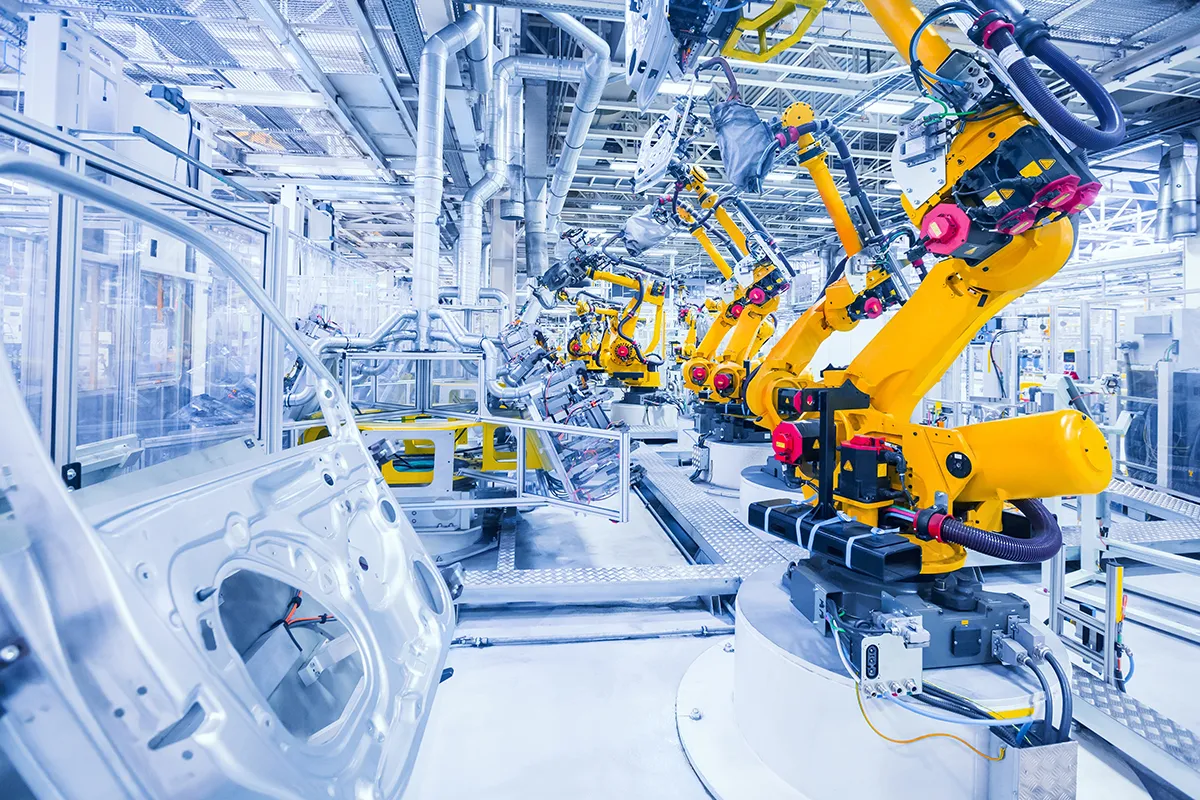
Each year, the International Federation of Robotics (IFR) brings together the key trends in robotics in a report. This year was no exception. It opens with a new record: the global market value of industrial robot installations now stands at 16.5 billion dollars. Future demand will be driven by a number of technological innovations, market forces and new industries.
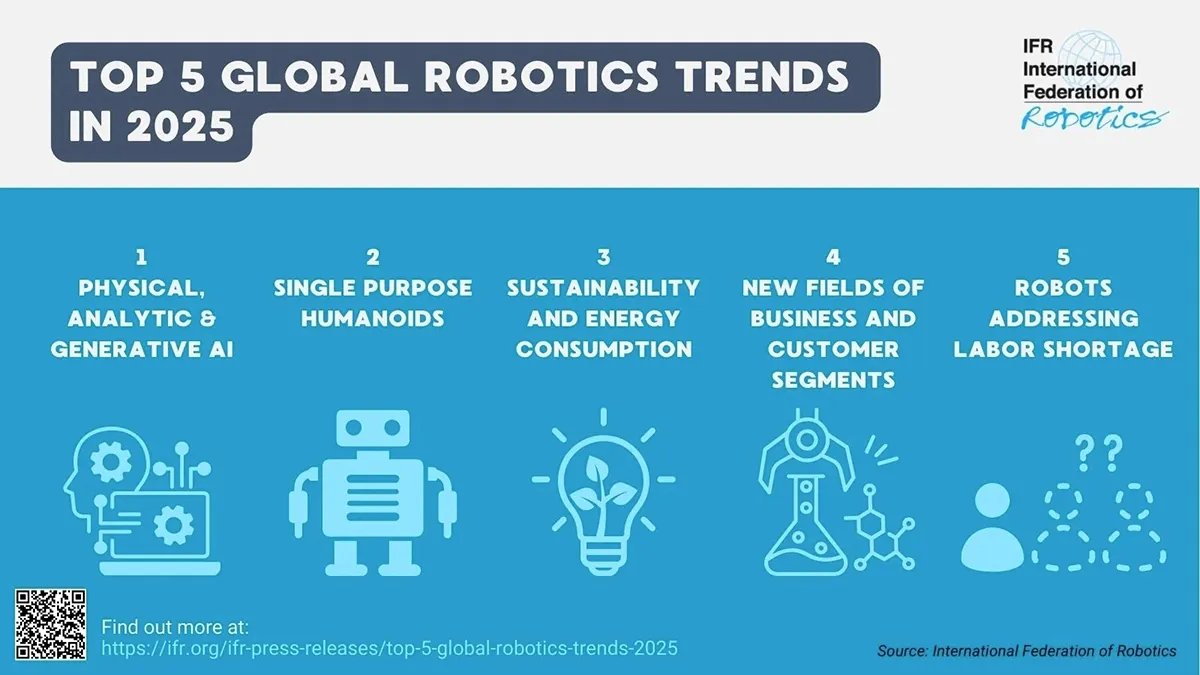
Artificial intelligence in robotics is on the rise. By using a range of AI technologies, robotics can perform a wide variety of tasks more efficiently. Analytical AI enables robots to process and analyse the large volumes of data collected by their sensors. This helps them manage variability and unpredictability in the external environment, in high-mix, low-volume production and in public spaces. Robot and chip manufacturers have recently been investing in the development of specialised hardware and software that simulate real-world environments. This so-called physical AI enables robots to train themselves in virtual environments and work based on experience rather than programming. These generative AI projects aim to create a ‘ChatGPT moment’ for physical AI. This AI-driven robotics simulation technology will be developed further for both traditional industrial environments and service robotics applications.

Humanoids
Robots shaped like human bodies have attracted considerable media attention. The vision is that robots will become universal tools capable of loading a dishwasher independently and then working on an assembly line elsewhere. Start-ups are developing these universal humanoid robots. Industrial manufacturers, however, are focusing on humanoids designed to perform just one task. Most of these projects are being carried out in the automotive industry, which has played a key role in pioneering robot applications throughout the history of industrial robotics, and in the warehousing sector. From today’s perspective, however, it remains to be seen whether humanoid robots can make a viable and scalable business case for industrial applications, particularly when compared with existing solutions. Nevertheless, many applications could inherently benefit from the humanoid form, offering market potential for robotics, for example in logistics and warehousing.
Sustainability and energy efficiency
Robots play an important role in helping manufacturers achieve these objectives. These automated systems ensure consistent quality, which is essential for products designed to last a long time and require minimal maintenance. Robots are crucial to the cost-effective production of green energy technologies, such as solar panels, batteries for electric cars and recycling equipment. They enable manufacturers to scale up production quickly to meet growing demand without compromising on quality or sustainability. At the same time, robot technology is being improved to make robots themselves more energy efficient. For example, the lightweight construction of moving robot components reduces their energy consumption. Various sleep modes put the hardware into an energy-saving standby state. Advances in gripper technology use biomimetics to achieve high gripping force with almost no energy consumption.
New industries
There is still considerable potential for robot automation in manufacturing. Most manufacturing companies are SMEs. The adoption of industrial robots by SMEs is still held back by high initial investment and total cost of ownership. Robot-as-a-Service (RaaS) as a business model enables companies to benefit from robot automation without fixed capital investment. Low-cost robotics offers solutions for potential customers who consider a high-performance robot too large. Many applications, after all, have modest requirements for precision, payload and service life. Low-cost robotics caters to this new segment, which is looking for ‘good enough’. Demand across all sectors is being boosted by the fact that recent crises have raised political awareness of the importance of domestic production capacity in strategically important industries. Automation enables manufacturers to relocate production to nearby locations without sacrificing cost efficiency.
Robots as a solution to labour shortages
Although the impact varies from country to country, the cumulative effect of labour shortages on the supply chain is a concern almost everywhere. The use of robotics significantly reduces the impact on the manufacturing sector. By automating dirty, dull, dangerous or delicate tasks, human workers can focus on more interesting and higher-value work. Robots perform tedious tasks such as visual quality inspections, hazardous painting work or lifting heavy objects. Technological innovations in robotics, such as ease of use, collaborative robots and mobile manipulators, help fill gaps where needed.
Question about this story? Ask your question
Keep following this
Get an email when a new story is published. No account needed.
- ThemeFlexible production with robots
- SubjectNews







