












Smart algorithms in inclinometer deliver greater reliability
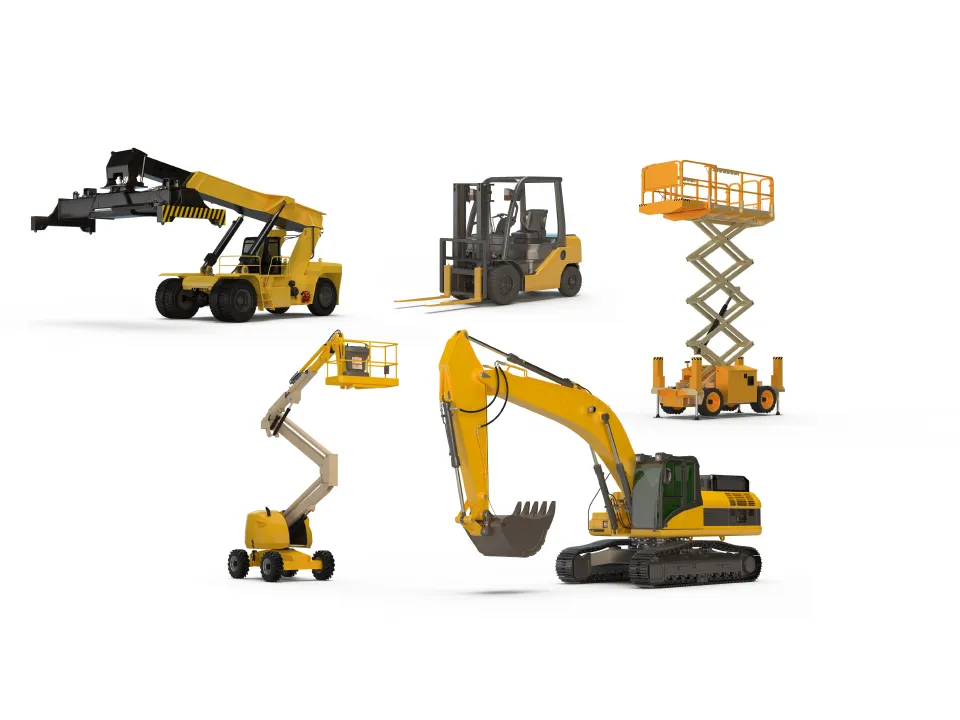
Machines have become much smarter in recent years, partly thanks to the intelligence built into measurement instruments. A dynamic inclinometer using smart algorithms is expected to become standard in many mobile machines.
Smart machines generate ever more data. Sensors act as the machine’s feelers, sending signals to the control system so it can respond appropriately. Another trend in automation is that more and more machines are operating autonomously. Examples include AGVs (automated guided vehicles), robots and larger autonomous vehicles. Whether machines move autonomously or are operated by a person, the importance of accurately positioning a machine in real time is growing. Traditional systems can struggle with this. In many cases, movement is communicated to the control system using an inclinometer with one, two or three axes. Filters are used or additional sensors added to prevent unintended shocks and vibrations from ‘contaminating’ the signal. But adding extra components makes the system more expensive, complex and prone to faults.
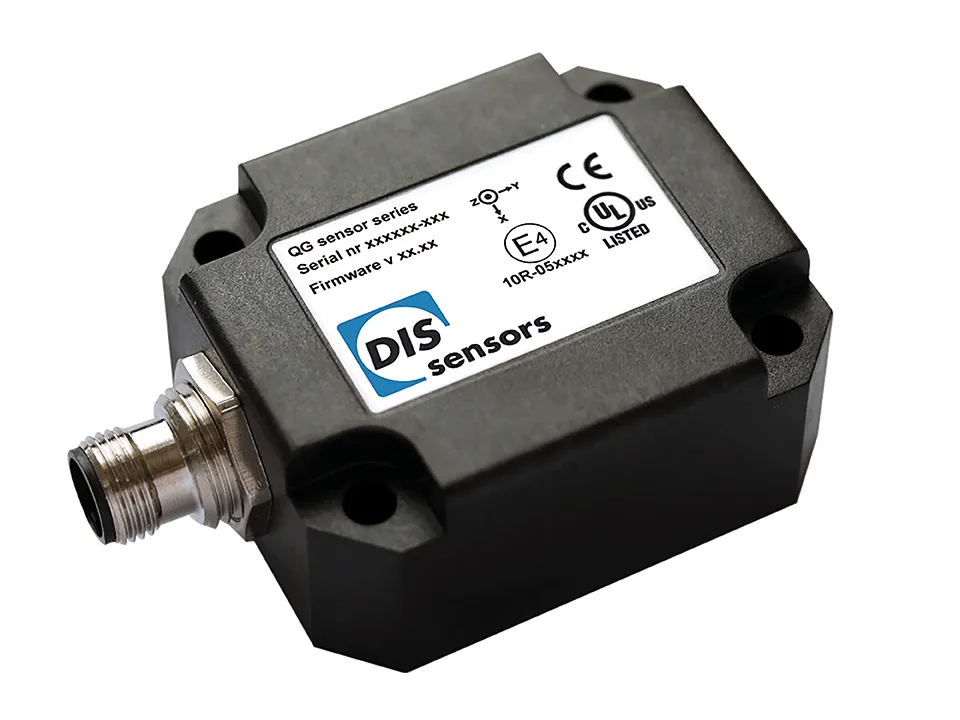
Dynamic inclinometer
After a period of testing and fine-tuning, a new sensor has now been developed to monitor machines and installations without vibrations and shocks affecting the measured values. This is the dynamic inclinometer from DIS Sensors, which Rotero Belgium has immediately added to its range. The sensor runs on a completely new hardware and firmware platform based on the latest MEMS (Micro-Electrical-Mechanical Systems) chip. The instrument combines an accelerometer with a three-axis gyroscope. The signals are intelligently combined using smart software algorithms. The angle sent to the control system as a separate CANopen/J1939 object for each axis is gyro-compensated, making it accurate, real-time and unaffected by disruptive vibrations and shocks.
From aerospace to the mainstream
“The technology has been used in aerospace and defence for some time. With the advent of affordable MEMS chips, it is now accessible to many more sectors,” explains Pim Wieske, sales manager at DIS Sensors. Feedback from beta testers has already been very positive. “Users were particularly impressed by the high reliability of the signals. This inclinometer can measure even rapid movements accurately in real time, enabling much faster response times.”
In practice
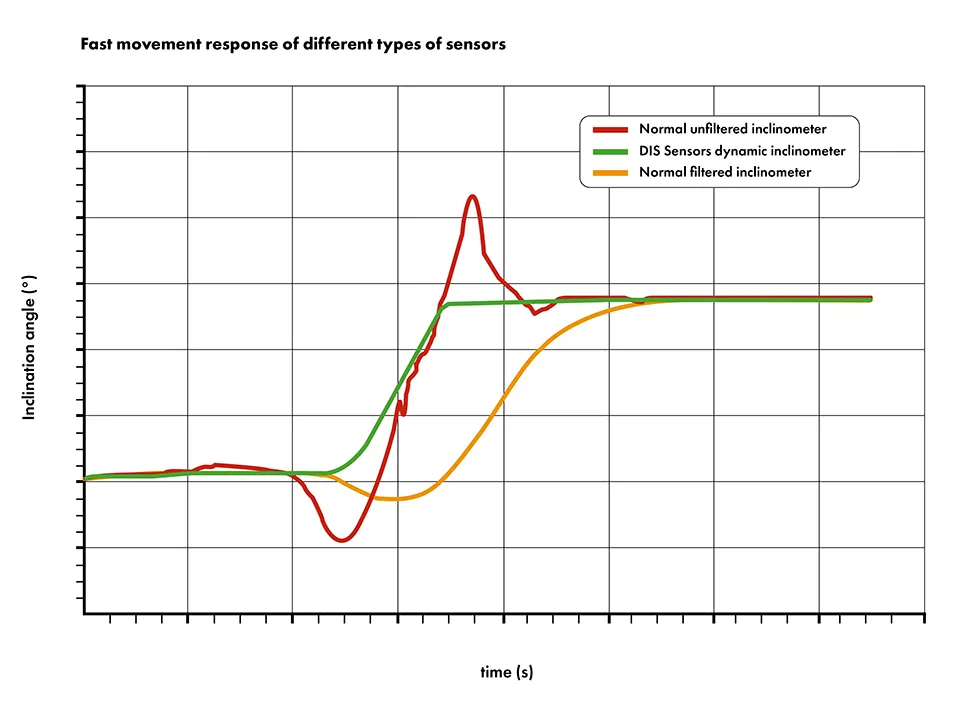
Wieske explains the benefits of the instrument. “When the moving parts of large machines, such as cranes, move quickly from A to B, filtering often causes a lag. The more of this lag you can eliminate from a system using a gyroscope, the more accurately movements can be monitored. The greater reliability of the results could make it possible to reduce built-in safety margins and expand the operating range.” Wieske gives a second example. “AGVs or small forklifts taking a corner in a warehouse must not tip over. A traditional sensor measures lateral acceleration when cornering, causing the control system to mistakenly register a tilt angle. The dynamic inclinometer filters out lateral acceleration in real time, measuring the exact movement and position without delay. This will mean fewer false alarms and significantly greater efficiency for the user.” According to Wieske, dynamic inclinometers are becoming much more important as automation increases and autonomous vehicles become more widespread. “In fact, they are expected to become standard in mobile machines.” The dynamic inclinometer will be available worldwide from December. Rotero handles distribution in Belgium.
Question about this story? Ask your question
Companies in this story

Keep following this
Get an email when a new story is published. No account needed.
- ThemeSmarter measurement and inspection
- SubjectNews
- CompanyRotero Belgium







