Industrial Automation Nederland is part of Louwers Mediagroep: 45+ specialist platforms in the Netherlands, Flanders and Wallonia. Trade magazines, websites, newsletters, video and podcasts, since 1987.
Every day, large numbers of samples are analysed in laboratories. The benefits of automation in this field are clear: automation delivers faster results, higher throughput, fewer errors and lower personnel costs. For drive systems to operate smoothly, high dynamics and precision are essential. We speak to Dr Aihua Hong about the requirements and developments in this market segment, for which she is responsible at FAULHABER.
Dr Aihua Hong
Which sectors use laboratory automation?
Automated processes are found in every sector with laboratories, for example the chemical and pharmaceutical industries and food technology. The medical sector is also experiencing substantial growth worldwide. In this sector, automated solutions have been indispensable for many years in so-called in vitro diagnostics (IVD), the analysis of medical samples such as blood, urine and tissue. Pharmaceutical companies’ research laboratories are also automating an increasing number of test procedures required to develop new medicines.
What exactly is laboratory automation?
The level of automation varies considerably between laboratories. It ranges from carrying out individual processes using standalone devices to fully automated sample analysis in complex systems. The latter is particularly useful when large numbers of samples need to be analysed according to a standardised protocol and little flexibility is required, for example in IVD at a hospital’s central laboratory or in large medical diagnostics laboratories.
Which processes are carried out automatically?
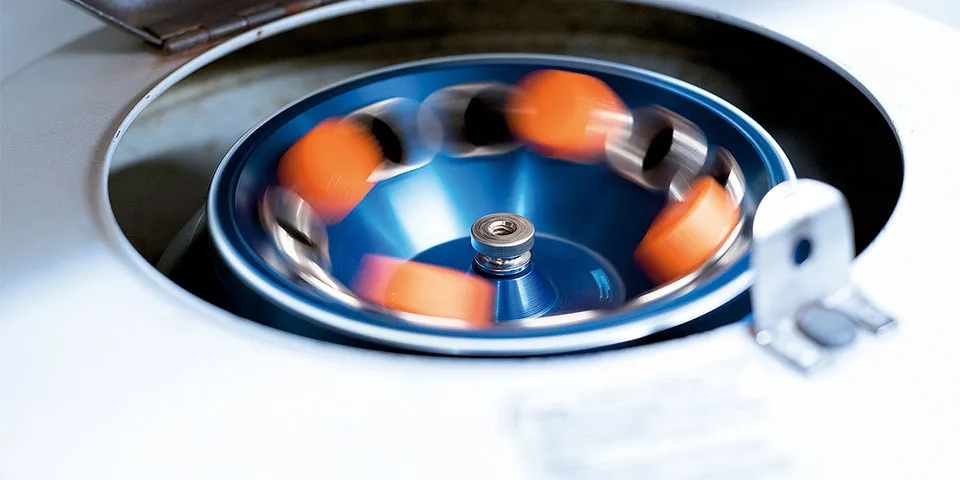
In these laboratories, almost the entire analysis process is automated. It starts with preparing blood samples in colour-coded test tubes. A scanner identifies the type of analysis required for each tube and ensures that a robot arm picks it up accordingly. Some samples are centrifuged to separate the blood components. The samples are then moved in special transport units to the analysis station itself, for example on a conveyor belt or in a small wheeled cart.
What happens at the analysis station?
First, the sample is identified by positioning its barcode in front of the camera for scanning. The cap is then removed from the test tube, and a small amount of the sample is taken from it. The tube is then sealed again and archived in case further tests are needed later. The sample is moved to a reaction vessel for analysis, for example on a plate or in a Petri dish. During the test itself, drive technology is used mainly for processes such as pipetting, liquid handling, mixing and stirring.
In vitro
What requirements must the motors meet?
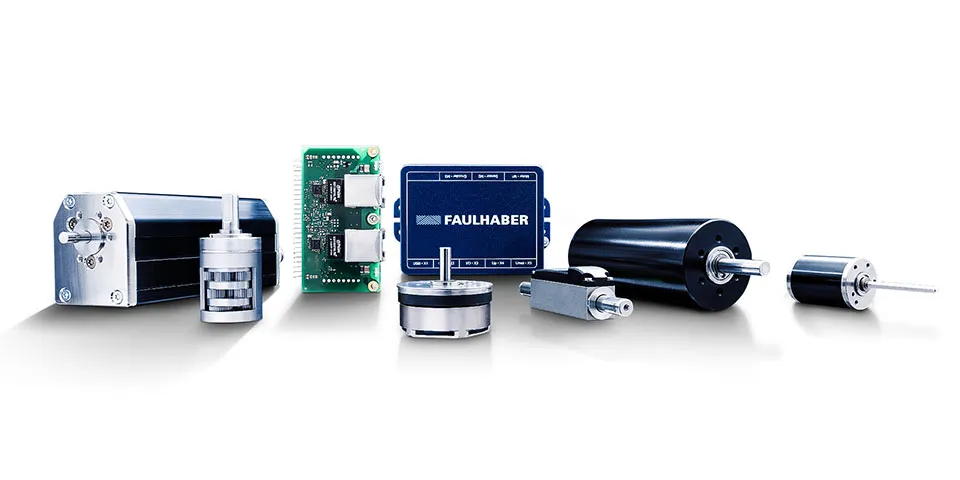
A large number of different movements have to be performed during the process, and the drive technology must make them all possible. Conveyors require large, powerful motors, while components need to be as compact and lightweight as possible. Thanks to our extensive product range, we can cover the full spectrum and almost always provide excellent solutions, whatever the requirements.
Find the right company in the sectorSearch by product, specialism, region or project across the company directory and all articles from Industrial Automation Nederland.
We use cookies to keep the site working properly. With your consent, we also use cookies for statistics and third-party banners. Read more in our privacy and cookie statement.