












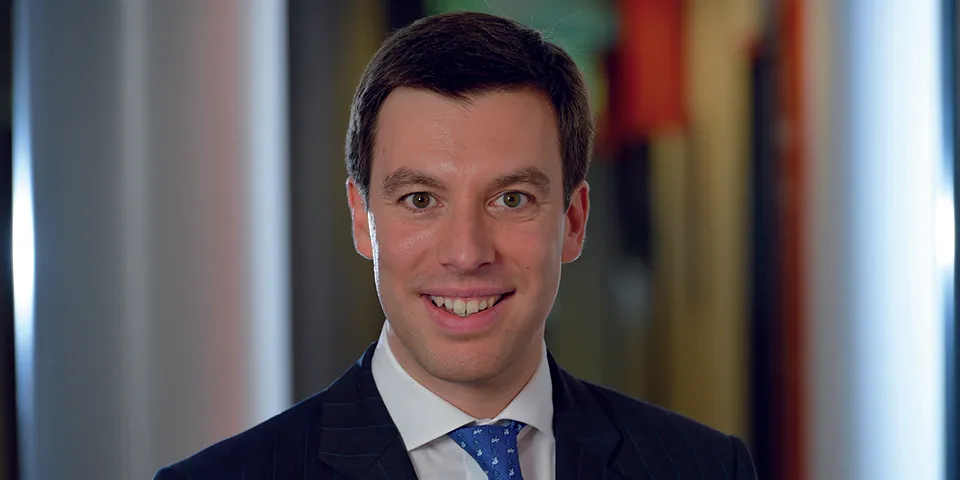
The Pen | Frank Beckx, Managing Director of essenscia vlaanderen.
Did you know that one in three products exported by Flanders comes from the chemicals, plastics and pharmaceuticals sectors? And that, over the past ten years, the sector has accounted for more than half of all foreign investment in Flanders, with 330 investment projects? To top it all, €5.5 billion was invested over the past twelve months, creating 800 new jobs. The combination of innovation and talent is the formula for the chemicals and pharmaceuticals sectors to maintain their international leadership.
When we talk about innovation, we talk about talent
From the smartphone in your pocket to the solar panels on your roof. From the latest immunotherapy for cancer to the carbon frame for your next racing bike. More than ever, our society depends on innovations from the chemicals, plastics and life sciences sectors. Studies show that global demand for chemical products will almost double by 2030. That is because we supply the essential building blocks for the finished products of many other sectors.
Over the past decades, we have built a chemicals and pharmaceuticals industry in Flanders that can hold its own against the world’s best. The chemicals cluster in and around the Port of Antwerp is one of the largest in the world, and probably the most specialised, connected and environmentally friendly. We are also a European leader in the research and development, production and export of new medicines and advanced biotechnological therapies. The challenge now is to maintain this leading position in the decades to come, so that companies continue to invest, innovate and create jobs here.
The chemicals and life sciences sectors are Flanders’ undisputed innovation champions, accounting for 56% of all industrial investment in research and development. Companies invest €2 billion a year in R&D. These innovations are essential for improving the treatment of diseases and for tackling climate change successfully. It is therefore no surprise that the chemicals sector plays a key role in the Flemish Government’s Moonshot programme. Over the next twenty years, this ambitious innovation project will provide €400 million for groundbreaking research at universities and research centres, to develop breakthrough technologies that will make industry in Flanders climate-friendly.
What does this involve? Electrifying production processes, applying biobased feedstocks such as algae or sugars in industry, developing new energy carriers such as hydrogen, developing chemical recycling technologies that turn plastic waste into a valuable feedstock for the chemicals industry, and capturing and reusing CO2 as a feedstock in a circular economy, known as CCU (Carbon Capture and Utilization). This technology is still in its infancy, but mattresses and sports flooring made from CO2 have already been developed.
Innovation is the key to a sustainable society and a better quality of life. But when we talk about innovation, we talk about talent. It is thanks to the knowledge, expertise and productivity of more than 62,000 employees, from top technical specialists and engineers to digital whizzes and laboratory researchers, that the chemicals and pharmaceuticals sectors are making their mark internationally day after day. We must not let this strength slip away, and that too requires innovation. For example, in new education models such as work-based learning and teaching. In collaboration with the Flemish Ministers for Work and Education, sector federation essenscia vlaanderen will launch a pilot project by the next school year.
This is how we build bridges between the classroom and the workplace. This is how we inspire more girls and boys to take an interest in technology and science. This is how we ensure that Flanders remains a chemicals and pharmaceuticals hub with global reach and impact.
Question about this story? Ask your question
Keep following this
Get an email when a new story is published. No account needed.
- SubjectNews







