












Tin recycling places high demands on machine safety
High material prices are driving recycling. Tin is a good example. But before scrap can be transformed into tin with a purity of 99.95%, it must undergo a series of separation processes. When Metallo Belgium’s tin line needed a new CE certification, the company turned to Pilz, which made the project a textbook example of modern safety thinking by adapting the installation quickly and flawlessly. The work was carried out with Preferred Partner IMA.
The entire installation was validated by Pilz and can now continue to operate for years under a new CE declaration.
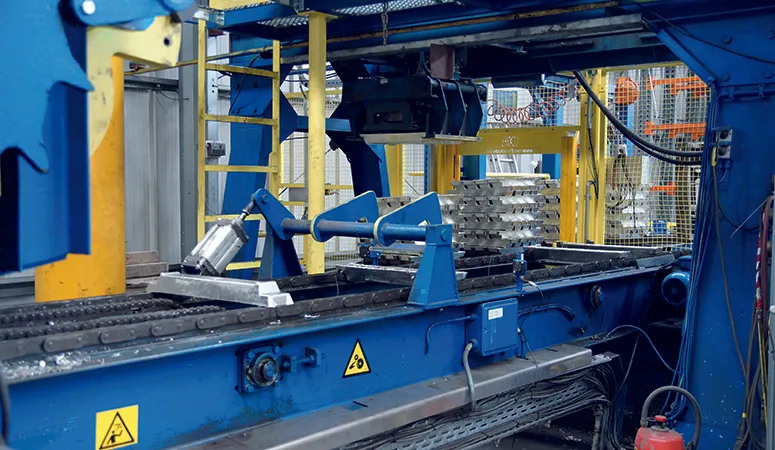
Behind the gates of Metallo Belgium in Beerse, an impressive process is under way. The company recovers usable materials from scrap sourced from all over the world. Project engineering manager Jos Maes explains how tin is processed: “At the copper smelter, we first separate the scrap into various types of copper, lead and tin. The tin then undergoes its final treatments on the tin line. The metal pump fills casting moulds, which have already been heated to prevent splashing. A robot then scrapes off the so-called scabs on the tin. These are caused by oxidation in the heated ambient air. Next, the tin reaches the stamping machine, which stamps the casting number onto the tin blocks. After cooling, the blocks reach the turning wheel on the conveyor chain, where they automatically fall out of the mould and onto the conveyor belt. If they do not, hammers knock them loose from the inside and outside of the mould in the turning wheel. They are now ready for further processing.”
The Pilz project at Metallo is a good example of the workflow involved in an integrated safety project.
Foundation for success
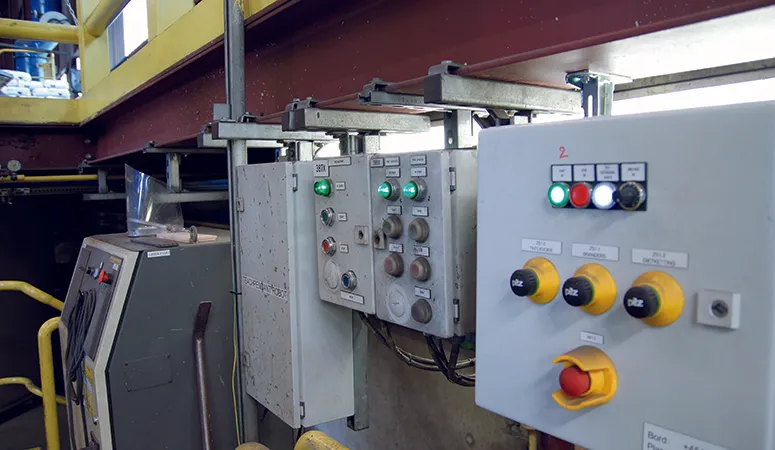
The installation used to process the tin was CE-certified, but its approval was already twenty years old. Renewal was necessary, particularly as Metallo’s management places a strong emphasis on safety. “That is why we approached Pilz,” says Maes. “We had already carried out a similar project with them on the lead conveyor. A fully bespoke safety fence was developed for that project. It is completely free-standing, with no direct anchoring to the machine, which reduces vibration. The light curtain is also important on this line. It makes working much more ergonomic for our people. Tin residues have to be removed every day, after all. With a light curtain, there is no door or fence in the way, so they can carry out the task easily. The concept was developed by Pilz and Metallo, and together with the expertise of Preferred Partner IMA, it forms the basis for the project’s success.” Maes goes on to explain the excellent cooperation with Pilz and IMA: “It was important to us that the casting chain did not stop when we actually needed to produce tin. IMA responded well to this by splitting the project into several subprojects.”
More than just a safety project
An additional benefit of optimising the line is reduced noise. In the old installation, a hammer system knocked the moulds loose as soon as the tin-heating furnace was switched on, hours before the tin was actually needed. The hammers made an infernal but unnecessary noise during that time. Pilz addressed this as part of the modifications. Improved programming ensures that the hammers only strike when there is actually material in the mould. “This project is a good example of the workflow involved in an integrated safety project, covering every step: starting with a risk assessment that identifies all safety aspects, followed by joint discussions on the measures to be taken, with legal requirements in mind; the implementation phase, where the quality of partner IMA was crucial; and validation, which was carried out by Pilz. The whole project was then secured with a CE declaration,” concludes Timen Floré, sales manager at Pilz.
Text Valérie Couplez | Image Pilz
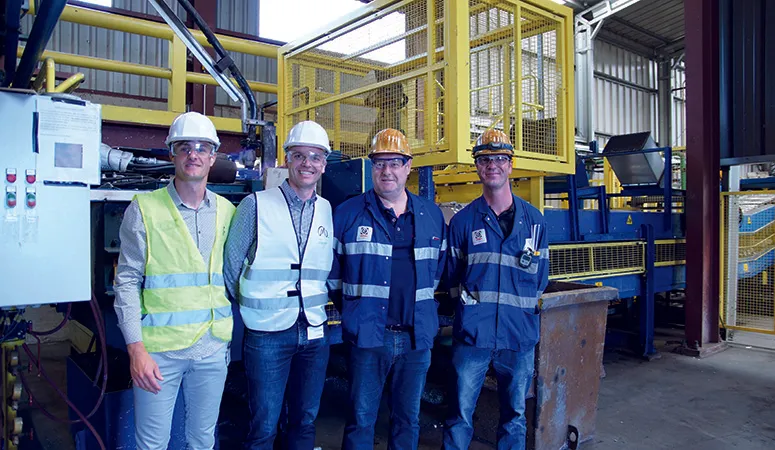
Featured image: From left to right, Timen Floré (Pilz), Joris Ceyssens (IMA), Jos Maes and Pelle Lemmens (both Metallo) in front of the tin casting line.
Question about this story? Ask your question
Keep following this
Get an email when a new story is published. No account needed.
- ThemeSafe machine design and operation
- SubjectNews







