Improved level measurement accurate to 1 mm
Text Wouter Burggraaf, Ambassadeur Safe Food FactoryImage Vega Meet- en Regeltechniek
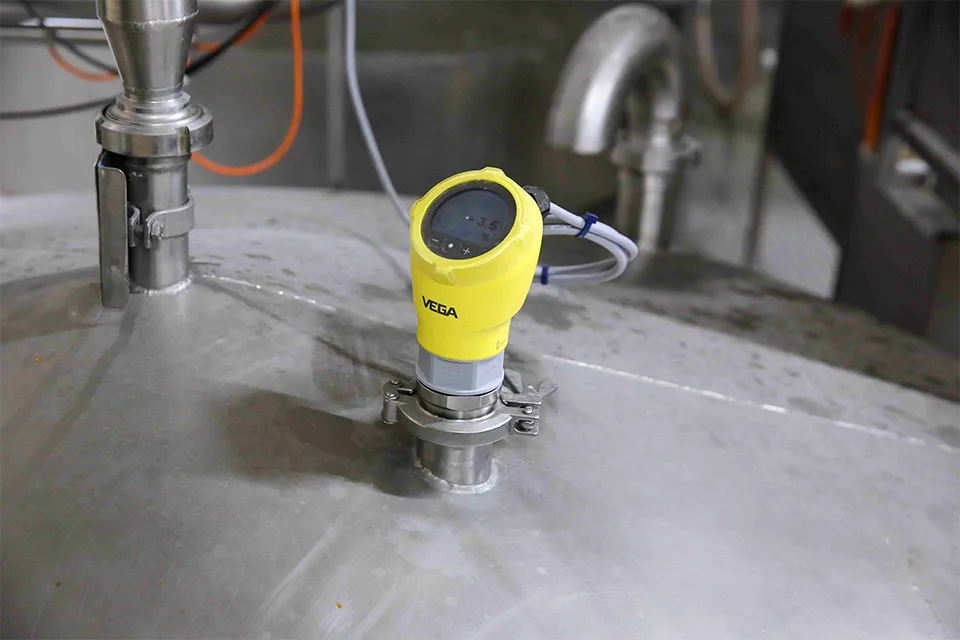
Remia is aiming for the top with a radar sensor for non-contact level measurement of liquids
Demand is growing for a wider variety of sauces, smaller packs and longer shelf lives, making more frequent cleaning necessary. Remia therefore wanted to improve its level measurement. Some products cause problems with the diaphragms in pressure transmitters and the tuning forks in level switches. Load cells would require costly modifications. Remia, however, has had positive experiences with radar and carefully selects which type to use in each application.
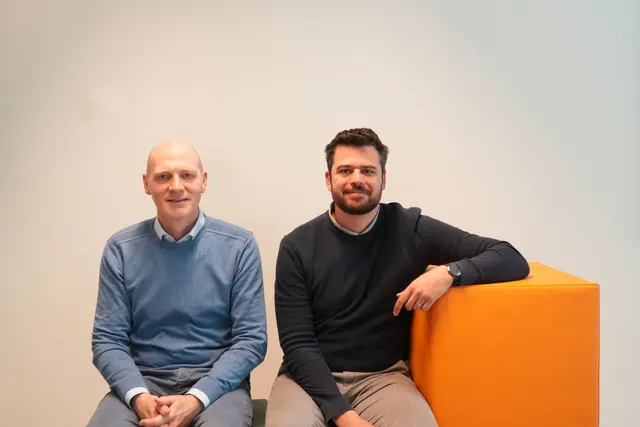
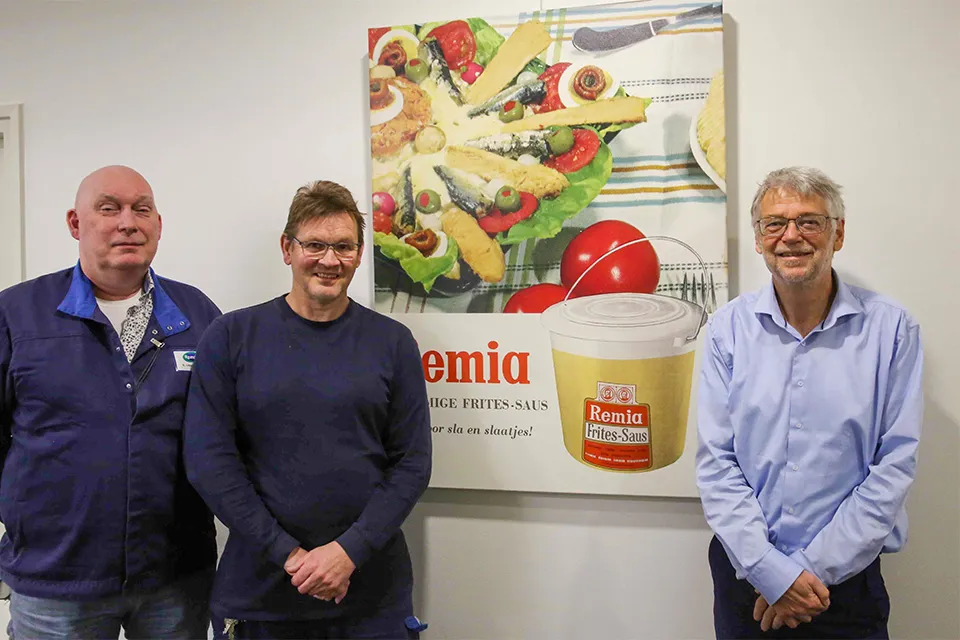
“We want to be the best sauce factory in Europe and make the tastiest sauces,” says Jaap Stijlaart, plant manager since 1993. A graduate in technical chemistry from Eindhoven, he was fascinated by the physical transport phenomena involved in food production: emulsifying, pumping and gelling. Year after year, the Consumers’ Association has rated Remia’s mayonnaise and ketchup as the tastiest. Alongside its own brand, the factory also produces private-label products, exports 40% of its output and makes organic, kosher and halal products.
Cleaning has become more important
Cleaning has become more important. In the past, a 1-litre jar of mayonnaise would be emptied in an evening by a large family. Now, portions are smaller and shelf lives longer. With more than two thousand products, this means frequent production runs and cleaning, handled by four CIP sets. After CIP, the line is tested for ATP before it is released. EHEDG hygiene guidelines were already in place in 1995, ensuring the equipment could be cleaned effectively.
Improved level measurement
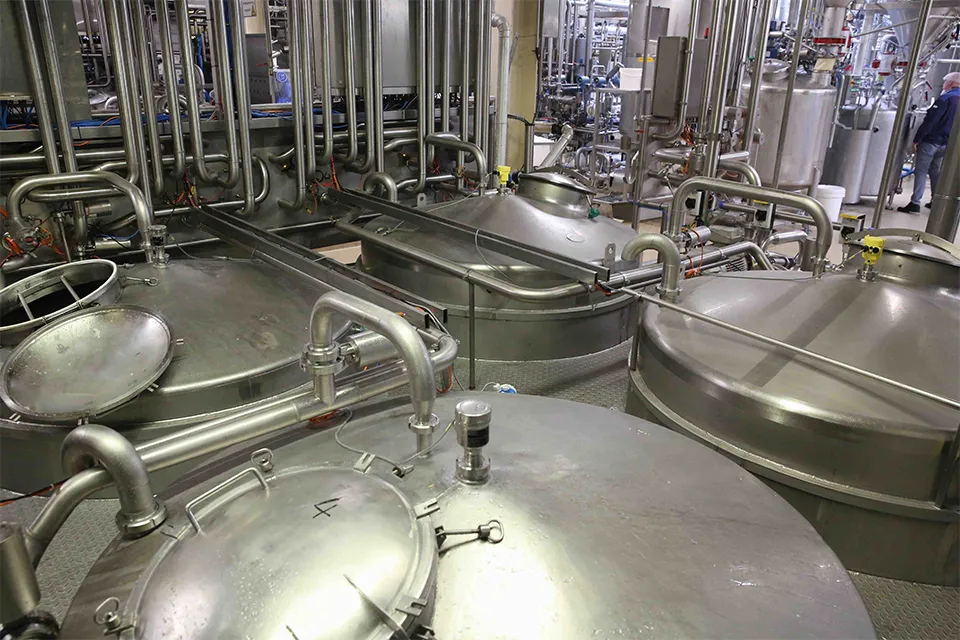
One problem Remia has tackled recently is level measurement in tanks. A standard hydrostatic pressure transmitter is not always reliable. Some recipes have a high salt content, which can damage the diaphragm. High- and low-level switches also monitor the level, but viscous sauces leave deposits on tuning forks. Load cells were an expensive alternative for the 50 tanks, as they would require modifications to the pipework. The solution came in the form of the VEGAPULS 64, an 80 GHz radar sensor. Mounted at the top of the tank, it measures the distance to the liquid level with an accuracy of 1 mm. The measurement is unaffected by temperature or foam, and the narrow beam angle of 3 degrees prevents interference from the agitator. Vertical installation means that almost no product adheres to the sensor, and even product residue does not affect the measurement. The radar measures down to a point above the outlet valve, often making a low-level switch unnecessary. It is also easier to clean and unaffected by CIP jet sprays. Since 2017, 36 of the 50 tanks have been equipped with radar. Only one sensor has failed, without indicating a false level. Remia uses the VEGAPULS 64 in agitated process tanks and the VEGAPULS 31 in quiet buffer tanks.
Safety remains a priority. Additional safeguards are preferably configured at PLC level so they can respond within milliseconds. Automation must not go so far that it prevents operators from intervening immediately.
The choice of radar level measurement reflects Remia’s vision: combining food safety, reliability and sustainability without unnecessary costs. This sometimes means moving away from traditional solutions, but those aiming for the top must be willing to take that step.
Question about this story? Ask your question
Keep following this
Get an email when a new story is published. No account needed.
- ThemeSmarter measurement and inspection
- SubjectProcess & instrumentation