Mapping energy consumption with flow measurement
Text Marjolein de Wit-BlokImage BEKO Technologies
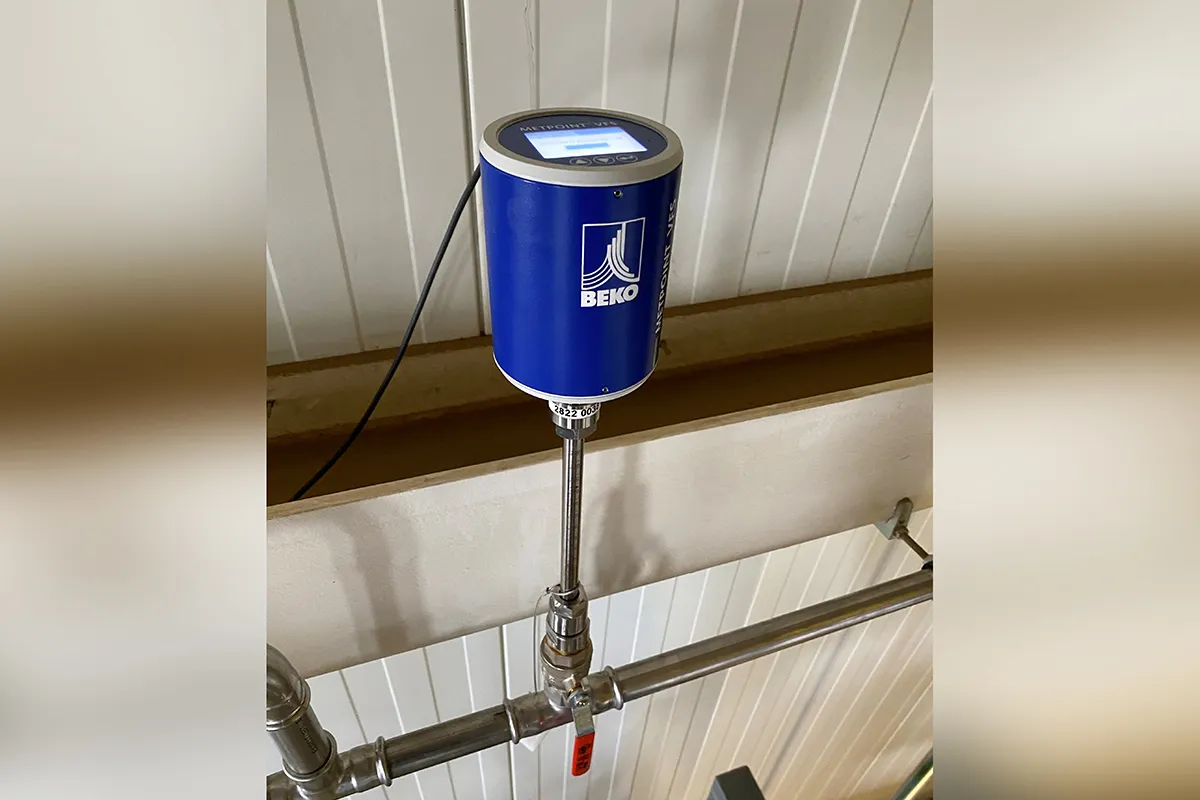
Driven by the Climate Agreement and cost savings, virtually every company is focused on sustainability in general and energy saving in particular. In many cases, compressed air users can make significant progress by starting to measure their compressed air consumption. Continuous monitoring provides important trend data, quickly bringing anomalies to light. BEKO Technologies offers an improved flow sensor with an open design and line laser for straightforward, accurate installation.
Monitoring the flow rate in a compressed air system is important for a number of reasons. Flow monitoring can identify problems such as leaks or inefficient operation of compressors and equipment. Resolving these issues reduces compressed air consumption and the associated costs, energy use and CO2 emissions. Flow monitoring is also important for carrying out targeted maintenance, keeping track of system condition and, where appropriate, collecting data for predictive maintenance. Finally, measuring flow can provide valuable information for optimising processes and products.
Measuring with METPOINT
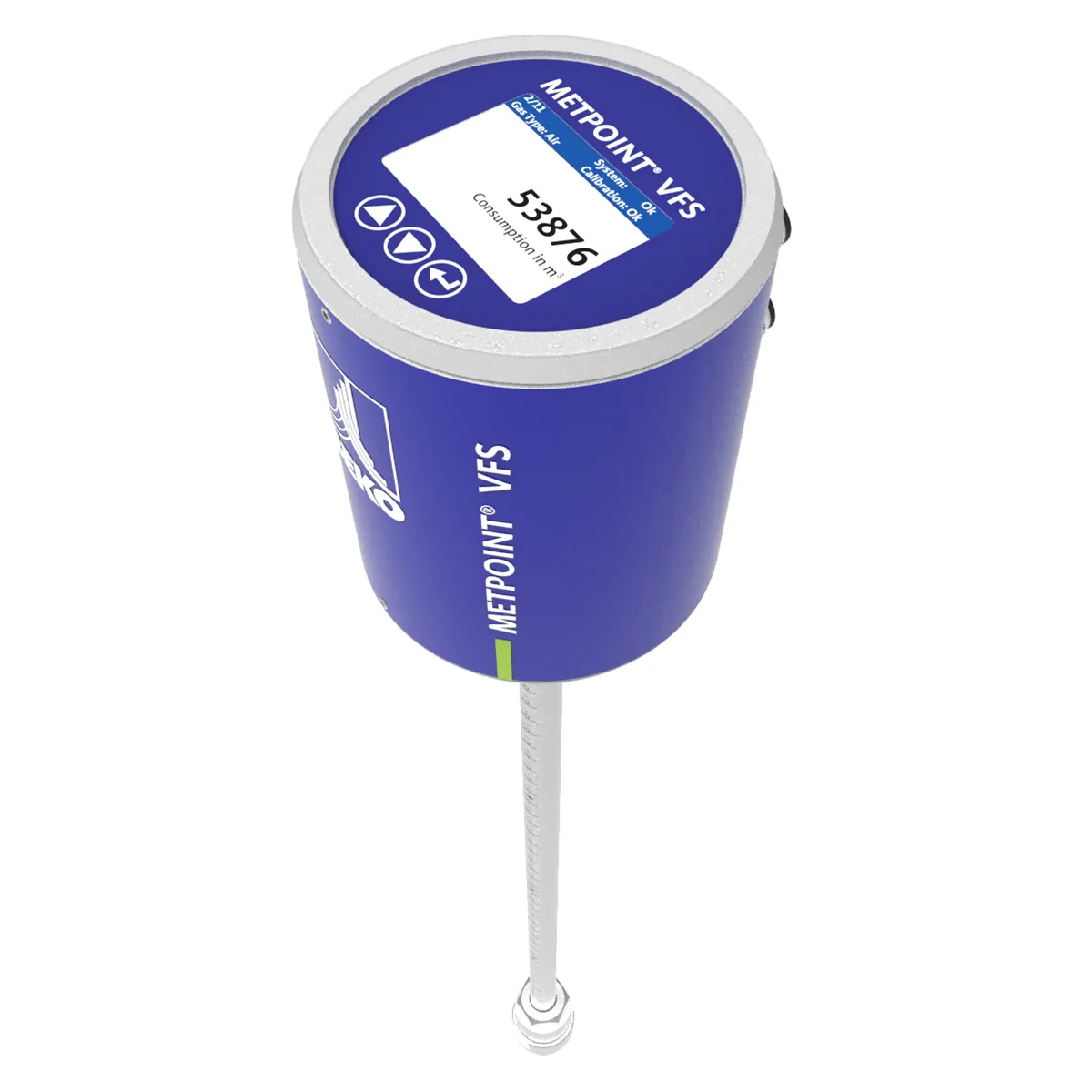
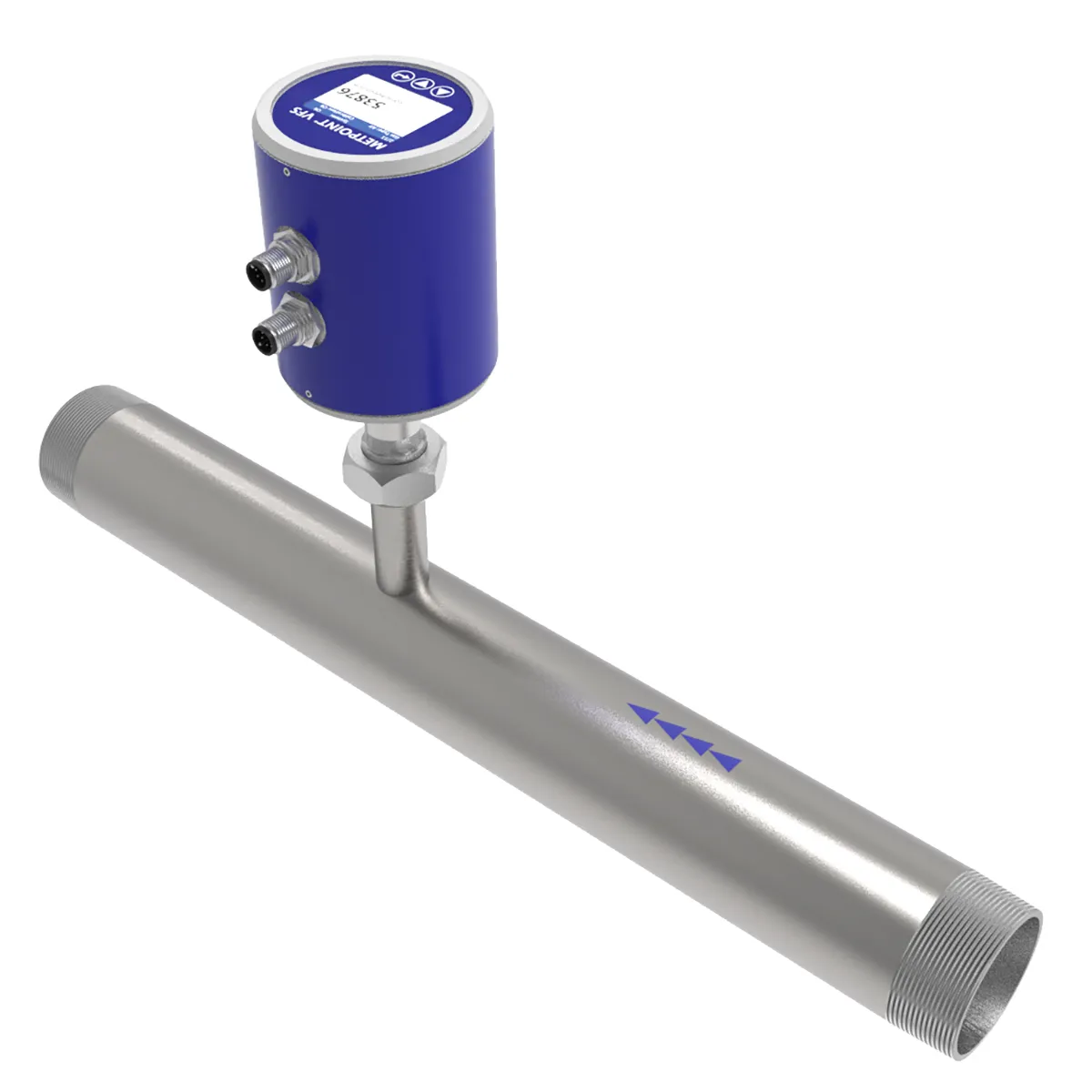
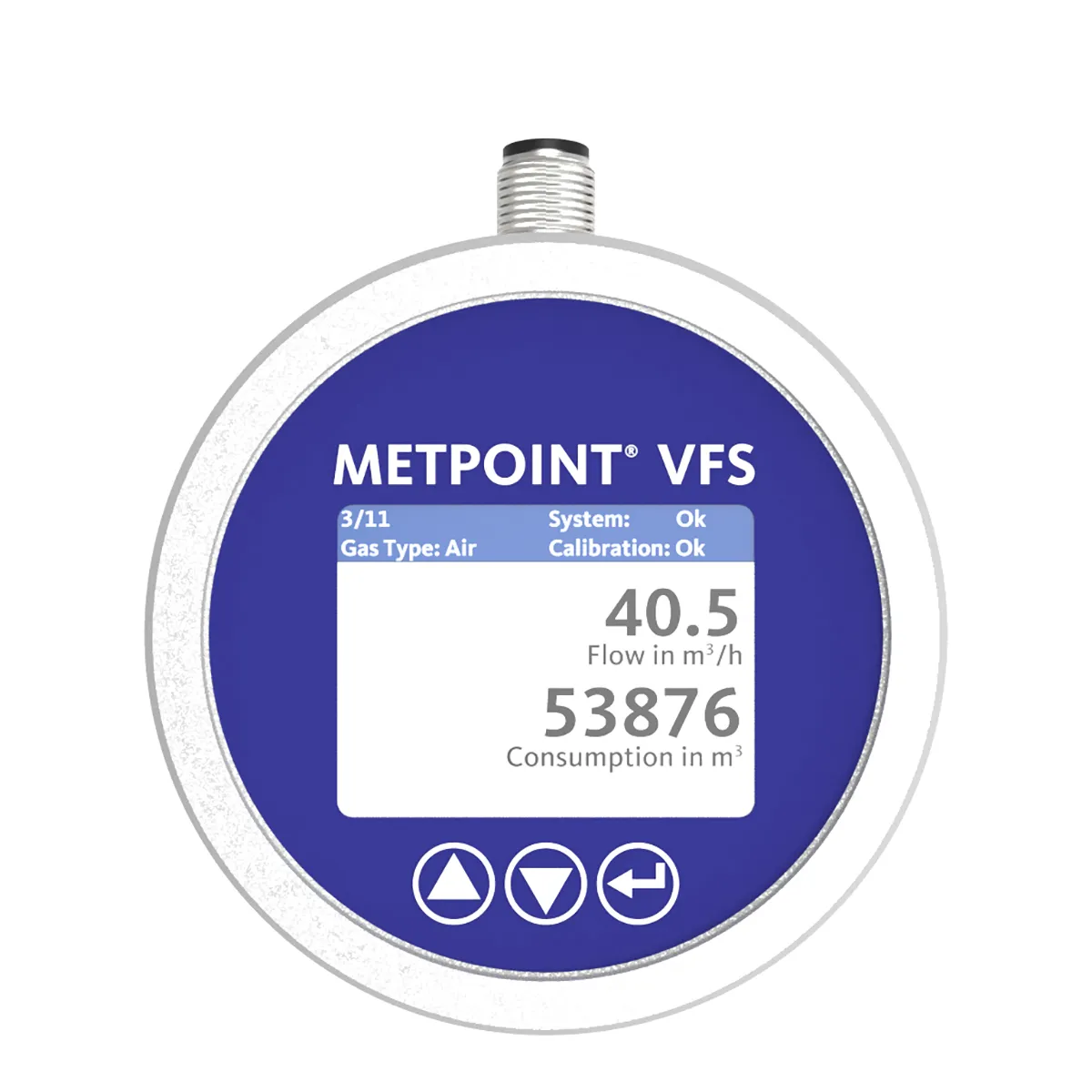
Accurate flow measurement requires a good measuring instrument. BEKO Technologies developed the METPOINT VFS in-house, in TI and TM versions. Both sensors measure flow rate and consumption, as well as flow velocity and medium temperature. Another feature shared by the sensors is the proven thermal mass measurement principle and high accuracy of ± 1.5% of the measured value and ± 0.3% of full scale. This high level of measurement and process reliability has been achieved in part through continuous monitoring of the sensor position. The TI version must be aligned for correct operation, with a line laser available to assist. The TM is installed using an integrated measuring section.
Both sensors are characterised by an open design, with two temperature sensors of different lengths encased in 1.4404 stainless steel. “This makes it harder for dirt to build up, and the different lengths of the temperature sensors make the VFS less sensitive to condensate,” says Sara Deckers, Focus Industry Manager at BEKO Technologies. “The sensor is also easy to clean. The TI design can also be combined with additional protection against high pressures of up to 50 bar.”
Output options include a 4…20 mA current output, Modbus RTU and/or a pulse output. Data can be stored directly via the control system or a BEKO data logger. Last but not least, the sensors feature an innovative display, a 2″ TF LCD (resolution: 240×230) that is readable from any direction.
In practice
Deckers: “Now that such good, robust and reliable measuring equipment is available, companies can start saving significant amounts of energy. Because make no mistake, even simple air leaks, however small, are literally throwing money away.”
Air leaks mean:
- Compressors continuously generating excess compressed air.
- Sometimes, the need to deploy an additional compressor.
- A risk of product contamination or reduced accuracy due to dirt entering through the leak.
Deckers concludes: “Flow measurements not only bring leaks and faults to light, they also give you a powerful tool for making improvements. I see it time and again at companies that simply fit their machines, sometimes dozens or hundreds of them, with a flow meter to see how much compressed air is actually being generated and how much is genuinely contributing to the process. An eye-opener for the user, every time.”
A business enquiry for Beko Technologies? Get in touch
Companies in this story

Keep following this
Get an email when a new story is published. No account needed.
- SubjectProcess & instrumentation
- CompanyBeko Technologies