Optimise your material flow
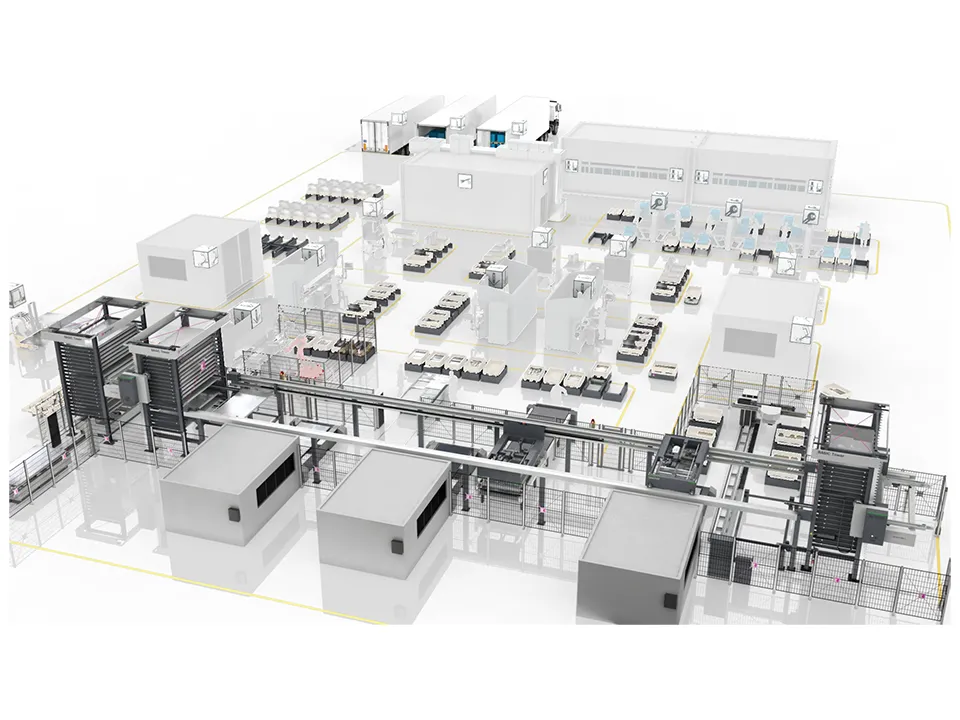
More and more companies are recognising the benefits of automated material flow and are reviewing their intralogistics processes as a result.
What stands out is that they often focus only on individual ‘stations’ in the material flow, rather than the entire process, from the delivery of raw materials to the dispatch of their own products. How can you optimise workflows to keep scaling up efficiency and productivity?
Companies looking to integrate automation effectively into operational processes need to take a close look at the entire process. A company can only start making money once its products have left the premises. Without logistics, that simply cannot happen. It goes without saying, then, that even a few percentage points of efficiency gains here will not only ensure smoother logistics, but also a more seamless production process. Have you ever calculated how long your workpieces sit idle during production? How much profit could you make if you no longer had to wait for your tools to be back in stock? How much time would you save if you no longer had to search for raw materials or products? Optimising material flows is an important step towards a more efficient production process. These rules of thumb will help you get started.
Give everything its proper place from the outset
Many companies need to optimise their processes from the very first steps. Delivered materials are often put away without a plan and stored in a random location in the warehouse. However, this is not the best way to ensure an efficient material flow. Instead, it is better to assess all possible warehouse systems individually and determine which type of warehouse best suits the company’s receiving area, the materials and the subsequent processing steps. As a rule of thumb, the time between delivery and storage should be kept to a minimum. On arrival, materials should be placed on a load carrier that moves them directly and automatically to the right location.
Align machines with the available space
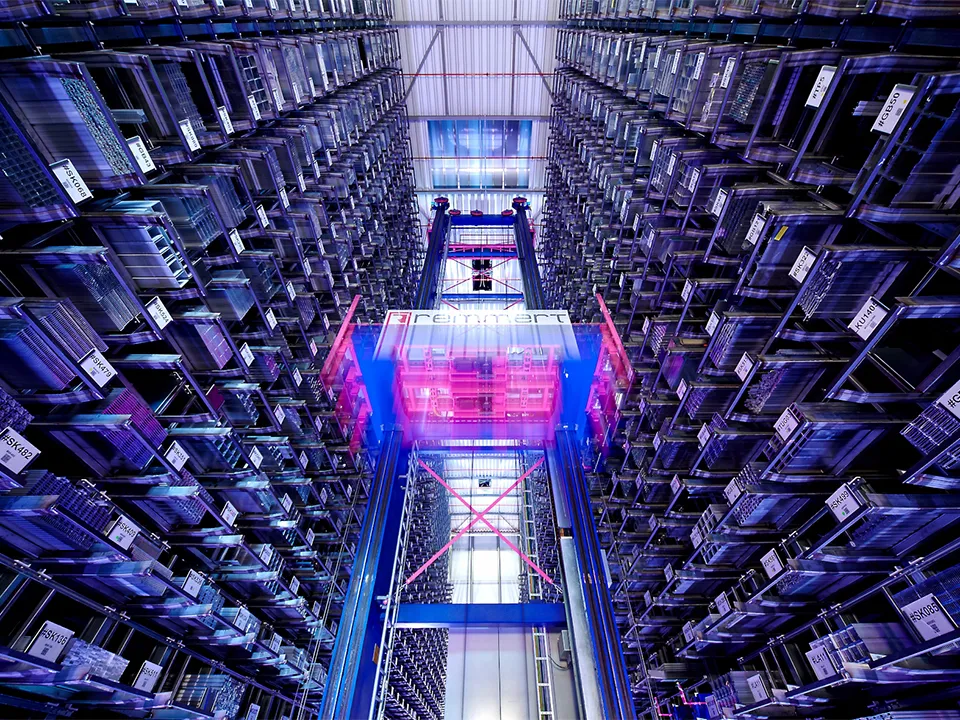
Another crucial factor is how the available space is used. When planning, tailor automated solutions to the conditions on site. The key consideration in this context is optimising machine integration. Existing systems are often not integrated into processes in a way that delivers the best results through synergy. This is particularly true where outdated habits and material-flow concepts are maintained, even though they do not support production. In such cases, companies need to implement a new material-flow concept. The ability to integrate machine tools independently of the manufacturer gives users considerable flexibility, even during the planning phase. The company’s specific requirements and production needs take centre stage. They select the machines that suit them, while material-handling experts ensure seamless integration. Another benefit of manufacturer-independent integration is future-proofing. Both machine replacement and system expansion can be carried out on a modular basis. This allows the system to be adapted to current production requirements at any time.
Assess the appropriate level of automation
Whatever machine or system you use, materials need to be removed from the warehouse quickly and efficiently and transported to the next processing stage. The aim is to make full use of machine capacity without potential downtime. An individual assessment helps determine the appropriate level of automation, whether fully or semi-automated, and identify suitable solutions that can be incorporated effectively into the existing material flow. Using flexible, independent systems also makes it possible to scale up alongside production and increase the level of automation.
Select the best warehouse type for the materials and production
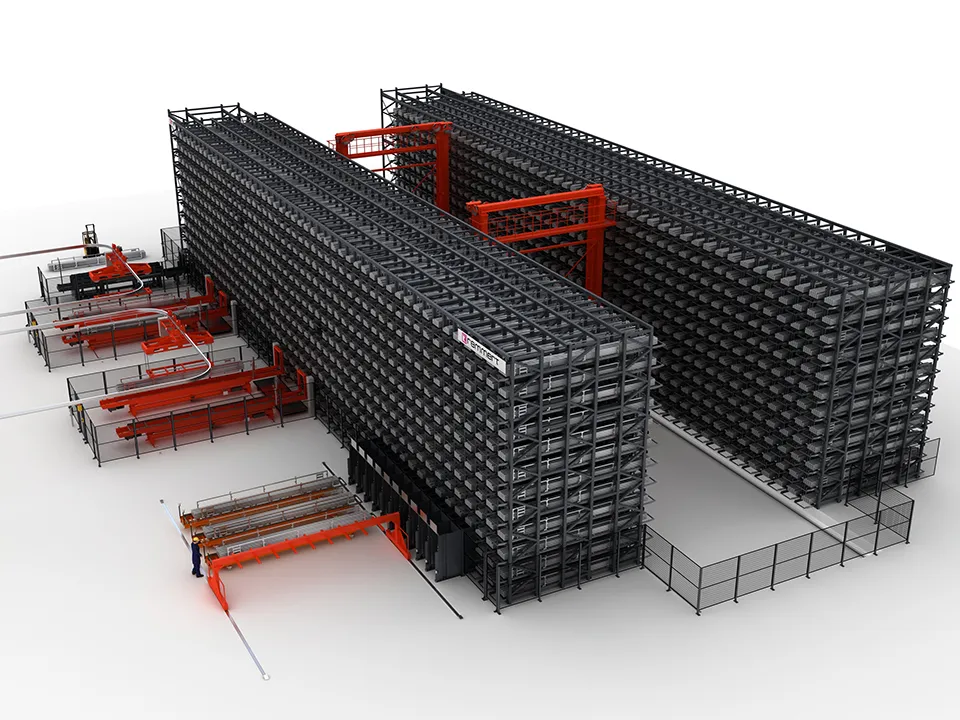
The most suitable warehouse type for the conditions on site becomes clear during the initial planning meeting and when agreeing objectives with the customer. Key variables include the quantity of goods to be stored, the available warehouse space and the materials required for production. These factors determine the size of the warehouse and the speed required of the automation solutions. Consideration must also be given to how the materials will be processed next. For example, if a production machine is connected, the warehouse must allow for a semi- or fully automated solution.
Take a holistic view of the future
If business results and KPIs are not as expected, it may be worth taking a closer look at the entire material flow. Many potential problems stem from companies not giving intralogistics enough importance. Material flow can be an extremely complex subject. For these companies, it is well worth bringing in experts who understand the requirements of different materials. By investing in targeted planning, cost-benefit analyses and a forward-looking approach to finding suitable solutions, you can achieve measurable savings in time and costs.
Question about this story? Ask your question
Keep following this
Get an email when a new story is published. No account needed.
- SubjectProcess & instrumentation