2D or 3D vision? Which works best for your application?
Dankzij visieoplossingen krijgen machines ogen.
Thanks to vision solutions, machines are getting eyes. A development that primarily serves to replace or supplement certain manual tasks with digital cameras and image processing. The technology comes in handy in many fields to automate production and improve product quality. Today, users have a choice of both 2D and 3D cameras. This article attempts to provide some guidelines as to which choice may be most interesting for your application.
The rise of vision technology has everything to do with the fact that the technology has become a lot more affordable. After all, these sensors were expensive and complex in the past, today machine vision is more affordable than ever and always extremely accurate. But which type of vision is best suited for your application? In some cases the choice will be very clear, but in others they both bring advantages and disadvantages to the table. Therefore, it is important to understand the strengths of both to arrive at a solution that ensures reliable machine vision.
Rough classification
2D vision can be realized using configurable cameras, vision inspection systems, programmable flexible cameras and even cameras that can stream images at high speeds. As with 3D vision, the possibilities are endless. Today, 2D may still call itself the standard for positioning, inspecting, measuring and reading objects. The technology lends itself ideally to high-contrast applications or where texture and color are key. 3D vision, in turn, is better suited for analyzing volumes, shapes or the 3D position of objects. It also provides relief for the detection of parts and defects that give little contract but where a height difference can be noticed. 3D vision serves mainly for measuring, inspecting and positioning objects, but can also be used for reading code or text when contrast information is lacking.
How does 2D vision technology work
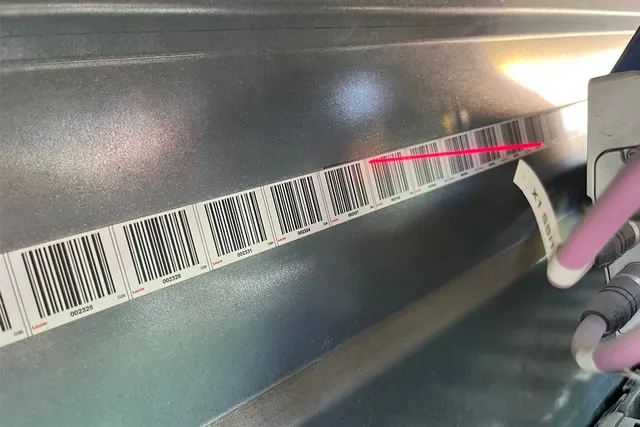
In 2D image processing, the analyzing is either immediately captured by a zone camera or by a scanning method using a line scan camera. In either case, this will result in an image representing intensity values (monochrome) or color images (often in RGB values). The key to good 2D imaging is the choice of lens and exposure. After all, exposure plays a major role in image quality. Correct lighting will emphasize the features to be analyzed, regardless of the ambient light. Manufacturers of 2D vision solutions usually have several techniques available to ensure that the light reaches the right place. Typical applications include data code inspection, flat object shape verification, line guidance for AGVs, color-based type verification, assembly verification ...
How does 3D vision technology work
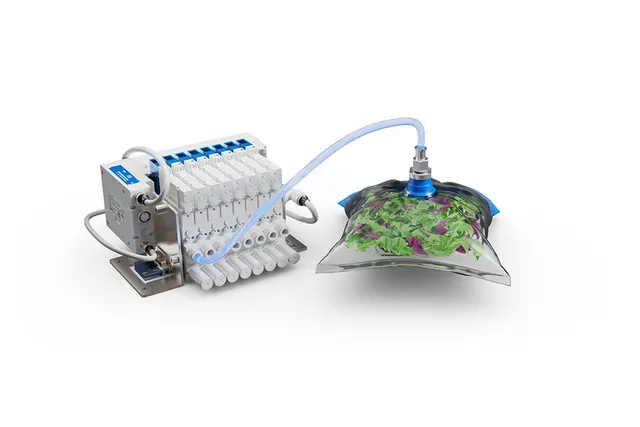
Capturing the third dimension in images can be done in several ways. It can be done through scanning or snapshot technology. Scanners create 3D images by composing them profile by profile by either passing an object through, the measuring range or by moving the camera over the object. To obtain the correct 3D data and thus a valid 3D image, the motion must be constant or well known, such as by using an encoder to track the motion. The 3D images created are generally extremely accurate. Snapshot technology creates a full 3D image of objects by a click, similar to what we know from a consumer camera, but in 3D. Neither the object nor the camera must move for this to happen, but the technology cannot yet present the same accuracies as scanning technology. Typical applications include robotic picking, package content verification, electronics assembly, food portioning, obstacle recognition in AGVs ...
Question about this story? Ask your question
Keep following this
Get an email when a new story is published. No account needed.
- SubjectSensors & vision