How modern sensors can do more for process control
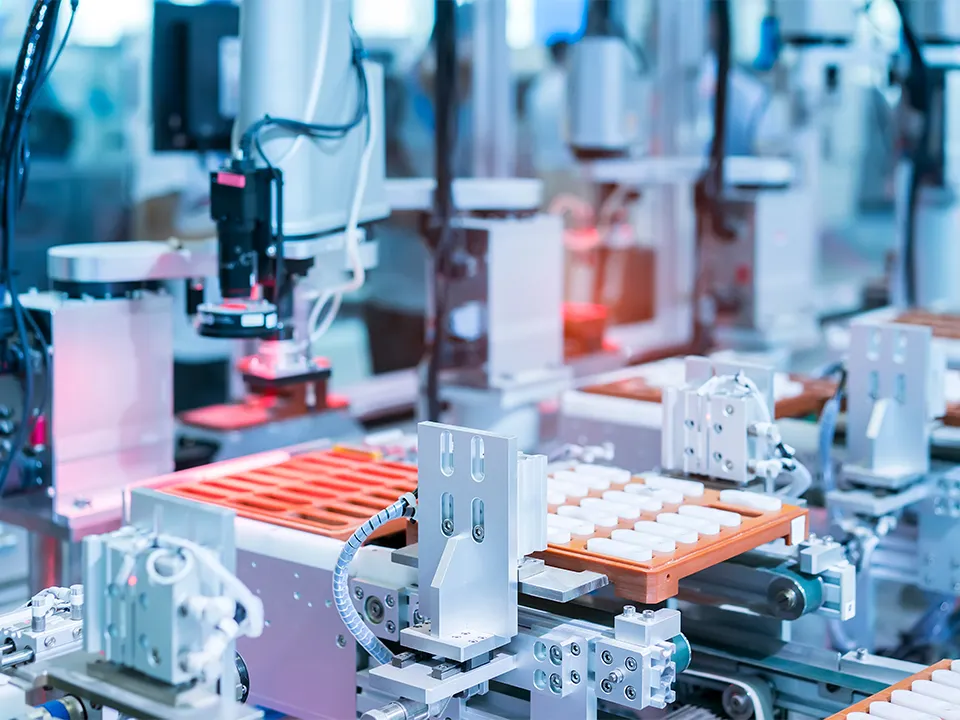
When you think of process instrumentation, you automatically think of sensors. Whatever parameter you want to monitor, whether temperature, pressure, level, flow rate or something else, there is always a sensor that can measure it continuously in-line for you.
Industry is not always kind to these components. In production, they can be exposed to challenging conditions: high and low temperatures, high pressure, dust, ATEX environments, intensive cleaning processes … But the sensors that really make a difference today do more than adapt seamlessly to their surroundings. They stand out for the additional functionality they offer, which can deliver far greater value. Here is an introduction.
Sensors are essential for keeping industrial production processes on track through automation. Manufacturers and machine builders understood this years ago. As a result, sensors are found in large numbers in and around machines and installations, throughout every stage of production. However, the technology has not stood still in recent years. Yesterday’s sensors are not the same as today’s. Modern sensors come with a host of additional functions that can make your life much easier.
From analogue to digital communication
One striking feature of modern sensors is the way they communicate digitally. Increasingly, this is via IO-Link, although it does not have to be. Nor does the familiar analogue 4 … 20 mA standard, which has served faithfully for years, necessarily have to disappear. The digital signal can simply be added on top. Why? Digital communication offers several advantages that are invaluable in a modern production environment. First, cable interference will no longer affect the transmission of process values. This means you always get the correct, reliable value. In this way, sensors make a significant contribution to product quality.
Communication from the field to the cloud
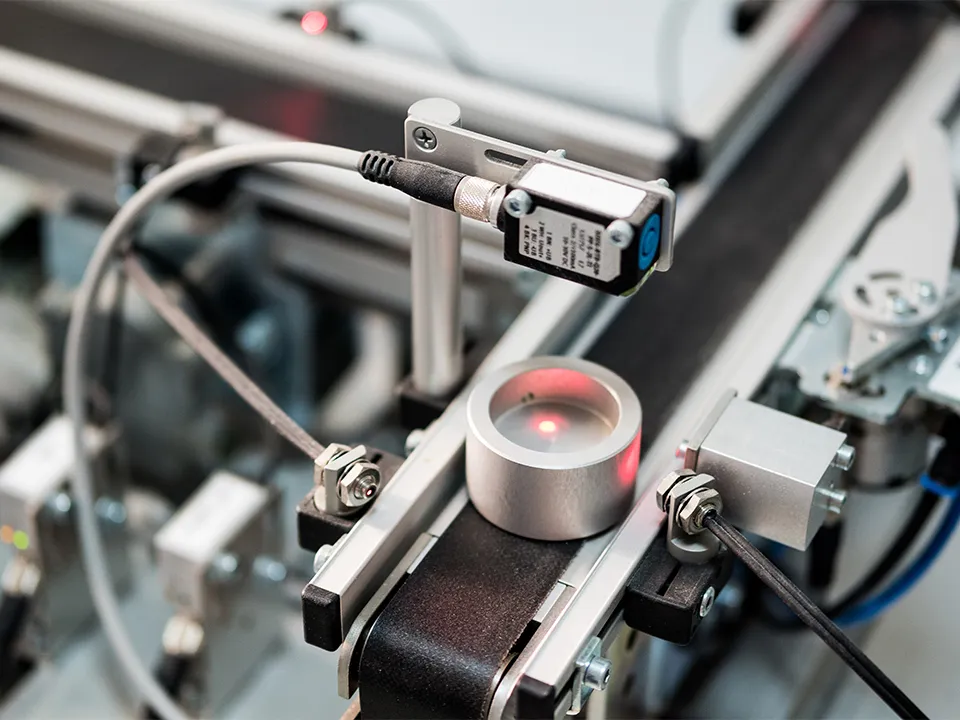
Digital communication also offers another advantage. Secondly, it makes it much easier to communicate with higher-level software and systems, such as ERP systems or the cloud. Digital is the language they have always spoken. Sensors can now join the conversation. Communication works both ways, from the field all the way up and back down again. The days when sensors were limited to one-way communication are also behind us, and rightly so. To create flexibility and transparency in your production environment, you need sensors to ensure the right settings are maintained for every product.
Keeping machines and installations in good working order, more easily
Thirdly, the ease of use that comes with digitising sensors is certainly worth highlighting. Sensors can be commissioned, parameterised and calibrated digitally, and therefore remotely. They have become fully plug-and-play. Is a sensor due for replacement? Its configuration can be transferred to the new sensor at the touch of a button. Digital makes it child's play.
More diagnostics built in
Another difference-maker is the additional diagnostic functionality built into sensors. The less downtime your production experiences, the higher your output will be.
Sensors ensure that machines and installations operate within their specified limits. You can rest easy if components such as sensors can also alert you when they are no longer working properly themselves, for example because of a fault or excessive build-up. You no longer need to search an entire sensor network to find the needle in the haystack. You know straight away which sensor to inspect and, if necessary, clean or replace.
Multiple process values
More sensors, more data? That no longer has to be the case. Sensors are no longer the ‘one-trick ponies’ of the past. Today, they can perform several tasks at once. A pressure sensor that also measures temperature automatically can compensate for and correct the effect temperature may have on the pressure measurement. This improves measurement reliability without the need to install a second sensor. Or consider a temperature sensor that can use two different measurement principles in the same housing, such as PT1000 and an NTC Thermistor, operating independently of one another. This allows both signals to be evaluated. That is now entirely possible thanks to the trend towards miniaturisation. In future, you will be able to get by with fewer components and therefore less cabling, but above all, you can save on the cost of external calibrations.
Pushing the boundaries
Finally, although the measurement principles used by sensors have largely remained the same, the technology continues to improve. Today, many sensors can provide the exact process value rather than just an on or off signal, giving you a clearer picture of your production. Work is also continually under way to reduce the impact of ambient conditions, such as dust, temperature and cleaning processes, so that you can obtain a reliable value at any time and in any location. And with the increased communication capabilities, even remote silos can transmit their values to your company network or the cloud.
Question about this story? Ask your question
Keep following this
Get an email when a new story is published. No account needed.
- ThemeSmarter measurement and inspection
- SubjectSensors & vision