Flexible automation takes more than just a robot
Text Christobal van LeeuwenImage iStock, Pexels en UnSplash
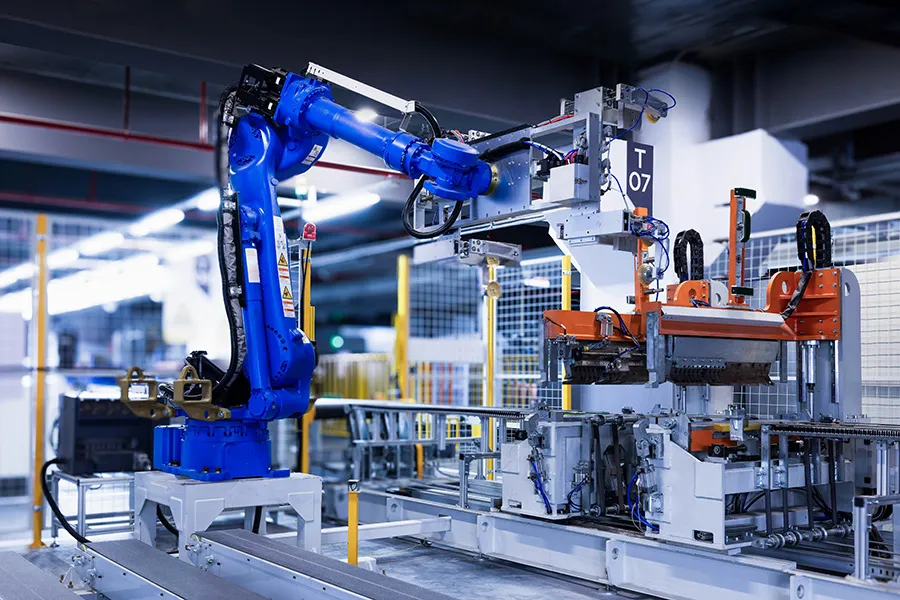
It is not the robot arm, but the interplay between the process, gripper, vision, software and safety that determines the return on investment from robotisation
Robotics is no longer the preserve of large production lines and fully enclosed cells. Industrial robots, cobots, AMRs and vision-guided systems are increasingly finding their way into manufacturing companies facing staff shortages, smaller production runs and higher quality expectations. Yet successful robotisation does not start with choosing a robot arm, but with a thorough analysis of the process.
The traditional industrial robot remains indispensable in applications such as welding, palletising, machine tending, handling, gluing and assembly. At the same time, its scope is expanding. Cobots lower the barrier to entry for companies looking to automate step by step. Autonomous mobile robots support intralogistics and material flows. Vision-guided robots can identify, locate and inspect products. This makes robotics increasingly relevant to sectors such as food, pharma, metalworking, plastics, logistics and packaging.
For many companies, flexibility is at least as important as sheer throughput. The market demands more variants, shorter lead times and smaller batches. Robot cells therefore need to be quicker to change over and better able to handle variations in products, packaging or position. This is changing how companies view automation: not as a fixed solution for one task, but as a configurable system within a broader production flow.
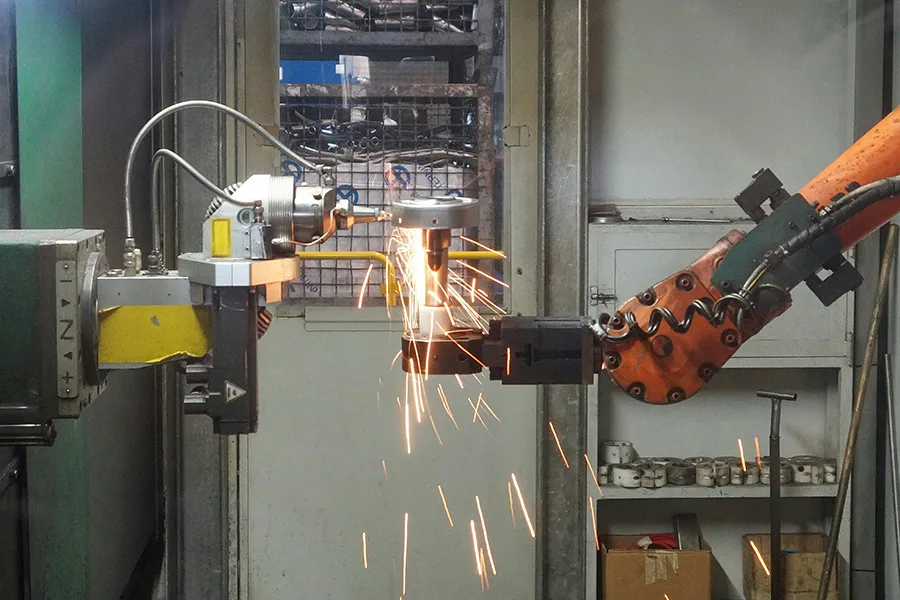
The robot is just one component
A robot on its own rarely solves a production problem. Performance depends on the entire system: product feed, positioning, gripper technology, vision, safety concept, software, cycle time and maintenance access. This is often where things go wrong in practice. The robot may function perfectly, while the cell still fails to deliver sufficient returns because parts are not fed consistently, the gripper cannot handle enough product variation or the operator has to make too many manual corrections.
A common mistake is for companies to start by choosing the robot. It is better to analyse the task first. Is the product rigid? How many variants are there? How is the part fed in? What tolerances are acceptable? Is the target cycle time realistic? How often are product changeovers needed? And what happens in the event of a fault, cleaning or maintenance? Only then should the choice be made between an industrial robot, cobot, delta robot, SCARA, AMR or mobile manipulator. Successful robot projects are therefore multidisciplinary. Mechanical engineering, automation, safety, software, gripper technology and operator ergonomics all need to be designed together. Anyone who looks only at payload and reach is missing a large part of the potential return.
Gripper and feed often determine feasibility
In many robotic applications, the complexity lies not in the robot itself, but in how it interacts with the product. A robot can work reliably only if it knows where the part is, how it is oriented and how it can be picked up safely. Gripper technology is therefore often crucial to the success of the cell.
Vacuum grippers, mechanical grippers, magnetic grippers and flexible end-of-arm tooling each have their own applications. In food and pharma, hygiene, cleanability and material choice all come into play. In metalworking, weight, burrs, oil and temperature are important. On packaging lines, speed, variation and delicate products are often key considerations. A gripper that works well in the test setup but struggles in production with misshapen boxes, film, moisture or variations in size will still cause downtime.
The feed also needs attention. Parts that arrive in an uncontrolled manner first need to be positioned or identified. This can be done using mechanical guides, vibratory bowls, conveyors, vision or 3D bin picking. Each option affects cycle time, flexibility and cost.
Cobots still require risk assessment
Collaborative robots are often presented as simple and safe. They can indeed be useful for lighter tasks, flexible workstations or working alongside operators. However, ‘cobot’ is not automatically synonymous with ‘safe’. The application determines the risk. A cobot handling a sharp workpiece or operating with a high payload, hot component, pinch hazard or high speed can still be dangerous. Risk assessments, safe speeds, force limits, scanners, guarding and clear procedures therefore remain essential. The interaction between the person, robot, tool and product must be assessed as a whole.
This distinction is important for industry in the Benelux, where many companies automate step by step. Cobots are valuable tools, but they are no licence to skip safety engineering. A collaborative application is safe only when the workpiece, movement, environment and use case have all been taken into account.
Vision and software make the difference
Increasingly, the added value of robotics lies in its combination with vision and software. Cameras, 3D sensors and image processing make it possible to locate parts, carry out quality inspections or compensate for variations in product position. This is particularly relevant in environments where products are not always positioned precisely or where several variants have to pass through the same cell.
Offline programming and digital simulation are also gaining ground. They reduce engineering time and make it easier to test new products or processes without stopping production. This is a major advantage for companies with frequent product changeovers. The robot cell then becomes less of a fixed machine and more of a flexible automation platform. However, software is no panacea. Vision requires stable lighting, clear contrast and robust algorithms. Simulation is valuable only when the digital environment sufficiently reflects reality. Here too, the technology must be driven by the application, not the other way round.
Robotics as a response to labour shortages
Staff shortages remain one of the strongest arguments for robotisation. Robots take over repetitive, ergonomically demanding or hard-to-staff tasks. Operators do not disappear as a result, but their roles change. They become process supervisors, quality inspectors or technical support staff. This calls for training and involvement. A robot cell perceived by operators as a black box is less likely to be accepted and used effectively. Clear interfaces, accessible fault messages and straightforward changeover procedures are therefore at least as important as the robot’s performance.
Robotics is therefore not a standalone investment, but part of a broader automation strategy. Companies that start with the process, product variation, people and desired level of flexibility will get more out of robotisation than those that simply buy a robot arm. The real gains do not come from the robot itself, but from how it is integrated into the production environment.
Question about this story? Ask your question
Keep following this
Get an email when a new story is published. No account needed.
- ThemeFlexible production with robots
- SubjectServices & solutions