Machine safety: prevention is better than cure
Text Valérie CouplezImage iStock
Machine accidents can happen in an instant, but safety does not happen by chance
Good machine guarding is central to protecting workers in manufacturing. Combined with other safety practices, its benefits go beyond simply preventing accidents. It also helps create a safer and more productive workplace, reduces the risk of legal liability and ensures compliance with safety standards. By making machine guarding and worker safety a priority, manufacturers can protect their most valuable asset: their employees.
Machine safety starts with a thorough risk assessment, before any machine guards are installed. This involves identifying the hazards posed by each component, such as heat, electrical issues and mechanical hazards. The assessment must also take into account the machine’s proximity to workers, to determine which hazards they may face when operating it. Factors such as speed, the products being processed and any additional hazards arising from the worker’s interaction with the machine must also be considered during the assessment. Once the hazards have been identified, the most suitable type of machine guarding can be selected.
Install the right guards
Safety guards come in different types and should be selected based on the machine and the specific hazards associated with it. Some of the most common types are:
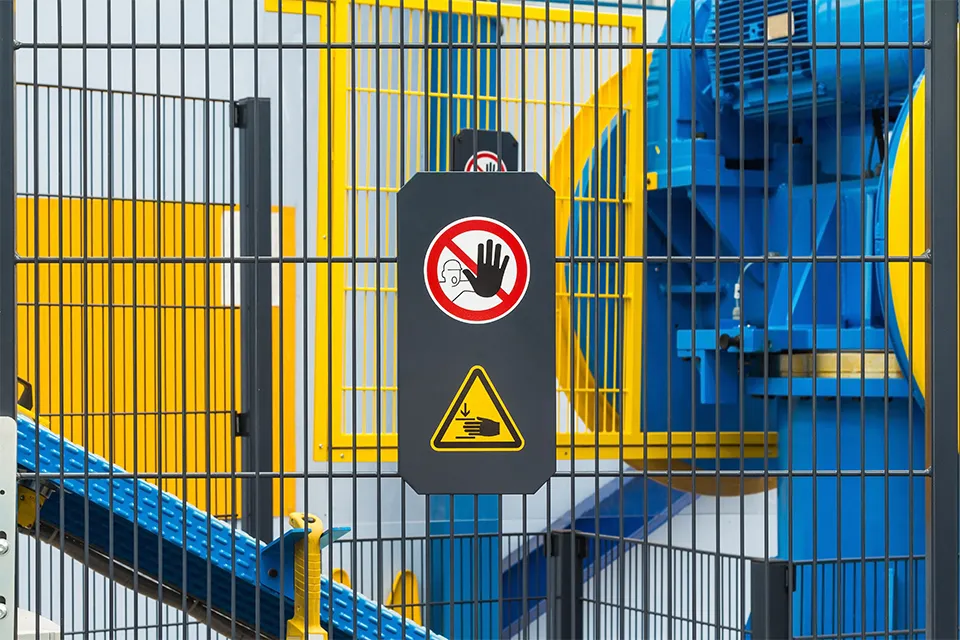
- Fixed guards: these are permanent barriers or covers that fully enclose a hazardous area and prevent access to moving parts. A circular saw, for example, often has a fixed guard around the blade to prevent workers from coming into contact with the cutting edge.
- Interlocked guards: these have a mechanism that automatically shuts down the machine when the guard is opened or removed. This prevents workers from accidentally coming into contact with moving parts. Press brakes, for example, have interlocked guards to prevent people from entering the pinch point while the equipment is operating. If the guard is opened, the machine stops automatically.
- Adjustable guards: these can be adjusted to suit different sizes of materials or parts being processed. Sheet metalworking machines such as shears or punching machines may have adjustable guards that accommodate metal sheets of different sizes and provide coverage around cutting edges or pressing areas.
- Self-adjusting guards: these automatically adjust to the size of the material being processed. A surface grinder may have a self-adjusting guard that moves automatically with the grinding wheel as it is raised or lowered, ensuring the wheel is always shielded from the worker, whatever its position.
Use safety devices and automation technology
Other safety devices complement physical guards to provide further protection for workers. Around 70% to 90% of workplace accidents are caused by human error. Many high-tech automated systems enhance safety, including:
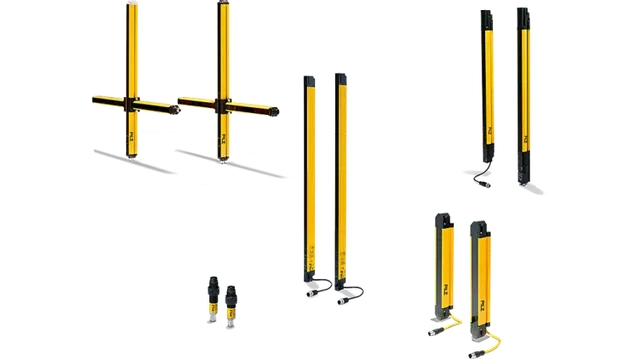
- Presence-sensing devices: these sensors detect when a worker is too close to a machine or one of its hazardous areas, and can trigger an automatic shutdown or alarm to warn of danger. A presence detector, for example, can warn the operator that their hands are too close to the blades.
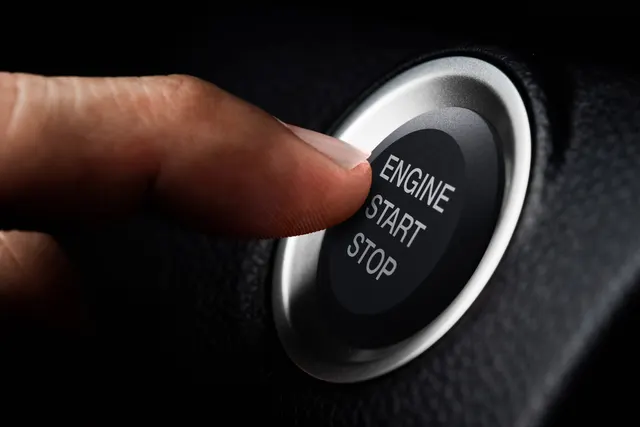
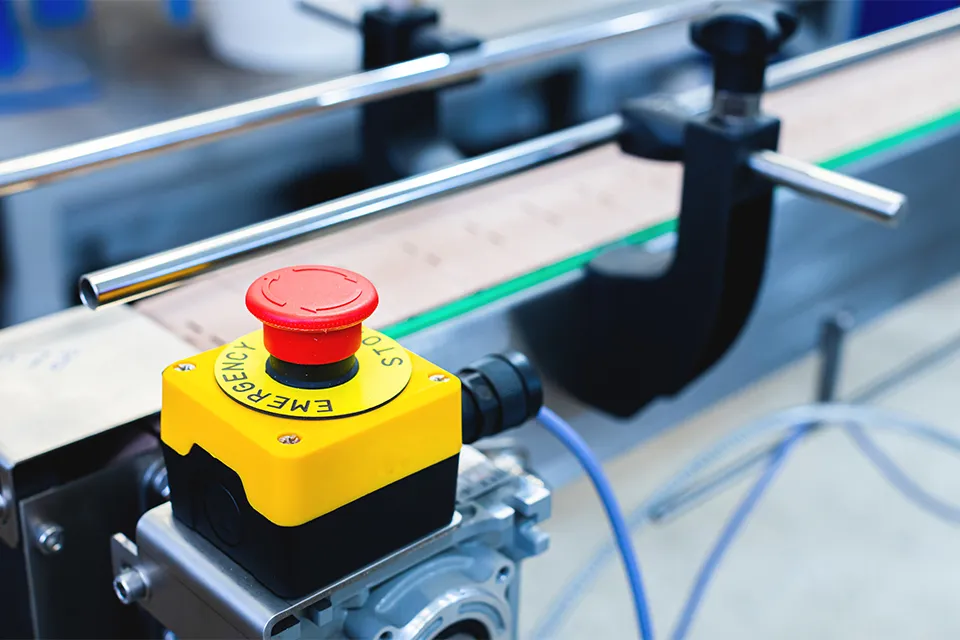
- Emergency stop buttons: these buttons must be easily accessible and visible in areas where high-risk machinery is used. Workers must know how and when to use them to stop the machine immediately in an emergency. In a factory with large stamping presses, for example, workers can use these buttons to pause the equipment if a hand or another body part is at risk of becoming trapped.
- Machine control systems: automated systems can restrict machine operation based on specific conditions, reducing the risk of injury to workers. These systems can be programmed to stop or slow down the equipment when specific safety conditions are not met. A CNC machine, for example, can be programmed with sensors that slow it down if a guard is not properly in place or if there is an obstruction in the work area.
Provide the right training and instruction
Even the best machine guards and safety devices cannot replace the importance of worker training. All workers, especially those who work directly with the equipment, must receive comprehensive training in machine guarding practices and procedures. The training should cover:
- The types of hazards they may encounter;
- The importance of safety guards and how they work;
- The correct use of safety devices and emergency stop buttons;
- How to recognise signs of wear or malfunction in machine guards;
- The importance of immediately reporting damaged or malfunctioning guards.
Health and safety advisers must ensure that workers know the safety protocols and understand how to keep a safe distance from hazardous machinery. Regular safety drills and refresher sessions can help keep workers up to date with the latest safety practices and ensure they remain vigilant at work.
Question about this story? Ask your question
Keep following this
Get an email when a new story is published. No account needed.
- ThemeSafe machine design and operation
- SubjectServices & solutions