Making your AGVs safe
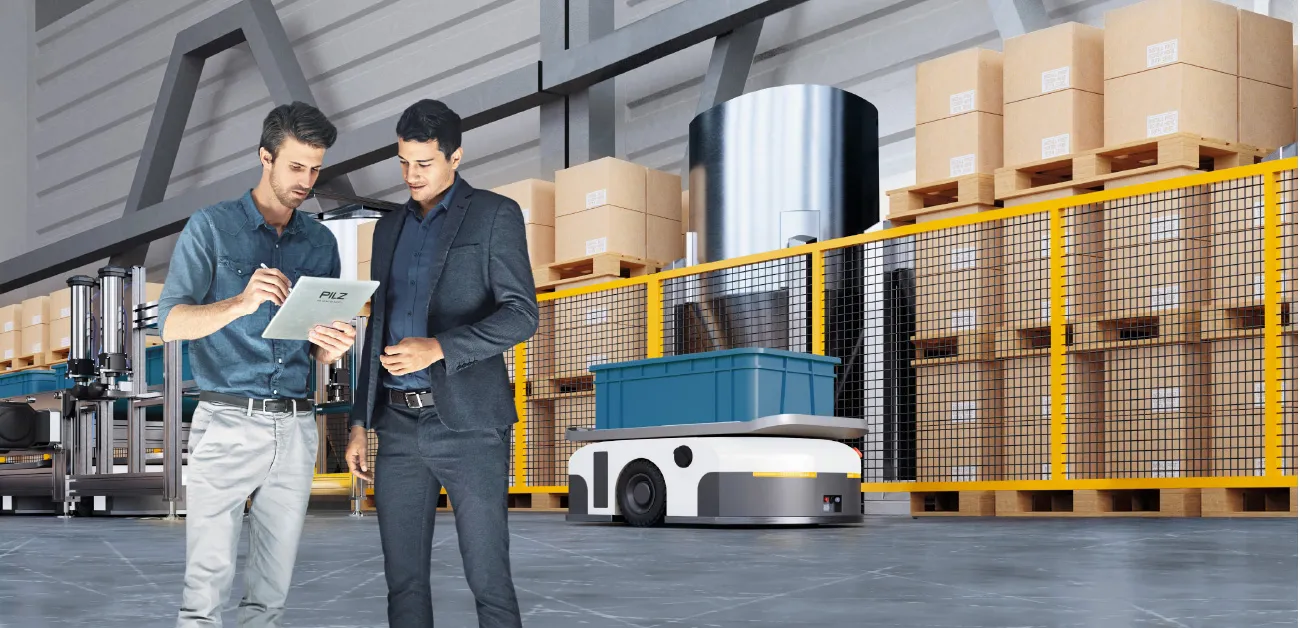
People and machines must be able to operate together in the same environment without disruption or danger. Since 2020, anyone building or using AGVs has therefore had to comply with the guidelines in ISO 3691-4. This international standard defines the requirements for safety functions and specifies how AGVs’ automated functions must be validated. As a safety expert, PILZ also has this expertise in-house. The company can supply both hardware components to ensure AGVs navigate safely and a complete range of services, from designing the safety concept through to commissioning.
Safety and productivity are the two key priorities in AGV development. To ensure that one does not come at the expense of the other and that everything complies with the ISO 3691-4 safety standard, it is best to call in an expert. PILZ has more than earned that reputation, as it also has the safety components and services required for this specific market. Nico Declerq, sales and marketing manager at PILZ, takes us through the offering.
“Safety is a crucial factor from the AGV design phase onwards. The earlier we can take safety aspects into account, the more unnecessary costs and time spent on changes later on we can save. Our expertise can really help customers move forward. We find that what they need most is a sounding board to help them overcome the challenges they face.”
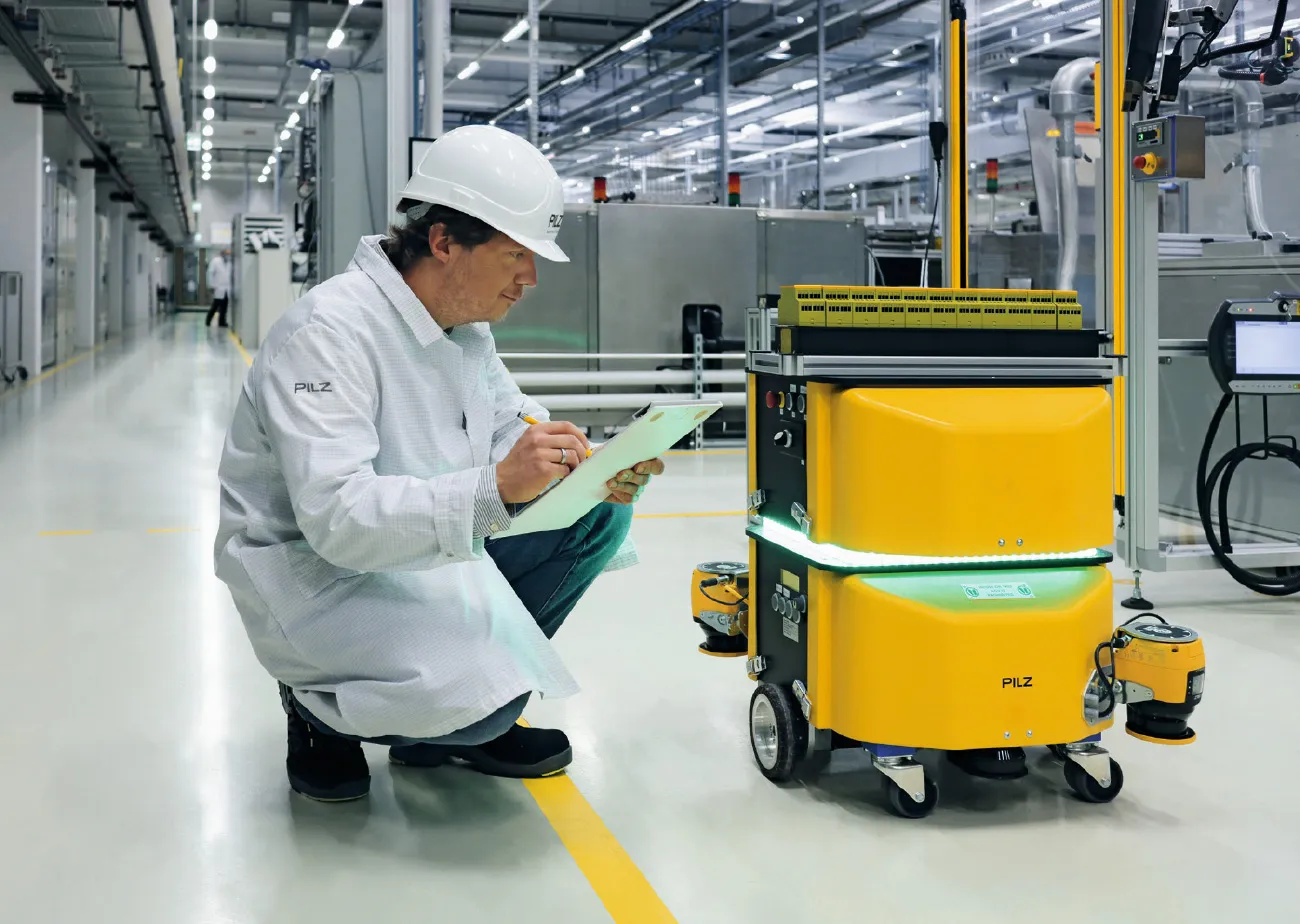
Design and build
Close collaboration is therefore used to first establish exactly which protective measures are required, based on the vehicle (design risk assessment, factory acceptance) and the environment in which the AGV will operate (site acceptance). One of the most important elements of the safety architecture is, of course, the safety scanners on the AGV itself.
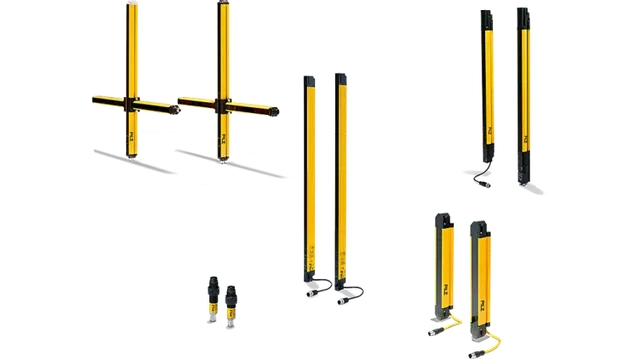
“Based on the risk assessment data, safety zones must be defined and appropriate actions linked to them. This can be achieved using conventional safety scanners such as PSENscan. This component is available in a basic version that uses a standard field, and an advanced version that continuously adjusts the safety zones according to specific parameters, such as the AGV’s speed,” Declercq adds. However, when an AGV has to navigate in challenging conditions, radar technology can be a good alternative. “Laser measurements can be affected by dust and dirt, but PSENradar is not. PILZ therefore has a solution for every situation.”
Safety controllers
A second important element of the safety architecture is the control system. The data collected by the safety scanners must also be transmitted and processed correctly and reliably to ensure the right safe actions are taken. PILZ can offer its customers several options in this area too.
Declercq: “For very simple applications, a hardware-configurable safety relay such as PNOZmulti 2 is sufficient. For more complex applications, there is the software-configurable myPNOZ safety relay. Finally, the PSS4000 safety PLC offers a high-end solution. Safety encoders, PSENenco, can also be used as an option, either directly with PSENscan or via the PNOZmulti or PSS4000 safety controllers. There are various options, making it easy for customers to choose what best meets their requirements and budget.” PILZ also supplies other safety components, such as PITestop emergency stop switches, signal towers and a PITreader USB key system, which allows authorised users to change the AGV’s operating mode,
for example for maintenance work.
Full-service partner
What makes PILZ such a good safety partner is that it has the equipment, expertise, services and even training to help customers.
Declercq: “AGV builders are well aware that safety comes first. Being able to act as a full-service partner is a real asset in making an application completely safe. This helps save time and money, while also giving users the assurance that they meet the requirements of ISO 3691-4.”
Question about this story? Ask your question
Keep following this
Get an email when a new story is published. No account needed.
- ThemeFlexible production with robots
- SubjectServices & solutions