New steps towards simpler, more compact automation
At the SPS in November, Beckhoff Automation showed what the automation of the future could look like. We take you through the key highlights.
The start of a new year is the perfect time to spot innovations. Components that can take your machines to the next level, delivering greater productivity, better quality, lower costs or improved safety. Beckhoff Automation showed at the SPS in November what the automation of the future could look like. We take you through the key highlights.
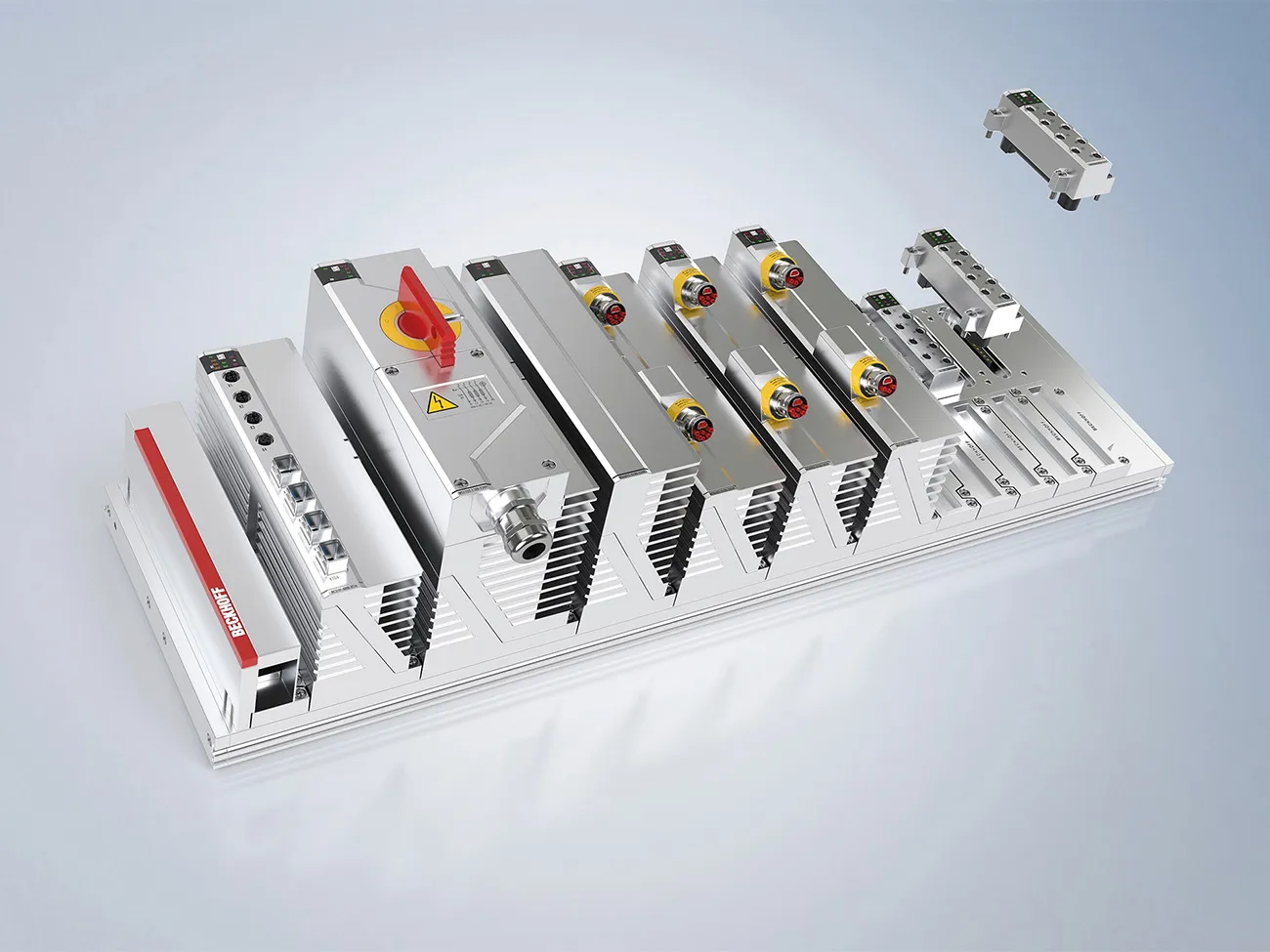
Let’s start with a product that has the potential to spark a revolution. What if you no longer needed a control cabinet at all? The new MX-System is an intelligent solution comprising a controller in its own housing. This concept turns a controller into a modular control cabinet, taking another step towards simpler automation, with less wiring, and more compact designs. It is based on a robust aluminium baseplate with IP67 protection and standardised plug-in connections. Machine builders can then clip or screw onto it the modules they need for their specific machine. Almost everything that fits in a control cabinet can also be accommodated by the MX-System. A good cross-section of Beckhoff’s product portfolio is already available for it, and this will only expand over the coming months and years.
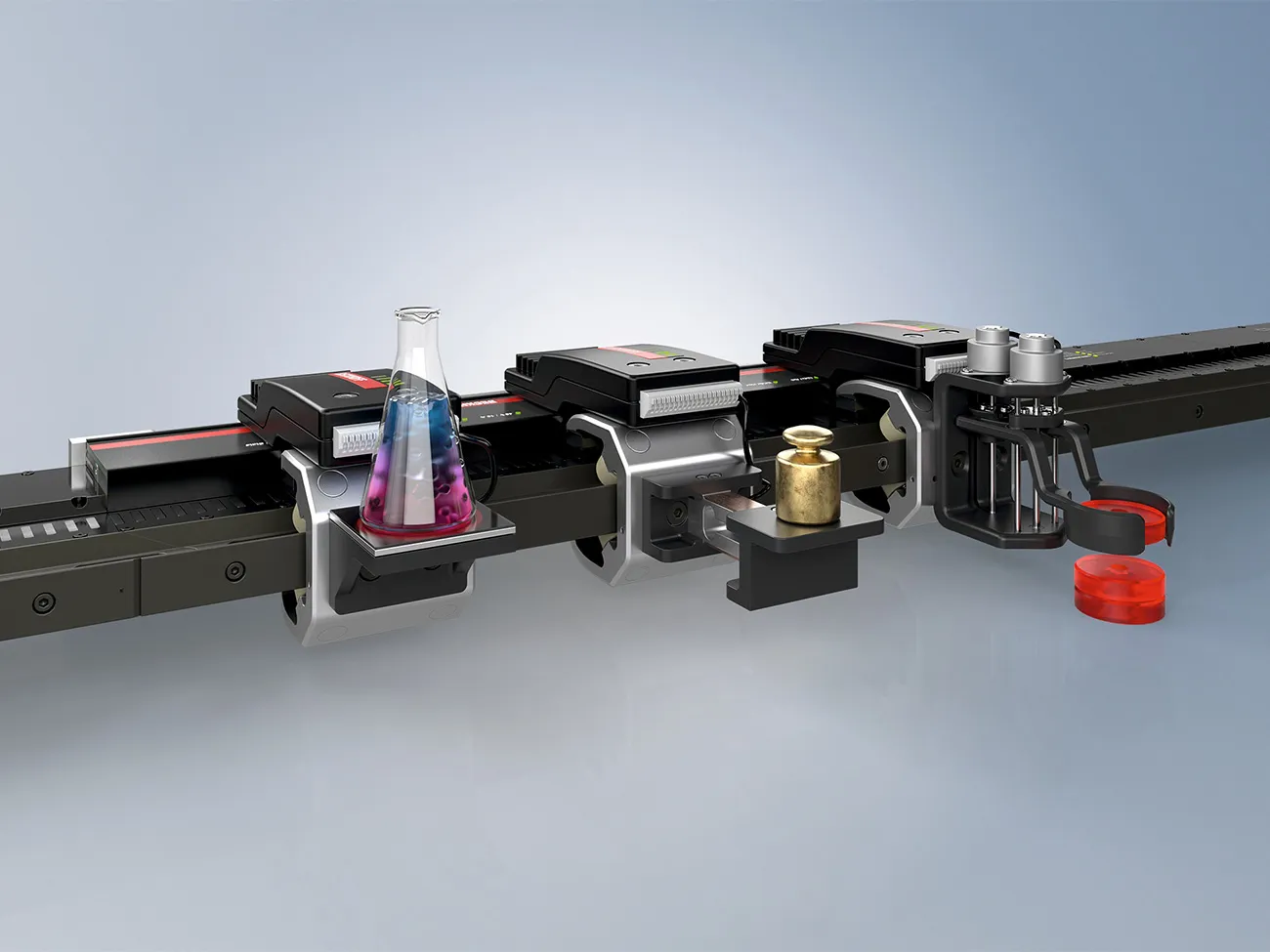
Contactless power and data transmission for XTS movers
And the leaps in technological progress just keep coming. With its innovative No Cable Technology (NCT), the intelligent XTS transport system sets a new benchmark for machine flexibility. NCT adds a special motor module to the modular XTS system, along with electronics that can be mounted on the movers to enable contactless power and data transmission. The hardware required for the transmission technology is fully integrated into the motor module, preserving existing functionality and the compact layout. No additional connections or supply lines are required. NCT enables products on the movers to be processed and their quality checked while the process is under way. Sufficient power and fast communication with the TwinCAT control system make it easy to connect sensors and actuators. Data can be communicated in real time, and system-wide events can be synchronised with µs accuracy when connected to EtherCAT.
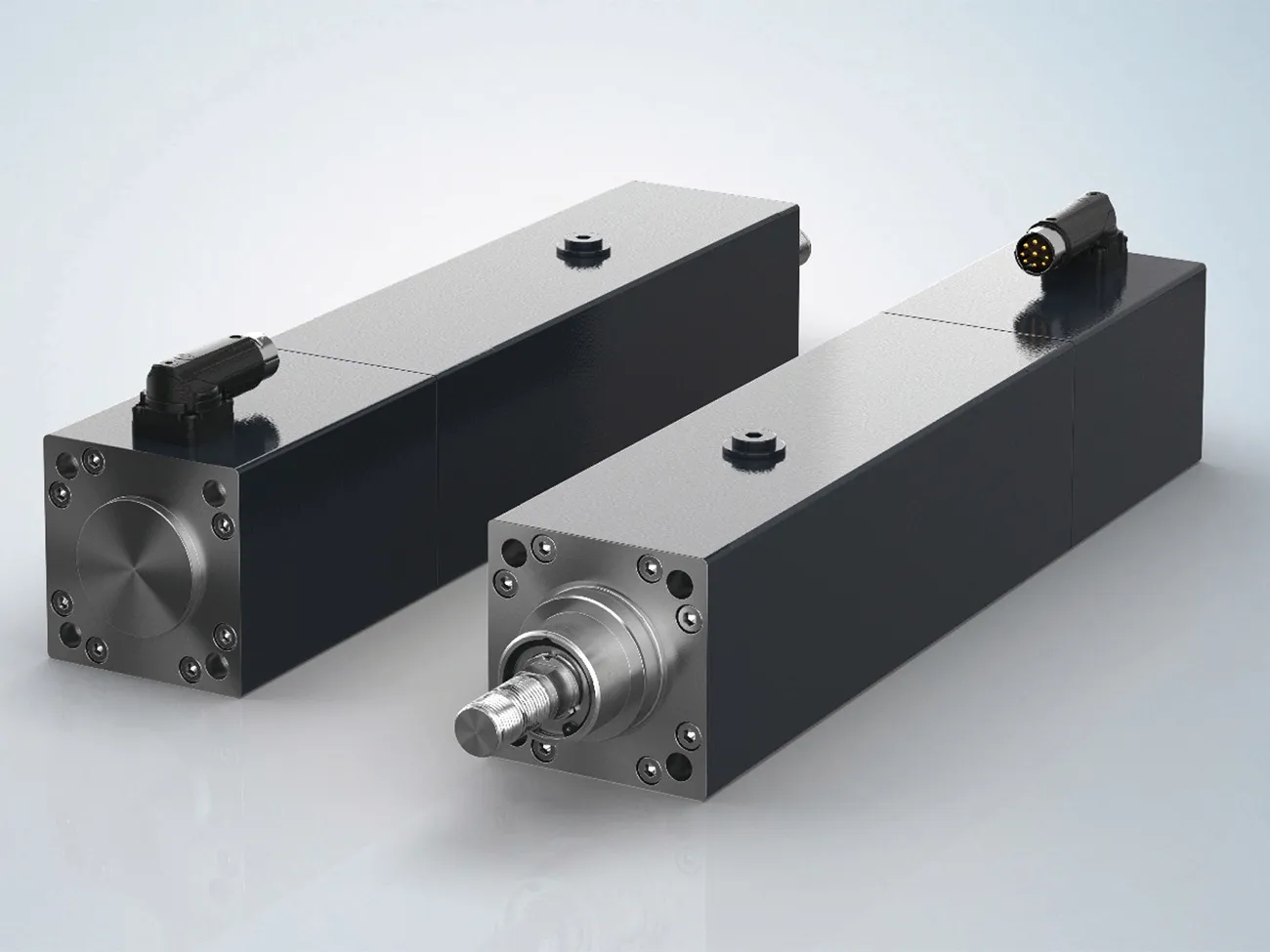
A servomotor alternative to energy-intensive pneumatic cylinders
The electric cylinders in the AA3000 series are particularly well suited as direct drives for linear applications requiring high process forces and speeds. Their advantages in terms of force, dynamics and compactness are combined with those of servo technology, including controlled positioning, safe standstill and high energy efficiency. The integrated mechanism, comprising precision rolling bearings, a ball screw and a guide, ensures backlash-free, purely translational movement. It also results in a very compact design. The end of the spindle shaft features an external thread for fitting conventional adapters, such as ball joints or clevis brackets from the pneumatic/hydraulic range. The electric cylinder’s flange dimensions are based on ISO 15552, and mounting points are provided on both sides for applications that require, for example, a pivoting bolt connection. This compatibility makes the changeover from pneumatic to electric drive technology particularly straightforward.
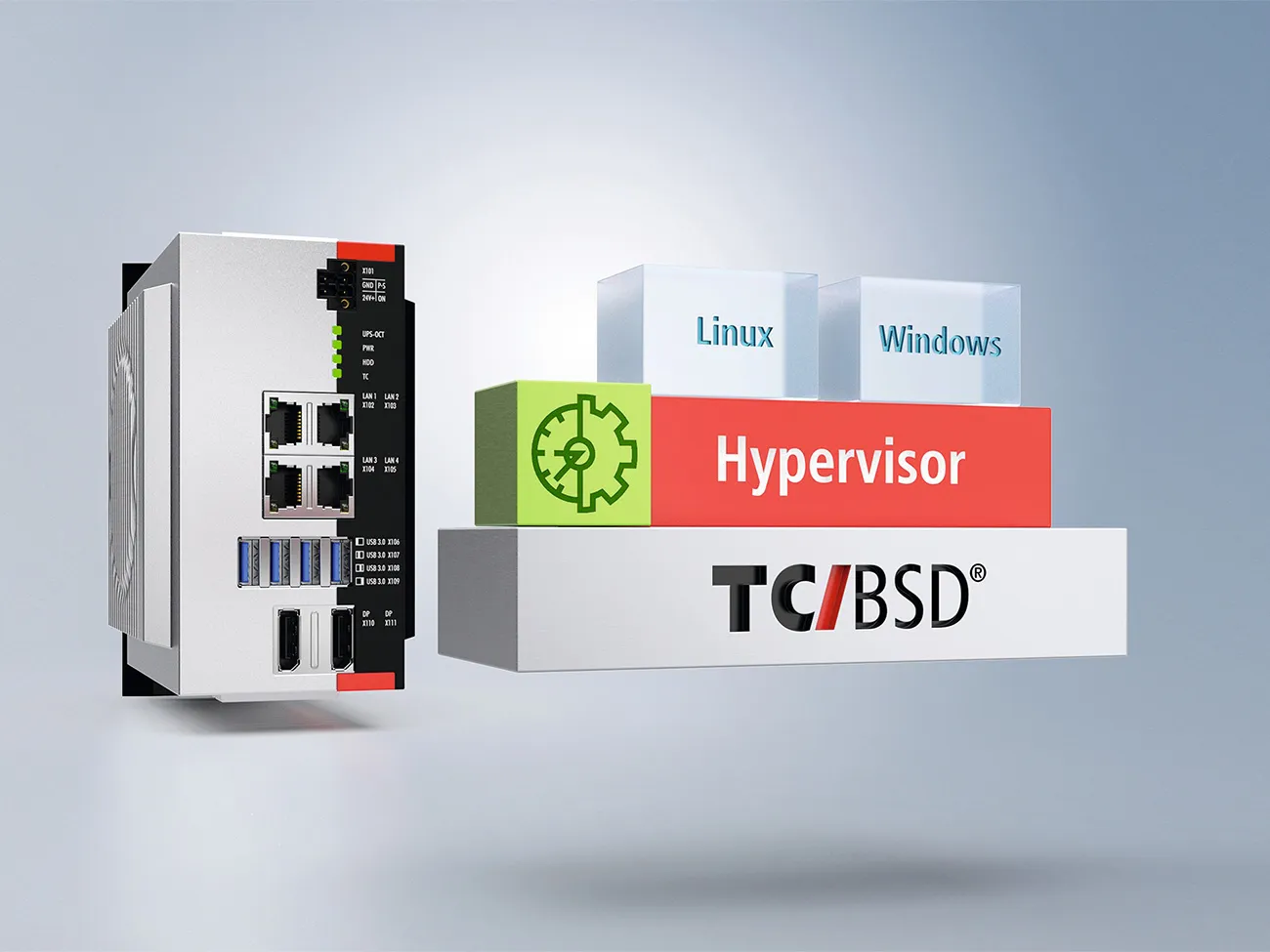
Greater availability through integrated virtual machine environments
Software innovations also have their place in the digital age. The TwinCAT/BSD Hypervisor is a system function of Beckhoff’s TwinCAT/BSD operating system that enables virtual machines (VMs) and TwinCAT real-time applications to run simultaneously on an industrial PC. Optimised hypervisor integration in TwinCAT/BSD and matching Beckhoff software and hardware configurations support maximum virtual machine performance while preserving TwinCAT real-time capabilities. The powerful execution of virtual machines makes it possible to harness the strengths of different operating systems on a single industrial PC. The security of the overall system can also be improved by running user environments in a modular, isolated way.
Question about this story? Ask your question
Keep following this
Get an email when a new story is published. No account needed.
- SubjectServices & solutions